
Listen & tracks
10 works · 31:29
-
1 Jacob and sons Andrew Lloyd Webber 2:23
-
2 Joseph's coat Andrew Lloyd Webber 2:29
-
3 Joseph's dreams Andrew Lloyd Webber 2:17
-
4 Poor, poor Joseph Andrew Lloyd Webber 2:13
-
5 Joseph in Egypt Andrew Lloyd Webber 3:57
-
6 Close every door to me Andrew Lloyd Webber 2:51
-
7 Joseph in prison Andrew Lloyd Webber 3:08
-
8 Pharaoh's dream Andrew Lloyd Webber 3:32
-
9 Pharaoh's number two / famine / who's the thief? Andrew Lloyd Webber 5:00
-
10 Any dream will do Andrew Lloyd Webber 3:39
The history of Joseph is an unusual one. Webber and Rice were originally asked by Alan Doggett, then head of the music department at Colet Court School in London, to write a musical piece for his choir to sing at their end-of-term concert. The first performance took place on 1 March 1968, as a fifteen-minute sketch.
In 1972 the work was staged at the Edinburgh Festival with the Young Vic Company, directed by Frank Dunlop. It played at the Young Vic itself, then transferred to the Roundhouse in London. By then Joseph ran for forty minutes, and in February 1973 it began its run at the Albery Theatre in London’s West End. Productions around the world have continued ever since.
Joseph is an entertaining retelling of the story of Joseph and the coat of many colours. It has become a perennial favourite for schools, both in concert and in dramatised versions.
In the artist’s words
The Joseph story has everything – danger, suspense, dreams, scandal, pathos – even a happy ending.
As the opera begins, Joseph is the smug 17-year-old son of a doting elderly father, Jacob. His multi-coloured coat was a type of garment for royalty or those who didn’t have to work for a living. With long sleeves and reaching to the ankles, it was quite unsuitable for the work of a nomadic shepherd. The elder brothers had good reason to resent him and his dazzling coat, a constant proof of his superior status with their father.
To make matters even worse, Joseph was a dreamer, which meant that he had the power to receive prophetic visions. For the ancient Hebrew, dreams had a prophetic quality. In those times, dreams customarily came in pairs, the second reinforcing the first; the double dream indicated certainty of fulfilment. The brothers were incensed at the idea of the cheeky, self-confident younger brother becoming their lord and master. Somewhat naturally, their thoughts turned to ways of removing him from the scene.
They could not kill Joseph outright, because shed blood cried out to God. This would be averted if he were left to die in a pit, an underground rainwater catchment, narrow at the top but sloping away to a broad base. However, a passing caravan of traders offered a better solution and for the going rate for young slaves (twenty pieces of silver), they were rid of Joseph, his coat, and his dreams.
In Egypt, Joseph worked for Potiphar, a successful member of Pharaoh’s administration. The ups and downs of his life continued – beginning at the bottom, he soon rose to the top of his master’s household. But Potiphar’s wife caused him to be imprisoned unjustly when he resisted her advances. Since adultery, even by a free citizen, was punishable by death, the fact that Joseph was merely imprisoned may have indicated that Potiphar had some doubts about the truthfulness of his wife’s story. Joseph, however, saw it as still another instance of God’s protection and his use of man’s evil for good.
Dreams were believed to contain, usually in a concealed fashion, a prediction of future events. Although no Hebrew ever needed an interpreter, non-Hebrews normally did. When Pharaoh had ambiguous double dreams, he was convinced that they signified some event of great importance. Joseph was brought from prison to interpret the dream of the seven fat and seven skinny cows. He predicted seven years of plenty followed by seven years of famine, and suggested a national programme of grain storage, putting aside one-fifth of each year’s harvest during the years of bumper crops. Joseph himself was named food administrator and given various signs of royal esteem. He married well and had two sons. The elevation of a slave to such rank was not unparalleled in Egyptian history and perhaps suggests that the unnamed Pharaoh (a title meaning “the great house”) was Akhnaten (Ikhnaton), who ruled about 1370 BC. Religious and political in-fighting had deprived him of an effective civil service and foreigners might have attained high office.
Egypt was normally a great grain-producing country and a natural source in times of famine. Joseph’s economic measures had succeeded beyond expectations, so much so that there was enough for neighbouring peoples who had no river like the Nile to save them during extended periods of drought. Ancient Egyptian inscriptions and carvings refer to the coming of Asiatics in search of food during the fourteenth century BC. One such group was Joseph’s brothers, who of course did not recognise their brother in the powerful Prime Minister. But he recognised them, and began an elaborate charade of teasing. When he accused Benjamin of theft (of his divining cup), the brothers maintained his innocence and, as if to atone for the years-ago betrayal of Joseph, offered themselves in Benjamin’s place. Recognising their honesty and changed attitudes, Joseph revealed his identity, asked about his father, and reassured his astounded brothers that he would not take some terrible revenge upon them.
Eventually, the whole family was reunited and settled in Egypt, and the story ends with Joseph’s re-affirmation that the covenant promise of a land for God’s people will be fulfilled. They will have a land of their own – this is the continuing dream, the most significant one of Joseph, the dreamer, the favoured son, the prime minister, the man of God.
Reviews
...one of the freshest and liveliest scores of the decade, one which bears the repeated hearings which constitute the acid test of all good music
Its appealing and marvellously rhythmic music is matched by frequently humorous words. Soloist Rob Gillespie is a standout. He injects mood and great beauty in ballads like “Close every door to me”, furious dramatic climax into “Who’s the thief?” and effective character differences between Joseph, Potiphar and Pharaoh.
Artists
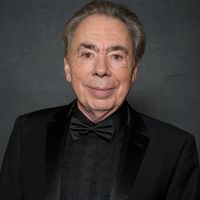
Andrew Lloyd Webber
composer
Andrew Lloyd Webber writes musical theatre that lodges in the ear and stays there: soaring ballads, rock-inflected biblical retellings, and scores that turn novels and poems into long-running stage worlds.

Tim Rice
songwriter
Rob Gillespie
vocals
Digital booklet
Digital booklet Notes, texts and credits — read online or download the PDF Download the PDFPerformers
- Rob Gillespie · vocals
Technical credits
-
Venue
Studio 3, Vancouver, Canada
-
Director
Kahlen Wood
William Sample
Details
- List price
- $20.00 AUD
- Total playing time
- 31 minutes 29 seconds
- Release date
- 1973
- Categories
- Soundtrack, Vocal
- Genres
- Stage & Screen, Vocal & Opera
- Musical work copyright
- © 1973 Kerygma
- Sound recording copyright
- ℗ 1973 Move Records
- Catalogue
- MD 3010
- EAN
- 9314574301021
More to explore

Dream Song
A charming collection of well-known songs, sure to delight. Immortal sacred favourites sit beside theatre and film themes, from Franck’s Panis Angelicus and Lloyd Webber’s Pie Jesu to Blake, Rodgers and Bart.

Silver: Celebrating 25 Years
Pot-Pourri marks twenty-five years with Silver, a seventh album that mixes contemporary classics, Broadway, and opera into one sparkling programme.

Rhythm of Life
A delicious blend of highlights from Broadway shows, popular music theatre, traditional songs and operatic hits, sung with style by Melbourne vocal ensemble Pot-Pourri.