Listen & tracks
12 works · 50:13
-
1 Amarilli, mia bella Giulio Caccini 3:05
-
2 What then is love but mourning? Philip Rosseter 2:52
-
3 Come again! Sweet love doth now invite John Dowland 2:36
-
Four French Folk SongsMátyás Seiber 4 movements10:15
- 4 Réveillez-vous 2:48
- 5 J’ai descendu 2:55
- 6 Le Rossignol 3:29
- 7 Marguerite, elle est malade 1:03
-
Three Spanish SongsJoaquín Rodrigo 3 movements4:54
- 8 En Jerez de la Frontera 1:24
- 9 Adela 2:33
- 10 De ronda :57
-
11 Rhapsody Valentine Sawenko 4:03
-
12 Cinco Preludios Ernesto Cordero 7:28
-
13 Alba Hans Haug 4:46
-
14 Página Romántica Carlos Pedrell 1:36
-
15 Lágrima Francisco Tárrega 1:47
-
16 María (Gavota) Francisco Tárrega 1:54
-
17 Danza Española No. 5 Enrique Granados 4:57
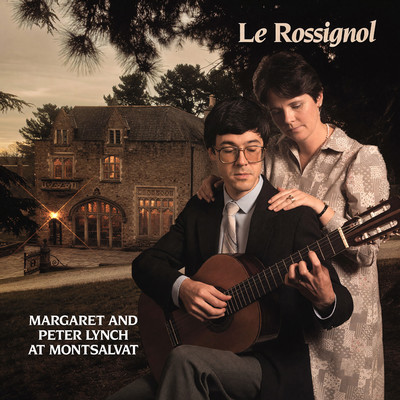
The songs, in various languages, need a voice of lightness and directness. Margaret Lynch supplies both, and a warm human quality besides.
She is accompanied by her husband Peter Lynch, a classical guitarist of marked sympathy and understanding. The programme also includes solo guitar pieces, decisive and fluent in turn.
Renaissance lute songs by Caccini, Rosseter and Dowland open the recital. Seiber’s French folk-song settings and Rodrigo’s Spanish songs follow. Solo guitar works by Sawenko, Cordero, Haug, Pedrell, Tárrega and Granados complete the programme.
In the artist’s words
By the late renaissance, the lute song had achieved a degree of perfection in style and form of no less significance than its nineteenth century counterpart, the German lied.
Enjoying the favour of Elizabeth I, Philip Rosseter (c 1575–1623) composed a large number of lute songs. The guitar adds a rich, sonorous dimension to this poignant song.
While England and the court of Elizabeth seemed reluctant to recognise John Dowland (1562–1626), he was regarded on the continent as one of the greatest lutenists and composers of the age. Both sombre and frivolous, his songs are amongst the finest of the genre.
His son, Robert Dowland (1591–1641), published an anthology of English and European lute songs in 1610. Entitled “A Musicall Banquet”, it contains one of the most remarkable songs of the period, Amarilli, mia bella, by Giulio Caccini (c 1550–1610). Although several sources exist for this song, the accompaniment realised here is wonderfully suited to this most haunting of vocal lines.
The folk song arrangements of the Hungarian composer Mátyás Seiber (1905–1960) are the most beautiful of their type in the repertoire. The guitar both imitates and compliments the voice with inventive counterpoint and lush harmonies, colouring the text in its every nuance.
The works of Joaquín Rodrigo are amongst the most significant and demanding in the literature of the guitar. These lesser known songs capture the very soul of Rodrigo, and of Spain, with a sentimental song of unrequited love couched between exuberant, flamenco rhythms. The unusual tuning of the sixth string to C sharp is a superb piece of orchestration in Adela.
Artists

Margaret Lynch
soprano

Peter Lynch
guitar
Peter Lynch is an Australian classical guitarist, teacher and director of the Melbourne International Guitar Festival. Trained in Canberra and London, he has broadcast for ABC radio and recorded recital and teaching repertoire for Move.
John Dowland
composer
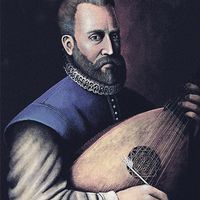
John Dowland's lute songs and ayres carry a rare, deliberate melancholy: tears that fall in measured pavans, love that stings in galliards, darkness that still sings. His music remains the living heart of the English Renaissance songbook.
Enrique Granados
composer
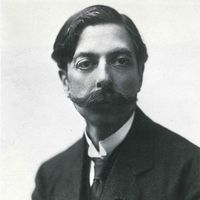
Enrique Granados was born in Lérida in 1867. He studied the piano and composition in Barcelona and then in Paris, returning to Barcelona in 1889, and won distinction as a pianist and popularity in Spain with his zarzuelas and piano music.

Joaquín Rodrigo
composer
Joaquín Rodrigo gave the classical guitar its most enduring twentieth-century voice. His Concierto de Aranjuez, Fantasía para un gentilhombre and smaller Spanish works still define how the instrument sings with orchestra, flute or voice: clear lines, warm colour and an unmistakable Iberian lilt.
Giulio Caccini
composer
Giulio Caccini shaped early Baroque solo song through monody: an expressive vocal line over simple chordal harmony, meant to move the listener as speech does. His Le nuove musiche collections codified the style that fed operatic recitative.
Ernesto Cordero
composer
Hans Haug
composer
Carlos Pedrell
composer
Philip Rosseter
composer
Valentine Sawenko
composer
Mátyás Seiber
composer
Francisco Tárrega
composer
Digital booklet
Digital booklet Notes, texts and credits — read online or download the PDF Download the PDFPerformers
- Margaret Lynch · soprano · tracks 1–10
- Peter Lynch · guitar
Technical credits
-
Recording Engineer
Martin Wright
-
Venue
Montsalvat
-
Guitar maker
George Love
Details
- List price
- $20.00 AUD
- Total playing time
- 50 minutes 13 seconds
- Release date
- 1985
- Categories
- Classical, Vocal
- Musical work copyright
- © 1985 Move Records
- Sound recording copyright
- ℗ 1985 Move Records
- Catalogue
- MD 3060
- EAN
- 9314574306026
More to explore

Images
Prudence Davis, Jeffrey Crellin and Peter Lynch in French salon and Impressionist chamber music for flute, oboe and guitar: Fauré and Ravel pavanes, Giuliani’s Serenade, Coste miniatures, Ponce’s Sonata III, Debussy’s Syrinx and Rêverie, and Duarte folk settings.
Mostly Bach
Flautist David Bloom and guitarist Peter Lynch present Bach's D minor suite arranged for solo flute, the C major flute sonata, and Mauro Giuliani's Grande Sonata in A major for flute and guitar.
Enfantines I
Katherine Day’s first solo album gathers piano works by Joachim, Krenek, Granados and Mozart chosen for young players. Her finely sculpted readings treat often-overlooked teaching repertoire with the care usually reserved for the concert canon.

Sidekick
Sidekick is the debut CD from guitar duo Ziggy and Miles. It pairs new works written for the brothers with their own arrangement of Debussy’s Clair de Lune and repertoire from Spain, Latin America and Australia that has shaped their musical identity.
Walsingham
Renowned Australian lutenist Rosemary Hodgson’s Walsingham gathers Elizabethan lute variations on a sacred ballad into a contemplative Marian rondo of mysticism and pilgrimage.
Australian Monody
The Marais Project is joined by countertenor Russell Harcourt for a collection of largely Australian songs and instrumental works, spanning light and darkness, love and loss.