Listen & tracks
2 of 10 tracks have a preview · 1 work · 61:45
-
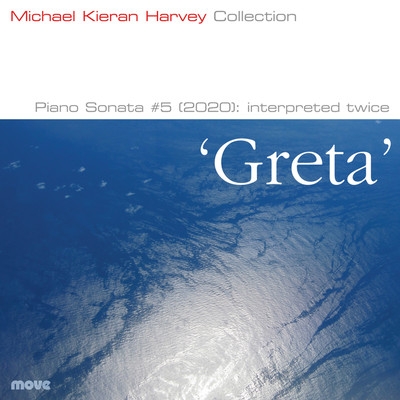
Greta: Sonata #5Michael Kieran Harvey 10 movements61:45
- 1 part 1 – G 100 bpm [piano] 8:09
- 2 part 2 – R Misterioso [piano] 6:53
- 3 part 3 – E Retorico [piano] 6:04
- 4 part 4 – T Ritmico [piano] 6:08
- 5 part 5 – A Maestoso stoico, con rubato [piano] 3:42
- 6 part 1 – G 100 bpm [electric organ] 8:06
- 7 part 2 – R Misterioso [Fender Rhodes] 6:54
- 8 part 3 – E Retorico [electric harpsichord] 6:04
- 9 part 4 – T Ritmico [electric bass] 6:07
- 10 part 5 – A Maestoso stoico, con rubato [electric piano] 3:38
One of the most extraordinary developments in recent years has been the emergence of a young spokesperson for the generations who will have to deal with the climate catastrophe caused by humans. Her name is Greta Thunberg, and her story is well known.
The accompanying poem Regret is by Arjun von Caemmerer. It selectively catalogues and arranges a small sample of precarious Australian flora and fauna, including some species now lost altogether, and some whose grip on survival appears increasingly tenuous in the face of accelerating climate change.
The five-movement sonata is structured as hermeneutic windows on the letters of Greta’s name, and is presented twice: once on concert grand piano and once on electric keyboards (organ, Fender Rhodes, harpsichord, bass and electric piano).
Hear Greta in both versions, with Arjun von Caemmerer’s poem Regret as the visual element:
In the artist’s words
This sonata is an atonement from my generation to Greta’s, hence the dedication to my two children, and is formed through a sequence of hermeneutic windows based on the letters of her first name. It was written and realised during the 2020 pandemic. The rhetorical nature of the piece suggests a concerto, but in this case the soloist is truly alone, courageously presenting their arguments in the face of indifference, ridicule and hatred. The work is in five sections. The possibility of using an electric keyboard, hopefully deriving power from a renewable source, frees the Sonata/Concerto from the domain of the concert grand piano with its connotations of upper class luxury and collusion with conservatism. This versatility gives the work a further connection to the protean vision of its namesake.
Reviews
The new piano sonata is in five movements and the entire work has been recorded twice – once using piano and once on electronic keyboards. I prefer the piano version but it’s quite fascinating to explore the differences between the two. The music is uncompromising, but Harvey’s piano playing is absolutely extraordinary in its virtuosity.
Harvey is also consistently vocal on environmental issues; his 2017 collaboration with violinist Emily Sheppard was a tribute to Bob Brown, who Harvey described as “a lifelong courageous warrior”. Harvey’s latest recording pays homage to another fearless environmental warrior, Swedish teenage activist Greta Thunberg. ... third movement ‘E’ is a highlight, with textural trills and ominous low register quakes translating particularly well to its corresponding electric harpsichord setting and eliciting sparkling resonances.
Michael Kieran Harvey uses all his attributes of heart, mind and hands in the composition and execution of this astonishing piece of music. Harvey has replicated each of the movements on an electronic instrument, because he feels there is an association of piano with the upper class and conservatism. To be honest, with Harvey’s music, that association would require an extreme leap of faith. However, the opportunity for interpretation on different instruments from the original, changes everything that one hears. Harvey draws upon differing timbres of the electronic instruments he uses, even, as with the last movement, using multiple contrasting tone colours. Equally, the differentiation of stereo sound, with distinctive bass in one channel and treble in the other, draws one’s attention to different facets in such a way that the individual layers, counter-rhythms and melodic lines prominent in the original, are entirely altered with their electronic interpretation. The second movement is particularly transformed in meaning with the use of a Fender Rhodes, a forgiving sound that cushions the prevailing mood of this movement. The harpsichord interpretation of the ‘E’ movement is also fascinating, separating so distinctively, as with the first movement, bass sounds from treble.
(Michael Kieran Harvey) writes virtuosic music that he then despatches with aplomb. Much of this music from Harvey is highly energetic and sometimes borders on being manic but maybe considering the topic of climate change and its massive problems it is most appropriate. In many ways it is like an extended improvisation. The work appears in two versions so we hear 31 minutes performed on a concert grand piano and then again on various electric keyboards. Different listeners might prefer one over the other whilst I simply enjoyed the variety that the diverse instruments offered.
Artists

Michael Kieran Harvey
piano, electric organ, fender rhodes, electric harpsichord, electric bass, electric piano
Australian pianist and composer Dr Michael Kieran Harvey FAHA is among the foremost interpreters of contemporary piano music of his generation. A champion of Australian music, he regularly commissions new work and has performed with the country’s leading contemporary ensembles and orchestras.

Arjun von Caemmerer
Dr Arjun von Caemmerer is a Hobart-based general medical practitioner, Iyengar Yoga teacher and practitioner, and writer. In 1995, with Naomi Cameron, he established The Hobart School of Iyengar Yoga.
Digital booklet
Digital booklet Notes, texts and credits — read online or download the PDF Download the PDFPerformers
- Michael Kieran Harvey · piano, electric organ, fender rhodes, electric harpsichord, electric bass, electric piano
Technical credits
-
Contributor
Arjun von Caemmerer
-
Recording Engineer
Martin Wright
Vaughan McAlley
-
Editing Engineer
Vaughan McAlley
-
Mastering Engineer
Martin Wright
-
Venue
Move Records Studio
Details
- List price
- $25.00 AUD
- Total playing time
- 61 minutes 45 seconds
- Release date
- 15 Jul 2020
- Categories
- Classical, Keyboard
- Musical work copyright
- © 2020 Move Records
- Sound recording copyright
- ℗ 2020 Move Records
- Catalogue
- MD 3452
- EAN
- 9314574345223
More to explore
De Tribus Impostoribus
This is a new collection of works by acclaimed Australian pianist and composer Michael Kieran Harvey, bringing together music spanning more than two decades of his distinctive and adventurous creative practice.
The life in between
Michael Kieran Harvey anchors this solo piano programme with Martin Friedel’s final work, …the life in between…, then sets it among virtuoso scores by Pertout, Crossman, Spiers, Selleck and McAlley.

War Sonatas
Three piano sonatas by Michael Kieran Harvey, written as a response to twenty-first-century war. Spoken poems by Arjun von Caemmerer stand between the works, framing a triptych of anger, friendship and warning.
Threnody
Michael Kieran Harvey’s landmark 1995 Astra recital of late twentieth-century Australian piano music returns in a 2024 Move re-master. Premiere recordings by Harvey, Vine, Campbell, McCaughey, Byrne, Humble and Anderson form one continuous programme.
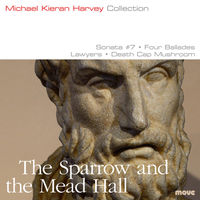
The Sparrow and the Mead Hall
Composed and mostly performed by Michael Kieran Harvey, these 2021 works move from the rarefied extended techniques of Piano Sonata #7 and Liszt–Busoni bravura in the Four Ballades to bebop wit in Lawyers… and metal-edged satire in Death Cap Mushroom.
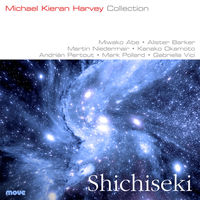
Shichiseki
Collaborations with violinist Miwako Abe and cellist Alister Barker sit beside solos written for Michael Kieran Harvey by Gabriella Vici and Andrián Pertout, spanning Japanese, Latin American and South Indian influences.