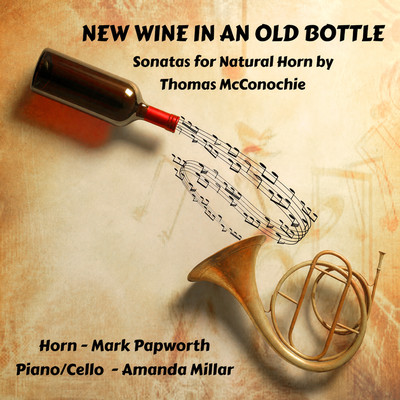
Listen & tracks
4 works · 51:40
-
Sonata No. 1 in F for Natural Horn and Fortepiano, Op. 14, TWV 66Thomas McConochie 3 movements15:12
- 1 i. Allegro 6:09
- 2 ii. Andante (with Oom-Pah Section) 4:59
- 3 iii. Sonata-Rondo 4:04
-
Horn Sonatina No. 5 in C Minor, Op. 16 No. 3, TWV 71 “A Little Bit of Sturm and Drang”Thomas McConochie 3 movements10:02
- 4 i. Presto 3:09
- 5 ii. Adagio 2:31
- 6 iii. Presto 4:22
-
Sonata for Natural Horn and Cello in D Major, Op. 22, TWV 74Thomas McConochie 3 movements13:27
- 7 i. Allegro 5:09
- 8 ii. Recitative and Aria 5:25
- 9 iii. Rondo 2:53
-
Sonata No. 2 in E-Flat for Natural Horn and Fortepiano, Op. 15, TWV 67Thomas McConochie 3 movements12:59
- 10 i. Allegro 5:24
- 11 ii. Andante con moto (Romanza) 3:24
- 12 iii. Maestoso (Theme and Variations) 4:11
The natural horn descended from the hunting horn and was the direct predecessor of the modern French horn. The hunting horn entered the orchestra in the baroque period; by the 1740s players were using the hand in the bell to fill out the scale. That technique became a codified system in the classical period, and it is the instrument for which Mozart wrote his horn concerti.
After valves arrived in the 1820s the natural horn faded over the following sixty years. Renewed interest in historical performance has brought it back, and more horn players are learning the old hand-stopping techniques.
Composers too have begun to explore what the natural horn can do. Thomas McConochie is one of them. This disc gathers new works written specifically for the instrument.
In the artist’s words
When I came to compose my first horn sonata, I was cognisant of the fact that the soloist horn repertoire is actually quite small; there are a few well-known pieces by famous composers that get played frequently. Yet what I, and many other hornists, would really like is not to play the same few pieces repeatedly (fine pieces though they are), but rather to play new compositions in similar styles in addition to the canon of horn repertoire. Perhaps we will even discover new works to add to the core repertoire of soloist horn music. Hence, this horn sonata begins with a subversive nod to Beethoven’s horn sonata by starting with a descending F major arpeggio, whereas Beethoven’s begins with an ascending F major arpeggio: the same but different.
The humour doesn’t stop there! The second movement is in ternary form, with the first section of music sounding like a typical romanza, with smooth legato playing and soft cadences, as horn players and audiences would expect. However, the middle section picks up the tempo, changes into the parallel minor key, and features a very detached horn melody over an “oom-pah” accompaniment for maximum hilarity.
The final movement is in sonata-rondo form. The music is in a jaunty 6/8 time with a feeling that will be instantly familiar to horn players and fans of horn music.
I originally composed this piece as a low horn work for valve horn (in F). It was Mark who initially arranged the piece for natural horn (in E-Flat), taking many passages up an octave into the normal register of both valve and natural horn. I think the result sounds great!
This sonatina stands out from the mainstream horn repertoire because it is in a minor key (every movement is in a minor key) and in the “sturm and drang” style. I drew on the symphonies of CPE Bach and Joseph Haydn as inspiration for this horn sonatina.
This work was commissioned by Mark Papworth in 2021. The general brief was to compose a sonata for natural horn and cello in my usual neo-classical style. Mark and Amanda also had some specific requirements for the piece: 1.) the cello part should play a melody at least once in every movement; and 2.) the second movement should be in the form of a recitative and aria and in a minor key.
It was a pleasure working with Mark and Amanda to compose this very rare kind of sonata. As far as I know, there are only three composers (including myself) who have composed sonatas for natural horn and cello, with Frederic Nicolas Duvernoy (1765–1828) and Aldolphe Blanc (1828–1885) composing sonatas between the late 18th century and mid-19th century, respectively. Their works are rare treasures, and I am very pleased to contribute more music to this niche repertoire.
I learnt a lot from composing and performing my first horn sonata and applied those lessons as goals for this second sonata. One thing I achieved was having more of a dialogue and call and response between the horn and piano part (rather than just having the melody on the horn all the time). We can hear this in the second subject of the first movement, where the piano plays most of the melody and the horn responds with characteristic “hand stopped chromatic leading tone, to open note” technique that is part of the charm of natural horn music.
In the second movement, both the horn and piano take turns playing the melody and accompanying one another in this straight-forward romanza. In the third movement, each variation concludes with a ritornello played by the piano, which is essentially a re-statement of the B section of the theme/variation.
The Natural Horn, also referred to as the Classical Horn or Hand Horn, descended from the hunting horn and was the direct predecessor to the modern day French Horn. During the baroque period, the hunting horn found its way into the orchestra. First for a more realistic effect, and then as a recognised member of the orchestra. During the latter part of the baroque period, horn players started experimenting with inserting their hand in the bell to obtain notes outside of the natural harmonic series. This developed into a codified system which enabled composers during the classical period such as Haydn, Mozart and Beethoven to use the horn as a lyrical solo instrument. With the emergence of the valved horn during the 1820’s and ‘30’s the natural horn died out through most of Europe except for France. The french players had come to appreciate the different sounds of the hand covering the bell to get the different notes, and had become so adept at playing it that they were reluctant to adopt the valved horn.
The natural horn was taught at the Paris Conservatoire until 1903. The natural horn died out for several decades before players developed a renewed interest in it which has led to many modern day players adopting the instrument and dedicating many, many hours to mastering the old techniques. As the interest in playing the natural horn has grown, modern day composers have also begun to appreciate the possibilities associated with writing for the natural horn. It has been a great pleasure for me to work with Thomas on some new repertoire for the natural horn and to present this CD of new Sonatas featuring the old techniques of natural horn playing.
Artists
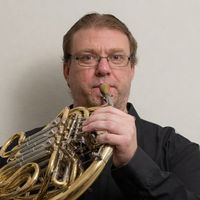
Mark Papworth
natural horn
Mark Papworth is a Melbourne tram driver and highly accomplished horn player. At home on baroque, natural and modern instruments, he studied in Melbourne, Perth and the United States.
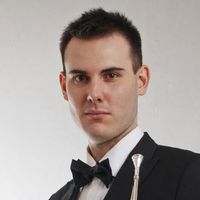
Thomas McConochie
composer
Thomas McConchie composes music in styles ranging from modern classical, to jazz, and world music. Elements of classicism such as balance, symmetry, restraint, clear and elegant development of musical ideas, etc., are present in much of Thomas’ music, including his Balinese music.
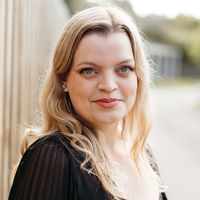
Amanda Millar
piano, cello
Amanda Millar is a versatile and passionate performer and educator of piano, cello and voice, based in Melbourne. A keen accompanist from early on, she collaborates with numerous instrumental and vocal soloists across Melbourne.
Digital booklet
Digital booklet Notes, texts and credits — read online or download the PDF Download the PDFPerformers
- Mark Papworth · natural horn
- Amanda Millar · piano, cello
Technical credit
-
Producer
Martin Wright
Details
- List price
- $25.00 AUD
- Total playing time
- 51 minutes 40 seconds
- Release date
- 30 Sep 2022
- Category
- Classical
- Musical work copyright
- © 2022 Mark Papworth
- Sound recording copyright
- ℗ 2022 Move Records
- Catalogue
- MCD 632
- EAN
- 9314574063226
More to explore
Evenings with the French Horn
Mark Papworth (natural and valved horns) and Rosa Scaffidi (piano) play Berlioz and Blanc in repertoire that sets the two French horn types of the late nineteenth century side by side.
Siegfried's Story
"Brassy revamp for Wagner" (The Age, 29 April 2020). Mark Papworth’s arrangement of highlights from Wagner’s Ring of the Nibelung for horn, tuba and piano traces the cycle as chamber drama.