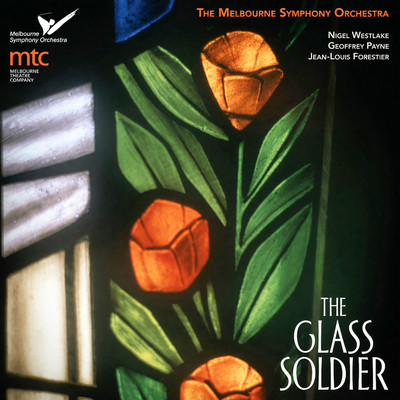
Listen & tracks
2 of 18 tracks have a preview · 10 works · 50:16
-
The Glass Soldier SuiteNigel Westlake 5 movements25:06
- 1 The Glass Soldier 3:22
- 2 The Age of Destruction 6:35
- 3 White Birds Fly Over the Valley of the Somme 4:16
- 4 Symphonies of Glass 4:58
- 5 I Was Blinded But Now I See 5:55
-
6 The Minstrel Boy Thomas Moore 2:53
-
7 Dear Lord and Father of Mankind Charles Hubert Hastings Parry 4:18
-
8 The Last Rose of Summer Thomas Moore 3:26
-
9 Sussex by the Sea William Ward-Higgs 1:35
-
10 Invercargill Alexander Frame Lithgow 2:13
-
11 Stony Broke in No Man's Land Jean Schwartz 3:14
-
12 Je te veux Erik Satie 3:58
-
13 Romance Without Words, Op. 17 No. 3 Gabriel Fauré 2:14
-
14 The Sounds of Villers-Bretonneux 1:19
The music from the Melbourne Theatre Company’s production is performed by the Melbourne Symphony Orchestra under Jean-Louis Forestier. Geoffrey Payne is featured on further tracks. At its centre is the world premiere recording of Nigel Westlake’s The Glass Soldier Suite, a work that holds the wonder, tragedy, love and resolution of First World War stretcher bearer N. H. Ferguson.
The album is a spiritual reflection, in music, on the journey of Australian soldiers in the Great War, told through one life: Private Nelson Ferguson of Ballarat. His story is one among thousands, yet it speaks of war’s horror, of disability, and of endurance, courage and love.
Ferguson served with the 15th Field Ambulance Corps in France from 1915 to 1918. Blinded by mustard gas at Villers-Bretonneux—where the battle that climaxed on ANZAC Day, 25 April 1918, turned the tide on the Western Front—he later taught art in Victoria. In 1968 a corneal transplant restored his sight.
Hannie Rayson’s play traces that challenged life, his love for his wife Madeleine, and his journey towards the light. In early 2007 members of the Melbourne Symphony Orchestra visited Villers-Bretonneux in homage to the ANZACs, among them the great uncles of principal trumpet Geoffrey Payne and the grandfather of trumpeter David Farrands.
Westlake’s suite, recorded here by the MSO, mirrors the play’s arc. A brass ensemble of leading Australian players, again featuring Payne—on one track on Ferguson’s own 1905 cornet—completes a musical tribute to ANZAC courage. The ensemble also performed at Melbourne’s Shrine of Remembrance on Remembrance Day.
In the artist’s words
The Glass Soldier is inspired by the life of Nelson Ferguson who served in France as a Field Ambulance officer in World War I. It is an epic story about war and art and the triumph of love told from the point of view of a young Australian who was plunged into a powerful international tragedy, the likes of which he could never have anticipated.
Nigel Westlake has produced an orchestral suite of astonishing power and integrity. It is an exquisite privilege to have such a work accompany my play. And it is thrilling that it should be performed by the Melbourne Symphony Orchestra. For me this has been a collaboration made in heaven.
Commissioned in memory of N. H. Ferguson and in honour of his contribution to art and his virtuous life, The Glass Soldier has been composed specifically for the Melbourne Symphony Orchestra and resident Principal trumpet, Geoff Payne. In five movements, the suite is inspired by Hannie Rayson’s epic play which tells the story of Nelson Ferguson’s misfortune in war and his ultimate triumph against adversity.
The Glass Soldier Beginning slowly and tentatively, this is a portrait of the young Nelson; an artist imbued with dignity and optimism as he embarks upon his journey to France, an ill-fated adventure that will change his life forever. The low-register trumpet phrases in the final bars suggest an apprehension of the fate awaiting Nelson and his comrades that lies over the horizon.
The Age of Destruction An orchestral impression of the battle of Villers-Bretonneux in North France (17–24 April 1918) in which Nelson, a stretcher-bearer, was embroiled. This music seeks to describe the relentless juggernaut of war and the terror of life on the battlefield. Nelson (via the trumpet) can be heard from time to time; a vulnerable lone voice searching for reason amongst the surrounding mayhem. Various effects are incorporated into the score in an attempt to conjure the desolate atmosphere of death and destruction including a wind machine, thunder sheet, air-raid sirens and gas alarms.
White Birds Fly Over the Valley of the Somme Solo cello is featured in a slow lament for the aftermath of the battle. The image of white birds juxtaposed over a desolate landscape devastated beyond recognition is a metaphor for hope. As Nelson surveys the killing fields of the Somme he yearns to be back in the arms of his true love, Madeleine. The sweet sounds of her piano playing inhabit his daydreaming and offer a glimpse of hope amongst the scarred earth and mud-filled trenches.
Symphonies of Glass Escaping from the horror of the trenches, Nelson has carved out a moment in time (on leave) and finds himself inside an ancient village church somewhere in the French countryside. He admires the grandeur of the stained-glass windows and lovingly communes with the spirits of the artisans responsible for such beauty. The music opens with a reference to the fifteenth-century French Advent plainchant “Veni, Veni, Emmanuel” over which is superimposed a filigree texture of harp arpeggios, celesta, crotales and solo violin. Nelson reflects on the meaningless slaughter of the war and berates the Almighty for allowing such atrocities to occur, at which time the orchestral texture is expanded and intensified, exploding at the peak of his anger as a stray bomb lands on the roof of the church and Nelson is covered in broken glass. Engulfed by mustard gas, he is hurled into darkness.
I Was Blinded but Now I See This is the struggle for a man plunged into darkness to find the light. Literally, and metaphorically. For Nelson blindness is akin to being a lost man. With extraordinary tenacity the trumpet cadenza charts Nelson’s journey as he sets about the process of regaining control. Optimistic and uplifting, this finale speaks of hope and rebirth; the regeneration of the human spirit.
I would like to thank Hannie Rayson for her guidance and feedback throughout the composition process, Jean-Louis Forestier for directing the orchestra with great sensitivity and attention to detail, the Melbourne Symphony Orchestra for a committed and powerful reading of the score and their ongoing support of my work and also Don Farrands for offering me a unique opportunity to render his family’s powerful story through the medium of music.
Reviews
Nigel Westlake's considerable music score is typical of the composer's output, with quotes from familiar melodies tinged with the sonorities of American pastoralism. It's written like a film score, and used that way too, pushing the audience's emotions this way and that in crucial scenes.
Artists

Nigel Westlake
composer
Westlake has played in fusion bands and soundtrack sessions, with Australia’s leading instrumental groups, and as a soloist with orchestras and classical ensembles in Australia and in major cities worldwide, from London and Paris to Tokyo, Beijing and New York.

Melbourne Symphony Orchestra
orchestra
The Melbourne Symphony Orchestra traces its roots to musicians assembled for Melbourne’s Centennial International Exhibition in 1888, beginning a long tradition of fine orchestral performance in this city.

Jean-Louis Forestier
conductor
Geoffrey Payne
cornet, trumpet
Geoffrey Payne is an Australian classical trumpeter and long-serving Principal Trumpet of the Melbourne Symphony Orchestra. A first-prize winner at the 1984 International Trumpet Competition in Budapest, he records as a soloist and chamber musician.
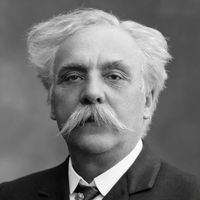
Gabriel Fauré
composer
Gabriel Fauré (1845–1924) was a French composer, pianist, organist and teacher whose music links late Romanticism with early modernism. His best-known works include the Requiem, the Pavane, and a large body of songs and piano music.
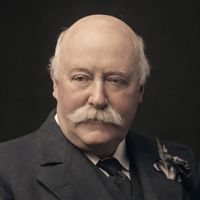
Charles Hubert Hastings Parry
composer
Hubert Parry's music still fills cathedrals and coronations. Best known for the choral song Jerusalem, the coronation anthem I was glad and the hymn tune Repton, his writing joins ceremonial splendour to a humane, singable warmth.

Erik Satie
composer
Erik Satie's piano music moves in slow, spare circles. The Gymnopédies and Gnossiennes rest on simple modal melodies and unresolved chords, cool, unhurried and strangely weightless.
David Farrands
arranger
David Farrands is an Australian trumpeter and arranger. A graduate of the Victorian College of the Arts, he works as a freelance musician with leading Melbourne orchestras and is a member of the Melbourne Brass Ensemble.
Sam M. Lewis
songwriter
Alexander Frame Lithgow
composer
Thomas Moore
composer
Thomas Moore set verses of Irish dispossession, loss and resistance to old Irish tunes in his Irish Melodies. Songs such as The Minstrel Boy and The Last Rose of Summer remain among the most enduring of those airs.
Jean Schwartz
songwriter
William Ward-Higgs
composer
Digital booklet
Digital booklet Notes, texts and credits — read online or download the PDF Download the PDFPerformers
- Melbourne Symphony Orchestra · orchestra · tracks 1–5
- Jean-Louis Forestier · conductor · tracks 1–5
- Geoffrey Payne · cornet, trumpet · tracks 6, 12 and 13
- Brass Ensemble · ensemble · tracks 6–11
- Jane Hammond · piano · tracks 12 and 13
- James Lloyd · double bass · track 12
- George Butrumlis · accordion · track 12
Technical credits
-
Producer
Don Farrands
Stephen Snelleman
-
Recording Engineer
Jim Atkins (all except tracks 11 and 14)
-
Mastering Engineer
Russell Thomson
-
Venue
Iwaki Auditorium, Melbourne
-
Booklet Design
Sarah Ingles
-
Photograph of MSO
Devika Bilimoria
Details
- List price
- $25.00 AUD
- Total playing time
- 50 minutes 16 seconds
- Release date
- 2007
- Categories
- Australian, Classical, Orchestral
- Musical work copyright
- © 2007 Don Farrands/Hot Road Productions Pty Ltd
- Sound recording copyright
- ℗ 2007 Don Farrands/Hot Road Productions Pty Ltd
- Catalogue
- MD 3318
- EAN
- 9314574331820
More to explore
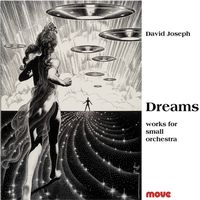
Dreams: Works for Small Orchestra
Australian composer David Joseph gathers choreographically inspired works for small orchestra from 1986 to 1994 in Dreams, tracing memory, dream states and perception through richly textured, psychologically charged writing.

Sidekick
Sidekick is the debut CD from guitar duo Ziggy and Miles. It pairs new works written for the brothers with their own arrangement of Debussy’s Clair de Lune and repertoire from Spain, Latin America and Australia that has shaped their musical identity.
Fluid Lines
After nearly a decade of hanging out, talking shop and drinking coffee, virtuoso guitarists Daniel McKay and Antony Field formed Duo 19. Their debut presents an eclectic programme of twentieth- and twenty-first-century works, including music by Australians Nigel Westlake and Phillip Houghton.
Broadway Boogie
Broadway Boogie gathers premiere recordings of recent Australian piano works by Andrew Ford, Andrew Byrne, John McCaughey, Nigel Westlake, Mark Pollard and Michael Kieran Harvey, loosely linked by allusions to New York. Melbourne’s Herald-Sun named it the best classical CD of 2008.
David Joseph Selected Works, Vol. 2
The second volume of David Joseph’s selected works brings together the Melbourne Symphony Orchestra, The Academy of Melbourne, and pianist Michael Kieran Harvey in three substantial late-twentieth-century scores.
Rabid Bay
Michael Kieran Harvey is one of the foremost interpreters of contemporary piano music of his generation. This recording presents some of Australia's cutting-edge piano music – bold and experimental, but also increasingly lyrical.