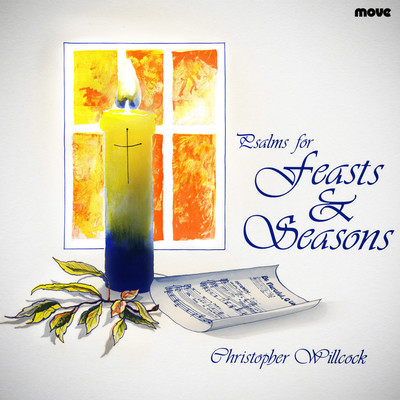
Listen & tracks
4 of 22 tracks have a preview · 22 works · 58:24
-
1 Psalm 25 To you, O Lord Christopher Willcock 2:53
-
2 Psalm 85 Lord, let us see your kindness Christopher Willcock 2:15
-
3 Psalm 98 All the ends of the earth Christopher Willcock 2:03
-
4 Psalm 75 Lord, every nation Christopher Willcock 2:34
-
5 Psalm 51 Be merciful, O Lord Christopher Willcock 3:39
-
6 Psalm 91 Be with me, Lord Christopher Willcock 2:53
-
7 Psalm 130 With the Lord there is mercy Christopher Willcock 2:37
-
8 Psalm 22 My God, my God Christopher Willcock 3:06
-
9 Psalm 136 His love is everlasting Christopher Willcock 3:24
-
10 Psalm 118 This is the day Christopher Willcock 2:14
-
11 Psalm 66 Let all the earth Christopher Willcock 2:27
-
12 Psalm 47 God mounts his throne Christopher Willcock 1:57
-
13 Psalm 104 Lord, send out your Spirit Christopher Willcock 2:28
-
14 Psalm 19 Lord, you have the words Christopher Willcock 2:03
-
15 Psalm 27 The Lord is my light Christopher Willcock 3:01
-
16 Psalm 34 Taste and see Christopher Willcock 2:36
-
17 Psalm 63 My soul is thirsting Christopher Willcock 3:14
-
18 Psalm 95 If today you hear his voice Christopher Willcock 1:46
-
19 Psalm 100 We are his people Christopher Willcock 1:46
-
20 Psalm 103 The Lord is kind and merciful Christopher Willcock 3:01
-
21 Psalm 145 I will praise your name Christopher Willcock 3:07
-
22 Psalm 122 Let us go rejoicing Christopher Willcock 3:20
Christopher Willcock directs the Julian Singers in varied voice groupings, with organ, flute and guitar accompaniment.
His clear sense of melody and harmony keeps the music within reach of congregations and modest choirs, while still rewarding more experienced singers.
In the artist’s words
The psalms are at once both poetry and prayer, or better, they are sung poetry and sung prayer. They have only half-lives if they are simply recited or read. They are common to the Jewish and the Christian faiths where they are one of the chief methods of prayer, both public and private. The wide range of human expression is echoed within their direct and memorable poetry: praise and lament, exultation and contrition, warlike chant and tender song. The ways in which the psalms have been sung are just as varied. The pattern heard in this collection is described as responsorial. This popular way of singing the psalms is similar to the refrain and verse format of many other songs. Here the refrain section is usually a short text taken from the psalm. It is first sung by a soloist (cantor), repeated by the congregation, and then repeated by them after each stanza of psalm verses sung by the cantor.
This collection falls into two parts: the first contains psalms traditionally associated with the major celebrations of the Christian liturgical year such as Christmas and Easter (Feasts), while the second contains of a general nature for the rest of the year (Seasons). Their selection was made principally for their suitability as responses after a reading from the Scriptures. Hence, a psalm of penitence would follow a reading on the theme of penitence. Their uses, of course, would extend far beyond this to many other occasions: formally liturgical ones and others less formally structured.
They may be performed simply or with more elaboration. Obviously too much decoration will blunt the direct appeal of the words. In addition to the organ, the present recording uses sometimes a flute and at others a guitar to provide instrumental variety in the accompaniment. Many worshipping communities have an instrumentalist or two as well as their keyboard player. Judicious experimentation with such instruments will produce many other results that are not attempted here.
Whether these psalm settings are used to stimulate a Church community to approach the singing of psalms afresh, or more simply as a means for an individual to enter their world of relating to God, the psalm texts themselves will continue to speak to the heart, whether in pain or in gladness.
The psalms are common to the Jewish and the Christian faiths. In Christian worship they are one of the chief methods of prayer. The wide range of human expression is echoed within their direct and memorable poetry. This recording is devoted to a collection of psalms performed in the responsorial style. This popular way of singing the psalms is similar to the chorus and verse pattern of many other songs. In this present performance the chorus section is called an Antiphon and is usually a short text taken from the psalm it accompanies and repeated after the stanzas. The Antiphons are intended for the larger group of people present, while the Verses are frequently sung by a Cantor and at times by a small choral group.
This collection falls into two parts: the first contains psalms that are traditionally associated with the major Christian feasts while the second contains psalms of a general nature. Their selection was made principally for their suitability as responses after a reading from scripture. Hence, psalms of penitence would follow a reading on the theme of penitence. But they may also be used in many other situations: for meditation, in Morning and Evening Prayer, and at various points in liturgical celebrations where hymns are commonly found.
They may be performed simply or with more elaboration. Obviously too much decoration will blunt the direct appeal of the words. In addition to the organ, the present recording uses a flute and a guitar to provide instrumental variety within the accompaniment. Most groups have an instrumentalist or two as well as their keyboard player. Experimentation with instruments will produce many other results that are not attempted here. The judgement about what kind of treatment will benefit the psalm should bring a particular group to a performance that best meets its needs.
In only a few cases has the entire text of a psalm been set. Usually the limit is kept to three or four stanzas. The verses were chosen to form texts of a manageable size and with a central theme that could be used to express a particular point in worship.
Artists
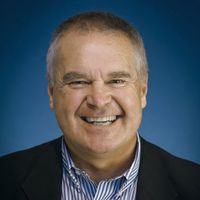
Christopher Willcock
conductor
Christopher Willcock (born 1947) is an Australian Jesuit priest and composer of liturgical and concert music. His sacred writing ranges from congregational psalm settings to large-scale choral cycles.
Digital booklet
Digital booklet Notes, texts and credits — read online or download the PDF Download the PDFPerformers
- Graham Cox · organ
- Robyn Hezky · flute
- Phil Gardner · guitar
- Therese Quinn · soprano · tracks 10 and 15
- Joan Marshall · alto · tracks 2 and 21
- Geoff Lock · tenor · tracks 4, 6, 11, 14, 16 and 19
- Michael Wood · baritone · tracks 3, 17, 20 and 22
- David Rankin · baritone · tracks 1, 5, 8, 14 and 22
- Christopher Willcock · conductor
- The Julian Singers · choir
Technical credits
-
Venue
Move Records Studio
-
Credit
Lynne Muir
Details
- List price
- $20.00 AUD
- Total playing time
- 58 minutes 24 seconds
- Release date
- 1977
- Category
- Choral
- Musical work copyright
- © 1977 Christopher Willcock
- Sound recording copyright
- ℗ 1977 Move Records
- Catalogue
- MD 3018
- EAN
- 9314574301823
More to explore
Move 50
Twenty-four Australian composers mark Move Records’ fiftieth year with short new works gathered on this commemorative disc.
15 Favourite Christmas Carols
Christmas carols without choir or singers, heard in the acoustics of St Patrick’s Cathedral, Melbourne. Cathedral organ, brass ensemble and tubular bells carry fifteen familiar carols in special arrangements by Christopher Willcock.
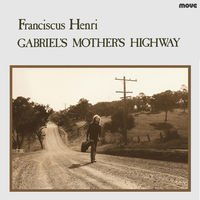
Gabriel's Mother's Highway
Franciscus Henri presents songs by Sydney Carter, Elton John and Arlo Guthrie alongside three of his own. Produced by Brian Cadd, the album settles into a gentle folk-rock style with clear acoustic colour.