Listen & tracks
2 of 3 tracks have a preview · 3 works · 56:39
-
1 Feral Robert Lloyd 17:07
-
2 Bold New Buildings Robert Lloyd 21:04
-
3 Nullarbor Robert Lloyd 18:28
Feral (1985), written for the Ohio Ballet and Molissa Fenley, sets the Lloyd trademark of keyboards against percussion in layered cyclic patterns.
Bold New Buildings (1986), for four keyboard players, was commissioned by the Adelaide Festival Centre and later taken up by Australian Dance Theatre. Its electric ensemble yields a brilliant shimmer of interlocking bell-like figures.
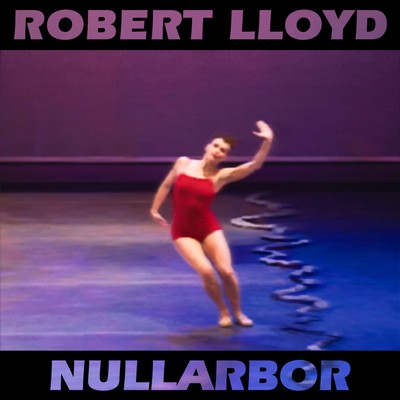
Nullarbor (1987), scored for octabans and timbales, draws on the harsh, tree-less plateau of southern Australia. Continuous interlocking drum patterns evoke both desert space and the precision demanded of the dancer.
In the artist’s words
The three dance scores on this disc share a common thread with all my music – a patterning principle. This began as a childhood fascination with the patterns of sand dunes, tree branches and, later, moon cycles. More recently this approach has manifested in observing the body’s rhythms while walking (moving feet on the pavement), breathing and heart-beat (pulsing).
Combining different length rhythmic and melodic material, learnt from my early experiments with tape recorders and studies in Pitjantjatjara and Balinese music, led me to explore musical interdependence as a compositional tool. Thus interdependent voices interlock with other lines and merge with yet others at common downbeat sections to form implied narrative structures. Listening to this process, one’s attention can move from a single line to many lines, from foreground to background, to create one’s own musical and spatial experience.
For these works I have used the clear ringing sound of metallophones, keyboards, octabans (small, tuned high pitched drums) and percussion instruments. The polyrhythmic nature of these compositions has inspired several dance works.
Feral
The Ohio Ballet commissioned Feral in 1986, with choreography by Molissa Fenley, and had its world premiere in Cleveland in the same year.
My early works were for mallet keyboards and tuned drums only and Feral reflects an impulse to further develop this work. I chose digital keyboards for toy piano, gong and bell sounds, and synthesisers for long-held bass lines. This augmenting of pitch and timbre made it possible to place fast-moving rhythmic cycles in the high drums, against medium speed cycles in the metallophones against slower speed cycles in the low keyboards. These cycling patterns change places with each other in the unfolding of the composition.
The work is divided into nine sections, comprising units of five-beat cycles against seven-beat cycles, interlocking drumming, simultaneous rhythms and an interlocking keyboard with cyclic melody in the last section.
Bold New Buildings
My first work for four keyboards, Bold New Buildings was commissioned by the Adelaide Festival Centre in 1986. It was subsequently choreographed by Nanette Hassall for Australian Dance Theatre (with design by Mary Moore) for seasons in 1987 and 1992. Bold New Buildings is scored for four keyboard players, playing six digital keyboards programmed with toy piano, tubular bells and orchestral bass sounds.
At the time I was inspired by the shapes and structures of contemporary architecture and decided to divide the composition into sections, each with its own rhythmic structure.
Nullarbor
dedicated to Dr Catherine Ellis
Nullarbor, Latin meaning ‘tree-less’, is the name of the vast desert covering a large part of south western Australia. This is a harsh environment and the traversing of it was once considered a rite of passage – three days by car.
Nullarbor was inspired by my childhood in Adelaide, a city placed on the outer edge of the central Australian desert where Aboriginal people lived. Part of my later education was to learn songs and dance from these people. The instrumentation of octabans and timbales played with sticks evokes the harsh, brittle atmosphere of the desert and recalls the sounds of dry twigs snapping underfoot when walking in the bush.
Nullarbor was written in Sydney in 1987 and became the score for Molissa Fenley’s 1993 dance work of the same name. Even though different sections can be heard, the piece is one continuous creation. The composition is based on fast interlocking drum patterns played by three percussionists.
Nullarbor is a dance work inspired by the vastness of the Nullarbor limestone plateau which runs along the southern edge of Australia. The dance embodies our feelings toward the raw and unrefined environment, the monotone of the land and its sense of isolation. The dance is staged laterally against a sculpture created by Richard Long, a line of stones that meanders from the top of the stage to the bottom in a long serpentine line. The sculpture acts as a barrier, a coastline, a place of transition, between one state of mind and another. The dance is choreographed in a series of dance lines that extends the idea of the Aboriginal songlines into a dance form. Each danceline travels the dancer toward the sculptural barrier/coastline and back out again with a different approach and departure each time. As the chanting of the song tells an Aboriginal where s/he is in the terrain so the execution of the danceline demarcates where the dancer is in space and in coherence with the music.
The musical score, having few landmarks itself, demands concentration and rhythmic precision from the dancer to keep her place both in space and in time. The memorisation of these dance lines then becomes the key to the unfolding of the dance.
Reviews
Brilliantly played
Shimmering, driving score
Robert Lloyd, has written an exciting percussion score that ranges from the very loud and textured to the finely modulated
With this release a wider audience will now discover the rhythmic poetry of Robert Lloyd’s music.
Artists
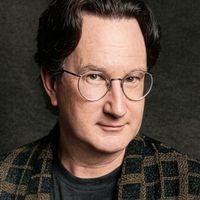
Robert Lloyd
keyboard, percussion, octabans
Robert Lloyd is a composer and performer on keyboards and percussion, known for kinetic, brightly coloured dance scores. His music draws its energy from interlocking rhythms shaped by American minimalism and Balinese gamelan.
Digital booklet
Digital booklet Notes, texts and credits — read online or download the PDF Download the PDFPerformers
- Robert Lloyd · keyboard, percussion, octabans
- Leigh Giles · vibraphone, percussion, octabans · all except track 2
- Natasha Moszenin · keyboards · all except track 3
- Peter Overall · keyboards · track 1
- Stephen Strahle · keyboards · track 2
- Brendan Fitzgerald · keyboards · track 2
- David Montgomery · timbales · track 3
Technical credits
-
Recording Engineer
Bernie Phillips
Phil Punch
Stuart Kirby
-
Thanks to
RealTime
Details
- List price
- $25.00 AUD
- Total playing time
- 56 minutes 39 seconds
- Release date
- 1995
- Categories
- Australian, Classical, Keyboard
- Musical work copyright
- © 1995 Move Records
- Sound recording copyright
- ℗ 1995 Move Records
- Catalogue
- MD 3171
- EAN
- 9314574317121
More to explore
Bridges, Vol. 1
Chamber works by Australian, Korean and Romanian composers, recorded by Monash University staff and guests, mapping cultural bridges across Eastern Europe, North Asia and Australasia after decades of relative isolation.
Dreamtracks
Music for clarinet by Australian composers. Celebrating Australia’s landscape, spirit and composers, Dreamtracks gathers some of the finest contemporary Australian writing for solo clarinet, clarinet and piano, and unusual chamber combinations.