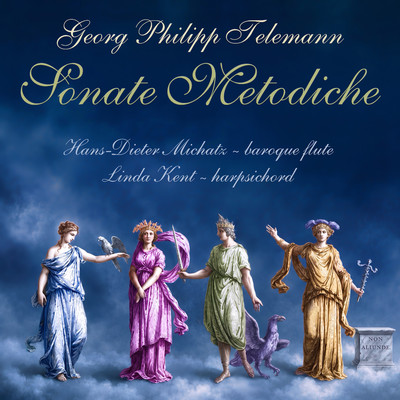
Listen & tracks
2 of 24 tracks have a preview · 6 works · 62:58
-
Sonata 1 in G MinorGeorg Philipp Telemann 4 movements8:20
- 1 Adagio 2:09
- 2 Vivace 2:12
- 3 Grave 2:00
- 4 Allegro 1:59
-
Sonata 2 in A MajorGeorg Philipp Telemann 4 movements11:26
- 5 Adagio 3:20
- 6 Vivace 2:47
- 7 Cortesemente 2:17
- 8 Vivace 3:02
-
Sonata 3 in E MinorGeorg Philipp Telemann 4 movements10:02
- 9 Grave 2:52
- 10 Vivace 2:33
- 11 Cunando 1:52
- 12 Vivace 2:45
-
Sonata 4 in D MajorGeorg Philipp Telemann 4 movements11:45
- 13 Andante 3:24
- 14 Presto 3:11
- 15 Con tenerezza 2:25
- 16 Allegro 2:45
-
Sonata 5 in A MinorGeorg Philipp Telemann 4 movements10:23
- 17 Largo 2:45
- 18 Allegro 3:53
- 19 Ondeggiando 1:53
- 20 Allegro 1:52
-
Sonata 6 in G MajorGeorg Philipp Telemann 4 movements11:02
- 21 Cantabile 2:37
- 22 Vivace 3:18
- 23 Mesto 2:54
- 24 Spirituoso 2:13
When the Sonate Metodiche were published in 1728, Georg Philipp Telemann was at the peak of his career. Securely employed by the city of Hamburg as Cantor and Director Musices, he had left behind the limits of service to a single sovereign and was writing for a more open, ‘democratic’ musical public.
Publications of his music were often followed by a second volume, a sign of their popularity with amateurs and professionals alike. The Methodical Sonatas themselves gained a companion set in 1732.
It remains surprising that these works have not entered the mainstream repertoire, and that recordings are still relatively few. They are large-scale pieces, extremely varied, and full of some of the most inspired writing of the period. The title can sound forbidding today, when ‘method’ too readily suggests something arid or uninspired. Nothing could be further from the truth. It points both to the care taken over the two sets of six sonatas and to the models of high Baroque ornamentation that Telemann supplies for each slow first movement.
The recording venue was quite live, closer to a larger Baroque music room than a dry studio. Flute and harpsichord therefore sound as equal partners rather than solo and accompaniment, in keeping with a deliberate choice to use as little technical manipulation as possible.
Reviews
Editor's Choice
One of the most delightful CDs I have come across this year.
Now if you really want to outdo your friends with a stunningly unique CD collection, then you need to get a copy of this.
These elegant sonatas showcase some of the most beautiful examples of Georg Philipp Telemann's artistry, and are exceptionally realised by Michatz and Kent.
His tone is warm and compelling throughout and he is supported admirably by Linda Kent
Artists
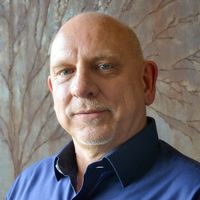
Hans-Dieter Michatz
baroque flute
Playing modern and baroque flute as well as recorder, Hans-Dieter Michatz has performed and recorded with The Australian Opera and Ballet Orchestra, The Sydney Chamber Orchestra, Sydney Philharmonia Choirs, the ABC, the Australian Brandenburg Orchestra, as well as in Musica Viva Education Project.
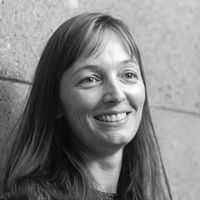
Linda Kent
harpsichord
Linda Kent has been a core member of the Elysium Ensemble and has performed with artists including Walter van Hauwe, Han Tol, Eva Legène and Stanley Ritchie. Her playing has been critically acclaimed for its sensitivity, insight and sense of style.
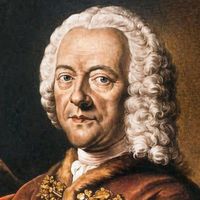
Georg Philipp Telemann
composer
Georg Philipp Telemann (1681–1767) was a German Baroque composer and multi-instrumentalist. Almost completely self-taught, he became a composer against his family's wishes and ranked among the leading German musicians of his age.
Digital booklet
Digital booklet Notes, texts and credits — read online or download the PDF Download the PDFPerformers
- Hans-Dieter Michatz · baroque flute
- Linda Kent · harpsichord
Technical credits
-
Recording Engineer
Vaughan McAlley
-
Editing Engineer
Vaughan McAlley
-
Venue
Move Records Studio
-
Design
Martin Wright
Details
- List price
- $25.00 AUD
- Total playing time
- 62 minutes 58 seconds
- Release date
- 1997
- Categories
- Baroque, Classical
- Genre
- Baroque
- Musical work copyright
- © 1997 Move Records
- Sound recording copyright
- ℗ 1997 Move Records
- Catalogue
- MD 3196
- EAN
- 9314574319620
More to explore
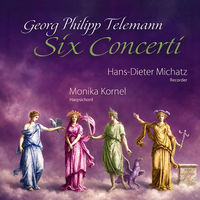
Six Concerti
Hans-Dieter Michatz and Monika Kornel present Georg Philipp Telemann’s Six Concerti from the 1734 Six concerts et six suites, scored here for voice flute, tenor recorder and harpsichord.
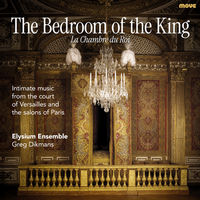
The Bedroom of the King (La Chambre du Roi)
Elysium Ensemble bring French chamber music of the early 18th century into the private apartments of Louis XIV: Couperin and Hotteterre in the douceur of Versailles and the Paris salons.
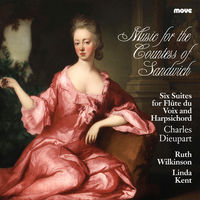
Music for the Countess of Sandwich
First Australian release of Charles Dieupart’s complete suites for flûte du voix and harpsichord (1701), including two suites later copied by J. S. Bach.
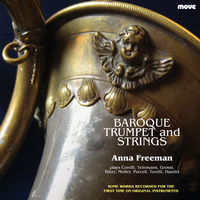
Baroque Trumpet and Strings
Sonatas and suites by Corelli, Torelli, Telemann, Purcell and Handel sit beside rarely heard works by Molter, Grossi and Biber, several recorded here for the first time on original instruments.
Exquisite Harmonies
Exquisite Harmonies features works for viola da gamba and harpsichord, and several harpsichord solos, largely from the French Baroque. The exceptions are Telemann, Abel and Australian composer Troy Russell. A nice treat is an improvised harpsichord fantasia in the style of Telemann.
Duos
An extraordinary acoustic frames extraordinary music: Ruth Wilkinson (recorders and bass viola da gamba) and Cynthia O’Brien (baroque violin), the duo known as Capella Corelli, in late Baroque two-part repertoire.