
Listen & tracks
1 of 23 tracks have a preview · 21 works · 71:39
-
1 Gospel Fanfare Christopher Dearnley 1:11
-
2 Mr Purcell’s Procession June Nixon 2:47
-
3 Misty Erroll Garner 3:09
-
4 Fourth Organ Symphony Charles-Marie Widor Andante cantabile 5:04
-
5 Was Gott tut, das ist wohlgetan Johann Pachelbel Chorale and Partitas 1–4, 7 and 8 7:43
-
6 Elevazione, Cantabile affettuoso Davide da Bergamo 4:27
-
7 Air for the Organ Samuel Wesley 2:16
-
8 Fantasy Samuel Wesley 2:24
-
9 Magnificat (Fugato), BWV 733 Johann Sebastian Bach 4:58
-
10 Sonata No. 4, Op. 65 Felix Mendelssohn Andante religioso 2:26
-
Sonata No. 6, Op. 65Felix Mendelssohn 2 movements3:46
- 11 Chorale 1:00
- 12 Finale 2:46
-
13 Es ist ein Ros’ entsprungen, Op. 122, No. 8 Johannes Brahms Chorale Prelude 3:08
-
14 Cantilène Théodore-César Salomé 2:51
-
15 Grand Chœur Théodore-César Salomé 5:36
-
16 Andante in A flat Johann Nepomuk Hummel 3:00
-
17 “Little” Prelude and Fugue in D minor, BWV 554 Johann Sebastian Bach 3:28
-
18 Canzoncina a Maria vergine, Op. 113, No. 3 Marco Enrico Bossi 2:48
-
19 Chorale Improvisation on "Dearest Jesus at Thy Word" Paul Manz 2:04
-
20 Noël “Joseph est bien Marié” Claude-Bénigne Balbastre 4:39
-
21 Improvisation in A minor John Stiller (March) 1:39
-
22 Chaconne in G minor Louis Couperin 2:15
A tour of the Barossa Valley usually means vineyards and cellars. Move offers another kind of tour. Together with Historic Organs of the Barossa Valley, Vol. 1, this disc records the region’s historic Lutheran organs.
Christopher Dearnley, one of the world’s leading organists (St Paul’s Cathedral, London, 1968–1990), and John Stiller give valuable and unique readings of popular and rare repertoire on these instruments.
Volume 2 includes Bach, Mendelssohn, Wesley, Pachelbel and Hummel, with distinctive pieces by less familiar composers. Dearnley contributes a fanfare written for St Paul’s and an unexpected arrangement of the jazz standard Misty.
The booklets outline the history of the organs, their builders and the music.
Reviews
beautifully played … a great introduction to these organs
… recording quality is what we have come to expect from Move – outstanding … what a splendid addition to any CD collection!
This disc explores more of the fascinating organs in the churches of the Barossa … fine playing … much to delight the listener.
Artists

John Stiller
organ
John Stiller (born 1945) is an Australian organist and church musician who documented historic organs across Australia and New Zealand and has long been director of music at St Petri Lutheran Church, Nuriootpa.

Christopher Dearnley
organ
The late Christopher Dearnley established a worldwide reputation as an outstanding organist and leading church musician through many recordings and solo performances across a distinguished career.
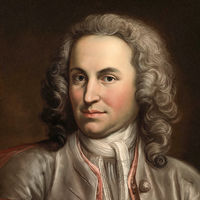
Johann Sebastian Bach
composer
Johann Sebastian Bach (1685–1750) was a German composer and organist of the late Baroque. His sacred and secular music for choir, orchestra, organ and solo instruments remains among the foundations of the Western concert and church repertory.
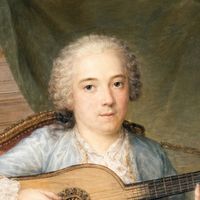
Claude-Bénigne Balbastre
composer
Claude Balbastre wrote flamboyant French harpsichord character pieces and Noëls that thrived in Parisian salons and on the organ: portrait pieces full of colour, dance rhythm and courtly swagger, still vivid when the keys rattle and the stops open.

Marco Enrico Bossi
composer
Marco Enrico Bossi (1861–1925) was an Italian organist, composer, improviser and teacher, best known for his organ music and for the lasting standards he set for organ study in Italy.
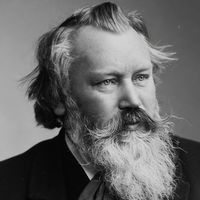
Johannes Brahms
composer
Johannes Brahms (1833–1897) was a German composer and pianist of the Romantic period. His music for piano, chamber ensemble, orchestra, and voice remains central to the concert repertoire.

Louis Couperin
composer
Louis Couperin (c. 1626–1661) was a French Baroque composer and keyboard player whose brief career shaped the French organ and harpsichord schools. Some two hundred works survive only in manuscript.
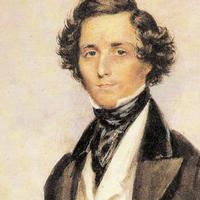
Felix Mendelssohn
composer
Jakob Ludwig Felix Mendelssohn Bartholdy (1809–1847) was a German composer, pianist, organist and conductor of the early Romantic period. His works include symphonies, concertos, oratorios, piano music and chamber music.

June Nixon
composer
June Nixon is one of Australia's best-known organists, choir trainers and composers. She obtained a Diploma of Music (piano) and Bachelor of Music (organ) from Melbourne University.
Johann Pachelbel
composer
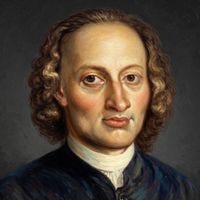
Johann Pachelbel (1653–1706) was a German Baroque composer, organist and teacher who brought the south German organ tradition to its peak. His chorale preludes, fugues and keyboard variations place him among the central figures of the middle Baroque.
Charles-Marie Widor
composer
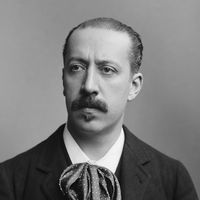
Charles-Marie Widor wrote ten organ symphonies that treat the instrument as a full orchestra, from the blazing Toccata of the Fifth to the plainsong-haunted Gothique and Romane. His Mass for two choirs and two organs is rarer ceremonial splendour.

Davide da Bergamo
composer
Erroll Garner
composer
Erroll Garner's ballad Misty has become one of the most durable jazz standards, its long singing line and easy harmonic lift still inviting singers and instrumentalists. As a pianist he was known for swing, whimsical introductions and a right hand that floated just behind the beat.
Johann Nepomuk Hummel
composer
Paul Manz
composer
Paul Manz wrote neo-Baroque chorale preludes, partitas and hymn improvisations for the organ, music shaped for congregational worship. His Advent motet E'en So, Lord Jesus, Quickly Come remains his best-known choral work.
Théodore-César Salomé
composer
Samuel Wesley
composer
Samuel Wesley wrote organ music that still sits naturally on historic instruments: an Air for the Organ, a Fantasy, and a Duet for four hands that holds its place beside Handel and Mozart in recital programmes.
Digital booklet
Digital booklet Notes, texts and credits — read online or download the PDF Download the PDFPerformers
- Christopher Dearnley · organ · tracks 1–4, 6–9, 14–16
- John Stiller · organ · tracks 5, 10–13, 17–22
Technical credits
-
Producer
Martin Wright
-
Recording Engineer
Martin Wright
Vaughan McAlley
-
Editing Engineer
Vaughan McAlley
Details
- List price
- $25.00 AUD
- Total playing time
- 71 minutes 39 seconds
- Release date
- 1996
- Categories
- Baroque, Classical, Organ
- Genres
- Organ, Baroque, Romantic & Impressionist
- Musical work copyright
- © 1996 Move Records
- Sound recording copyright
- ℗ 1996 Move Records
- Catalogue
- MD 3166
- EAN
- 9314574316629
More to explore
Historic Organs of the Barossa Valley, Vol. 1
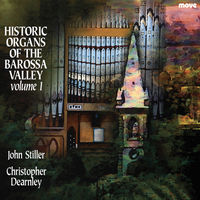
Christopher Dearnley and John Stiller give striking performances on six historic church organs of South Australia’s Barossa Valley. A 16-page booklet traces the instruments, their builders and the music.
Life and Love
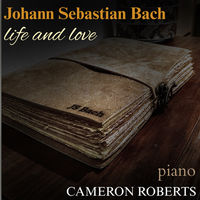
Cameron Roberts plays Johann Sebastian Bach at the piano, joining original keyboard works with his own arrangements and those of Busoni and Lipatti.
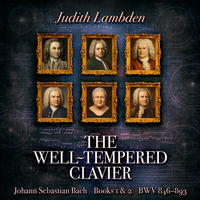
The Well-Tempered Clavier: Books 1 and 2
Distinguished Australian pianist and harpsichordist Judith Lambden presents J.S. Bach’s complete Well-Tempered Clavier, Books I and II (BWV 846–893), recorded across nine years as a five-CD set.
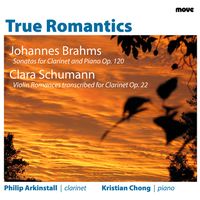
True Romantics
In True Romantics, clarinettist Philip Arkinstall and pianist Kristian Chong bring lyrical warmth to Brahms’s Clarinet Sonatas, Op. 120, and Clara Schumann’s Three Romances, Op. 22, here in Roger Young’s clarinet transcription.
Bach to China with Yu
Volume 3 of Julian Yu’s clarinet music, with Robert Schubert and ensemble in arrangements that join Chinese folk melody to Western classical craft.
Crossing Paths
Ensemble Liaison and the Tony Gould Trio take turns across the programme: each piece is heard first in a scored reading, then in an improvised jazz response that opens the same melodic and harmonic material to fresh colour.