Maurice Ravel
Many consider Maurice Ravel a major composer for the piano as well as a genius of orchestration. It remains a surprise how few works make up his total output for the instrument: all his piano compositions can be performed in under two and a half hours.
What is equally remarkable is the high quality of each of these compositions. There is no single work that could be described as less than successful, even among the early pieces, which bear many traces of Chabrier, Fauré and Satie. In the way he uses these influences rather than submitting to them, Ravel is immediately himself.
Art, for Ravel, was a fabulous construct which portrayed the spirit in a number of disguises. He was adept at assuming qualities he did not possess. His Spanish music – the Alborada del gracioso, the opera L’heure espagnole, the infamous Boléro (MD 3180) – is more Spanish than that of most Spanish composers. His assumption of classical disguise – Le Tombeau de Couperin, the Sonatine – shows a fascination with eighteenth-century musical forms. The tension between those forms and his idiosyncratic harmonic language was a source of energy and inspiration for him.
Above all, he was most at home in the fields of magic and mythology – Daphnis et Chloé, the Ma mère l’oye Suite (MD 3017) and Gaspard de la nuit (MD 3235). He had a great love of artifice and was quite pleased when his compositional method was compared to that of a jeweller. Perhaps his sensibility could express itself fully only in the world of the unreal. Yet he was an archetypal twentieth-century artist in the way he sought objective musical symbols, creating a world with its own laws and logic.
Maurice Ravel is featured on the following titles
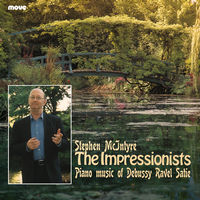
The Impressionists
In his debut CD for Move Records, Stephen McIntyre offers a programme of impressionist piano favourites by Debussy, Ravel and Satie, including Images, Children's Corner, Gaspard de la Nuit and the Gnossiennes.
Compositions by Maurice Ravel also appear on
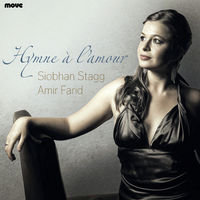
Hymne à l’amour
Hymne à l’amour is an exquisite collection of art songs from soprano Siobhán Stagg and pianist Amir Farid. The programme traces the frailty of the human condition through flirtation, deep love and heartbreaking truths.
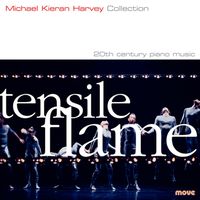
Tensile Flame
Michael Kieran Harvey’s two-disc piano programme pairs Liszt’s B minor Sonata and its early twentieth-century echoes in Skryabin, Rachmaninov and Ravel with a second disc of Stravinsky, Carter, Graham Hair and Carl Vine’s 1990 Piano Sonata.
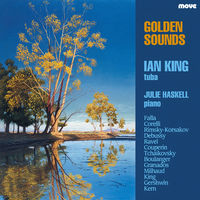
Golden Sounds
Ian King returns to the studio to enthral us once more with the golden sounds of his tuba, in arrangements of Falla, Corelli, Rimsky-Korsakov, Debussy, Ravel, Gershwin and more.

Poème: Music for the Romantic Violin
The internationally renowned violinist Miwako Abe and the pianist David McSkimming play works by French composers active in Paris at the end of the nineteenth century, sometimes inspiring each other and occasionally forming rivalries.
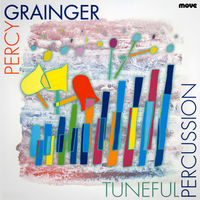
Tuneful Percussion
One of International Record Review’s “Best Discs of 2000”, and nominated for Best Classical CD at the 2001 ARIA Awards. Woof! play Grainger’s complete music for tuneful percussion on authentic instruments, including his own staff bells and steel marimba, with many works previously unrecorded.
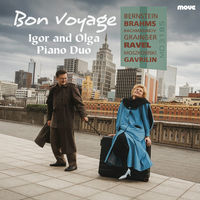
Bon Voyage!
Igor and Olga Piano Duo's debut album charts a piano-four-hands itinerary from Bernstein's America through Brahms, Rachmaninov, Gavrilin, Ravel and Moszkowski to Grainger's Faeroese dance.
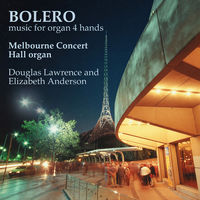
Bolero: Music for Organ 4 Hands
Douglas Lawrence and Elizabeth Anderson play organ four hands on the Melbourne Concert Hall’s French-style Casavant. Bolero gathers favourites and rarities arranged or written for two players at one console.
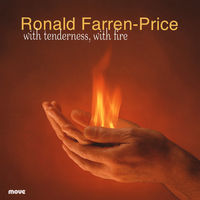
With Tenderness, With Fire
Ronald Farren-Price encores his hugely popular Reflections with this solo recital, ranging from the sublime beauty of a Beethoven Adagio to the thundering splendour of Prokofiev’s Toccata.

Images
Prudence Davis, Jeffrey Crellin and Peter Lynch in French salon and Impressionist chamber music for flute, oboe and guitar: Fauré and Ravel pavanes, Giuliani’s Serenade, Coste miniatures, Ponce’s Sonata III, Debussy’s Syrinx and Rêverie, and Duarte folk settings.
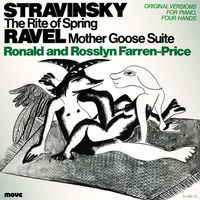
Stravinsky: The Rite of Spring (piano four hands)
Stravinsky's The Rite of Spring was first composed in 1913 for piano four hands, eight years before the orchestral score was published. Ronald Farren-Price and Rosslyn Farren-Price give an intense, highly rhythmic performance of the Rite, set against Ravel's melodic Mother Goose Suite, also originally written for piano four hands.

Summer Waves
Len Vorster plays a personal recital of short piano works by Gershwin, de Falla, Lord Berners, Berkeley, Field, Grieg, Debussy, Poulenc and Ravel, drawn toward summer light, dance rhythm and nocturne stillness.

Kevin Kanisius Suherman presents Schimmel Konzert 219
Kevin Kanisius Suherman presents the new Schimmel Konzert 219 concert grand in a recital that sets Romantic and early twentieth-century piano works beside his own arrangements of Indonesian song.
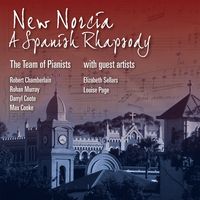
New Norcia: A Spanish Rhapsody
The Team of Pianists present Spanish and Spanish-tinged piano music as a tribute to New Norcia’s Benedictine heritage, from Infante and de Falla to Ravel’s Rapsodie Espagnole.

Burns and Beyond
This recording, Burns and Beyond, gathers art songs for voice and modern piano drawn from Robert Burns, and includes Percy Grainger’s Three Scotch Folksongs, built on ancient Scottish tunes.