Richard Meale
Richard Meale (1932–2009) was a leading Australian composer of instrumental works and operas, and an influential teacher. Early scores introduced international avant-garde methods to Australian audiences; later music turned toward a frank lyric tonality.
In 1960 he was awarded a Ford Foundation Grant for studies in non-Western music at the University of California, Los Angeles, concentrating on Japanese court music and Javanese and Balinese gamelan. Early scores such as the Sonata for flute and piano (1960) brought the methods of the international avant-garde into Australian musical life; Coruscations (1971) stands as a culmination of that phase. The Sonata also won him the Ford Foundation Grant and was heard at the 1963 World ISCM Festival in Amsterdam.
After returning to Australia he joined the Music Department of the Australian Broadcasting Corporation, and for seven years made a strong contribution to national radio with special programmes of Asian and contemporary music. As pianist, lecturer, broadcaster, conductor and composer he was central to the spread of avant-garde music here, giving first local performances of works by Boulez, Bussotti, Castiglioni and Messiaen, and conducting the Australian premiere of Schoenberg’s Pierrot lunaire with Marilyn Richardson. Interest in his own music grew quickly; in 1965 Dean Dixon performed Homage to Garcia Lorca in Europe.
With Images (Nagauta) (1966), Nocturnes (1967), Very High Kings (1968), …Clouds Now and Then, Soon it will Die (1969), Interiors/Exteriors (1970), Coruscations (1971), Incredible Floridas (1971) for Peter Maxwell Davies and The Fires of London, Evocations (1973) for Paul Sacher and the Collegium Musicum of Zurich, and his String Quartet (1975), he gained international recognition at festivals including ISCM World Music Days, the Warsaw Autumn and the Paris Rostrum, and was frequently broadcast on European radio. From 1969 to 1988 he was Reader in Composition at the University of Adelaide. In 2000 he was conferred Doctor of Letters honoris causa by the University of New England.
After Viridian (1979) and String Quartet No. 2 (1980) his style turned more exclusively lyrical and embraced a frank tonality. That course continued into Voss, his first opera, premiered in Adelaide in 1986. In 1989 he was awarded an Australian Creative Fellowship. His second opera, Mer de Glace, again with libretto by David Malouf, premiered in Sydney in October 1991. His first Symphony was first heard at the Adelaide Festival in March 1994. The Wihan Quartet’s Australian debut tour for Musica Viva included the premiere of String Quartet No. 3, commissioned by Kenneth Tribe for Musica Viva’s 50th birthday in 1995.
Melisande for solo flute was premiered in 1996. In 1998 the Lights Ensemble performed Lumen for the Centenary of the Adelaide Conservatorium. Palimpsest, commissioned by the Griffith Ensemble, was premiered by the Lights Ensemble at the Barossa Music Festival in 1999. In 2002 Three Miro Pieces was performed by the Sydney Symphony Orchestra.
Richard Meale died in Sydney, aged 77, on 23 November 2009.
Richard Meale is featured on the following titles
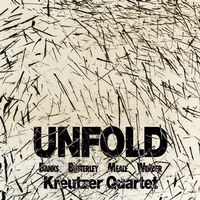
Unfold
The Kreutzer Quartet, long regarded as one of Europe’s most dynamic and inventive ensembles, turns here to four Australian string quartets from the 1960s and 1970s.
Compositions by Richard Meale also appear on
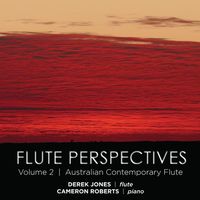
Flute Perspectives, Vol. 2
Derek Jones (flute) and Cameron Roberts (piano) present a programme of Australian works by Anne Boyd, Stuart Greenbaum, Rohan Phillips, Mark Pollard and Richard Meale.
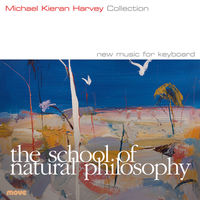
The School of Natural Philosophy
Michael Kieran Harvey plays new music for keyboard by Graham Hair, Douglas Knehans, Martin Friedel, Richard Meale and Hilda Paredes, linking science, landscape and modernist piano writing.