Listen & tracks
4 of 7 tracks have a preview · 4 works · 86:06
-
String QuartetDon Banks 3 movements35:35
- 1 String Quartet 19:27
- 2 Movement 1 10:07
- 3 Movement 2 6:01
-
String Quartet No. 1Richard Meale 2 movements27:39
- 4 Movement 1: Variations – far away 14:29
- 5 Movement 2 13:10
-
6 String Quartett No. 8 – Consort Music Felix Werder 9:20
-
7 Sequence for solo cello Don Banks (Bonus track) 13:32
They are the dedicatees of numerous works, and over many years have forged creative partnerships with composers including Sir Michael Tippett, David Matthews, Michael Finnissy, Judith Weir and Hafliði Hallgrímsson.
On this recording they present works by Don Banks, Nigel Butterley, Richard Meale (String Quartet No. 1) and Felix Werder (String Quartett No. 8).
Members of the Kreutzer Quartet are Peter Sheppard Skærved and Mihailo Trandafilovski, violins; Morgan Goff, viola; and Neil Heyde, cello.
Banks’ Sequence for solo cello was commissioned by the 66 Group in Cardiff and first performed by George Isaac in 1967. An opening lento sets out the principal motifs; an allegro develops them, with ad lib sections that set virtuosic passagework against slow plainchant. Between each ‘Canto’ Banks explores a single technique – sul ponticello, pizzicato, sul tasto, col legno – before a short coda gathers the earlier ideas.
Reviews
The versatile Kreutzer Quartet takes a whirl in the time machine and journeys to Australia for four string quartets composed between 1964 and ‘75. Meale and Werder receive first performances. These Banks and Butterley quartets haven’t been committed to disc since the 1980s. What looks to be a historical outing actually sounds as fresh and compelling as anything written last week. Michael Hooper’s fine notes explain the endeavor.
Banks’ 20-minute single-movement quartet reflects studies with Dallapiccola, Babbitt and Gerhard, a strongly expressive atonal sensibility that his Australian colleagues never fully appreciated. Butterley would write four quartets. These two movements take inspiration from a poem by Henry Vaughan (1621-1695), The Revival, whose first word provides the disc’s title. The music is precisely notated, but can be arrhythmic and intentionally lack vertical alignment.
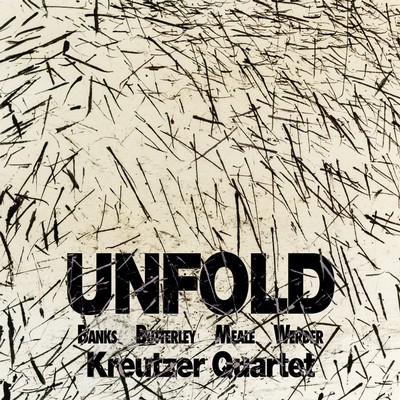
Meale and Werder’s quartets are played from full score (the cover art is Meale’s blotting paper). Meale’s No. 1 is in two parts. For the second part, the players scatter to new positions turning their backs to the audience, projecting icy indifference. The contrast in atmosphere is enormous. Werder intentionally doubles the final letter in “quartett,” yet the work doesn’t feel Germanic. Tempo markings are literally cut out of Walton’s Cello Concerto and pasted here. Born in Berlin, eventually settling in Australia, Werder remained an outsider.
Artists
Kreutzer Quartet
ensemble
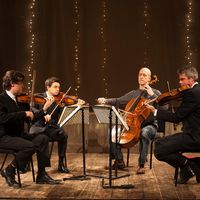
The Kreutzer Quartet has forged an enviable reputation as one of Europe’s most dynamic and innovative string quartets. They are the dedicatees of numerous works, and over many years have forged creative partnerships with composers including Sir Michael Tippett, David Matthews, Michael Finnissy, Judith Weir and Hafliði Hallgrímsson.
Don Banks
composer
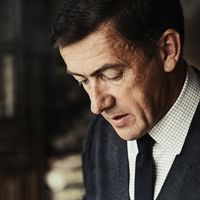
Don Banks (1923–1980) was an Australian composer of concert, jazz and commercial music. Serial craft, electronics and a lifelong pull toward jazz shaped chamber works, concertos and scores central to mid-century Australian modernism.
Nigel Butterley
composer
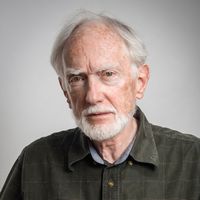
Nigel Butterley (1935–2022) was an Australian composer and pianist. His catalogue ranges from radiophonic and choral scores to chamber, vocal and orchestral works, and as a pianist he was closely identified with contemporary music and the prepared piano.
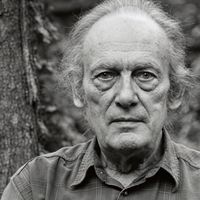
Richard Meale
composer
Richard Meale (1932–2009) was a leading Australian composer of instrumental works and operas, and an influential teacher. Early scores introduced international avant-garde methods to Australian audiences; later music turned toward a frank lyric tonality.
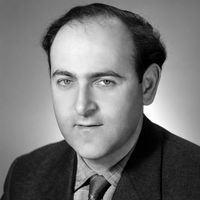
Felix Werder
composer
Felix Werder (1922–2012) was a German-born Australian composer who stood at the forefront of the musical avant-garde in this country. His early twelve-tone writing later opened into a freer, collage-like style that often makes virtuosic demands on its performers.
Digital booklet
Digital booklet Notes, texts and credits — read online or download the PDF Download the PDFPerformers
- Kreutzer Quartet · ensemble · tracks 1–6
- Peter Sheppard Skærved · violin · tracks 1–6
- Mihailo Trandafilovski · violin · tracks 1–6
- Morgan Goff · viola · tracks 1–6
- Neil Heyde · cello
Technical credits
-
Producer
Michael Hooper
Neil Heyde
Peter Sheppard Skærved
-
Recording Engineer
Jonathan Haskell
-
Editing Engineer
Jonathan Haskell
-
Venue
Aldbury Parish Church, Hertfordshire
Details
- List price
- $25.00 AUD
- Total playing time
- 86 minutes 6 seconds
- Release date
- Jul 2014
- Categories
- Australian, Classical
- Genre
- Modernist Classical
- Musical work copyright
- © 2014 Move Records
- Sound recording copyright
- ℗ 2014 Move Records
- Catalogue
- MD 3371
- EAN
- 9314574337129
More to explore
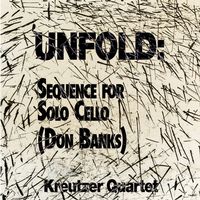
Unfold: Sequence for solo cello
This thirteen-minute work by Don Banks was recorded alongside the Kreutzer Quartet’s Unfold album. Time limits kept the track off that CD, so it appears here as a separate release.
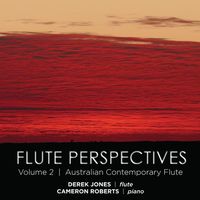
Flute Perspectives, Vol. 2
Derek Jones (flute) and Cameron Roberts (piano) present a programme of Australian works by Anne Boyd, Stuart Greenbaum, Rohan Phillips, Mark Pollard and Richard Meale.
The School of Natural Philosophy
Michael Kieran Harvey plays new music for keyboard by Graham Hair, Douglas Knehans, Martin Friedel, Richard Meale and Hilda Paredes, linking science, landscape and modernist piano writing.
Reverberations
Originally issued on two LPs and even quadraphonic tape in the early 1970s, this double CD is a limited re-issue of Reverberations One and Two: contemporary works for organ, brass, voices, didjeridu and electronics.
Contemporary Australian Piano
A valuable collection of Australian piano works by some of the country’s most respected and inventive composers, performed by pianist-composer Larry Sitsky.
Jewel
Australian gems for violin and piano. Jewel gathers works by some of Australia’s finest composers, among them Peter Sculthorpe, Margaret Sutherland, Don Banks and Vincent Plush.