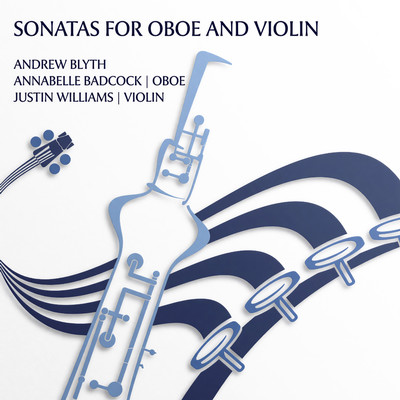
Listen & tracks
4 works · 53:27
-
Oboe SonataAndrew Blyth 3 movements19:00
- 1 i. Allegro 6:48
- 2 ii. Lento 6:44
- 3 iii. Allegro 5:28
-
4 Aria Andrew Blyth 4:15
-
5 Steelstrings Andrew Blyth 6:00
-
Violin SonataAndrew Blyth 3 movements24:12
- 6 i. Moderato 8:20
- 7 ii. Andante 7:58
- 8 iii. Allegro molto 7:54
The Oboe Sonata stays light in character and answers the instrument’s bucolic tone.
The Violin Sonata followed at once and aims at a weightier, clearer structure. Its three movements move from the sombre first to a joyous finale. For this recording the piano parts were recast for string quartet (Oboe Sonata) and string orchestra (Violin Sonata), turning both into small concertos.
In the artist’s words
The two sonatas on this disc started life as traditional sonatas with piano accompaniment. The Oboe Sonata was written for a teaching colleague, Caroline O'Donnell and is a first effort in writing a sonata. On this recording, the work is performed by Caroline's sister Annabelle. The music of the Oboe Sonata remains fairly light in character and reflects the bucolic sound of the oboe. The Violin Sonata was written immediately after the Oboe Sonata and is an attempt at a weightier and more effectively structured piece. The three movements are presented as a progressive motion from the sombreness of the first movement to the joyousness of the third movement. In planning to record these works, I decided to arrange the piano parts for string quartet, in the case of the Oboe Sonata, and string orchestra, in the case of the Violin Sonata—effectively making them small concertos.
Artists
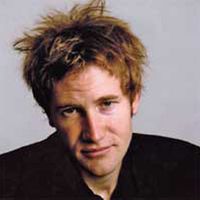
Justin Williams
violin
In 2005, Justin completed his Master of Music Performance degree at the University of Melbourne, studying the viola with Caroline Henbest. Since then, he has been based at the Australian National Academy of Music as a member of the Tinalley String Quartet where they maintain the position of 'Visiting Young Artists'.

Annabelle Badcock
oboe
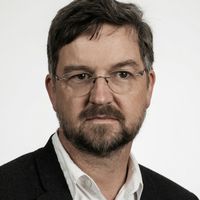
Andrew Blyth
virtual ensemble
Andrew Blyth (1958–2010) was an Australian composer whose music deliberately crossed classical and popular styles, with strong melodies, clear harmonies and rhythmic vitality realised through digital technology.
Digital booklet
Digital booklet Notes, texts and credits — read online or download the PDF Download the PDFPerformers
- Andrew Blyth · virtual ensemble
- Annabelle Badcock · oboe · tracks 1–5
- Justin Williams · violin · tracks 5–8
Technical credits
-
Recording Engineer
Vaughan McAlley
-
Editing Engineer
Vaughan McAlley
-
Venue
Move Records Studio
-
Artwork
Benjamin Thomas
Details
- List price
- $20.00 AUD
- Total playing time
- 53 minutes 27 seconds
- Release date
- 2007
- Categories
- Australian, Classical
- Musical work copyright
- © 2007 Andrew Blyth
- Sound recording copyright
- ℗ 2007 Move Records
- Catalogue
- MCD 332
- EAN
- 9314574033229
More to explore
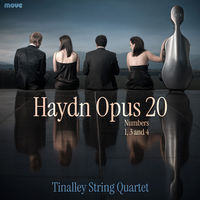
Haydn Opus 20
As first prize winners of the 9th Banff International String Quartet Competition, the Tinalley String Quartet was awarded the opportunity to make this CD at The Banff Centre, Banff, Alberta, Canada.
Music for French Horn
Andrew Blyth’s Horn Concerto of 2001 anchors this programme for French horn and virtual orchestra, with four shorter lyrical pieces. Soloist Geoff Viking Lierse is Associate Principal Horn of the Melbourne Symphony Orchestra.
Quiet Place
Each of the eleven tracks is a song without words. Written over a number of years, these pieces by Andrew Blyth share a concern for simplicity and directness of expression throughout the set.
Guitar Concerto
This recording looks toward a twenty-first-century classical aesthetic, deliberately crossing the line between concert music and popular song so that new work can again speak plainly to listeners and performers.