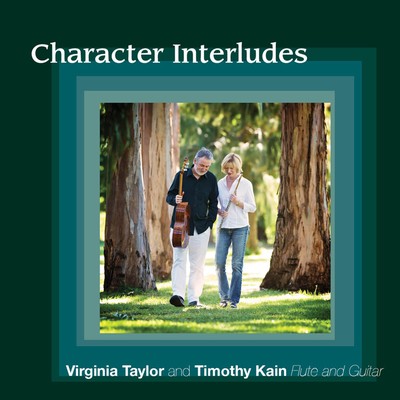
Listen & tracks
5 of 22 tracks have a preview · 5 works · 61:36
-
Suite Buenos AiresMáximo Diego Pujol 4 movements15:56
- 1 Pompeya 4:06
- 2 Palermo 4:40
- 3 San Telmo 3:16
- 4 Microcentro 3:54
-
From the DreamingPhillip Houghton 3 movements14:15
- 5 Cave Painting 5:20
- 6 Wildflower 5:36
- 7 Gecko 3:19
-
Character InterludesElena Kats-Chernin 9 movements12:44
- 8 i. Movement 1 1:12
- 9 ii. Movement 2 1:15
- 10 iii. Movement 3 1:42
- 11 iv. Movement 4 1:17
- 12 v. Movement 5 1:31
- 13 vi. Movement 6 1:25
- 14 vii. Movement 7 1:42
- 15 viii. Movement 8 1:18
- 16 ix. Movement 9 1:22
-
RetratosJaime Zenamon 3 movements9:10
- 17 Encuentro 2:28
- 18 Despedida 3:11
- 19 Diálogo 3:31
-
Tres Temas ArgentinosCoco Nelegatti 3 movements9:31
- 20 Un Motivo de Vals 3:05
- 21 Milonga del Serafín 3:35
- 22 El Cronopio 2:51
Folk song, dance and salon manners sit easily beside character pieces and poetic miniatures in this medium. Pujol’s Suite Buenos Aires draws on tango and porteño popular song; Houghton’s From the Dreaming answers landscape, rock art and animal life; Kats-Chernin’s nine interludes – heard here in their original flute and guitar form – are spare, playful miniatures written for the duo.
Zenamon’s Retratos and Nelegatti’s Tres Temas Argentinos close the disc with portraits and traditional Argentine forms reimagined for the concert platform. The recording grew from almost twenty years of shared work between Taylor and Kain, including arranging and commissioning for the duo.
In the artist’s words
This is a fascinating and diverse program of works from the southern hemisphere, born of the musical interests of both performers and the very nature of the flute and guitar medium.
The duo of flute and guitar is possibly as old as the instruments themselves. Although the flute and guitar have very different histories, there is some parallel in the development of the modern versions of these instruments during the 18th century, and their transformations as concert instruments through the classical period of European music and the 19th century. During the 20th century, an increasing interest in this particular duo on the part of composers and performers resulted in the establishment of a significant body of music—much of which is now standard repertoire around the world for performers on these instruments.
While portability is one advantage these two instruments have in common, they differ in sound production and tone-colour in the same varied and interesting way as the contrast of voice and guitar, or violin and piano. At the same time, however, there are particular sonorities with which the two instruments can blend to a remarkable degree. Certain techniques of guitar sound-production can result in particular sonorities which blend the guitar’s upper-partials with the flute, for example, creating a ‘third instrument’ that seems neither quite guitar or flute but a combination of the two. The comfortable dynamic balance between the two instruments also offers certain advantages.
Both flute and guitar have retained strong identities in the realms of folk and popular music of various kinds – and this naturally filters through to concert repertoire. In particular, the Italian, Spanish and Portuguese folk traditions, and their transplanted descendants in Latin America offer a rich field of materials and inspiration for composers writing for guitar. We find, then, that the flute and guitar duo repertoire has a strong tendency to invoke songs and dances, and for the flute to be often asked to reflect the expressive qualities of the human voice.
In the same way that folk songs and dances cross easily into salon and concert music in the repertoire for flute and guitar, these influences intersect comfortably with character pieces and poetic miniatures. To a large extent, the distinctive repertoire for the flute and guitar duo tends to be made up of these types: songs, dances, poetic pieces, and character pieces. This is a repertoire that is not necessarily concerned with large-scale architecture, symphonic breadth or academic rigour. Rather, it tends to be smaller in scale, more intimately personal. It is a body of musical repertoire concerned with direct communication, natural emotion, human sentiment; for all that, it is music that ranges like Portuguese fado from deep sadness to lively humour, and like flamenco from rough simplicity to extraordinary sophistication. To some extent, this communicative directness is also a result of the fact that so many guitarist performers also compose for this medium, bringing the advantage of a first-hand understanding of the instruments.
On a more personal level, this CD presents the results of a special collaboration between Virginia Taylor and Tim Kain over almost 20 years. These two performers have been strong leaders in the development of the flute and guitar duo during this period through their own performances and by their arranging and commissioning of new works. In addition to a strong interest in the established repertoire for the flute and guitar duo, Kain’s and Taylor’s performances have very often featured new works by contemporary composers. Additionally, the special relationships they have built with composers such as Houghton and Kats-Chernin have had a large impact upon the nature and qualities of the resulting music.
Máximo Diego Pujol (born 1957) is an Argentinean guitarist and composer whose music is born out of the fusion of Argentinean tango music and more formal styles of European composition. A graduate of the Juan José Castro Conservatory in Buenos Aires, he is now professor of guitar at the Buenos Aires Superior Conservatory of Music ‘Manuel de Falla’. Pujol’s knowledge of tango and Argentinean popular song is drawn from his experience of playing guitar in Buenos Aires nightclubs. The forms and nuances of these local musical genres colour all four movements of the Suite Buenos Aires (1995), and Pujol’s fluent melodic writing and elegant harmonies combine with his understanding of the special capabilities of the guitar to form a unified and expressive musical world. One notably effective idea is the re-use of the opening melody of the first movement (Pompeya) as the middle-section of the final movement (Microcentro), creating a sense of structural unity spanning the four movements of the suite. The work is dedicated to the Brisbane-based guitarist Julian Byzantine.
The Australian composer Phillip Houghton has pursued an independent path and forged a unique musical voice. Also trained as a painter, he draws inspiration from images, colour, textures, myths and language. Translated into sound, these give much of his music an expressively cinematic quality. His refined deployment of colours and textural contrasts is aided by a keen understanding of the guitar as an instrument. A long-standing interest in rock and pop music has also made an impact upon Houghton’s melodic and harmonic language, giving rise to an expressive use of harmonic pedal-points, to planes of harmonic activity rather than functional progression, and a strongly vocal approach to melodic writing.
Aspects of the dreamtime of indigenous Australians inspire the three pieces making up the set titled From the Dreaming, with reference to the powerful significance placed upon landscape, plants and animals, and human expression in the form of ceremonial painting. The pieces were originally composed in 1991, and revised in 1997. Cave Painting was inspired by ancient aboriginal rock art, rock formations, mystery and ‘powerfields’. The guitar in this movement tries to imitate the didjeridu. Wildflower is the song of a single flower in an ever changing panorama and climate of storms, drought, heat and isolation—isolation and endless space. Gecko is basically the life and times of a small gecko lizard in scherzo form!
Born in Tashkent, Elena Kats-Chernin emigrated to Australia in 1975. After an extended period of studying and working in Europe between 1980 and 1994, she has since lived in Sydney. Kats-Chernin’s earlier music was often commissioned for theatre and dance, but since returning to Australia she has established a reputation for writing colourful and enjoyable instrumental music—and indeed the element of fun is something that Kats-Chernin identifies as an important aspect of her work.
The nine Character Interludes (2000–2002) for flute and guitar were commissioned by Taylor and Kain and composed expressly for their duo performance. Each a miniature study, the pieces reflect perhaps many interesting aspects of the composer’s own musical personality. Transparently textured, unfussy, and direct, these pieces are entirely comfortable within their miniature dimensions. Kats-Chernin’s melodic lyricism is in evidence throughout, as is her fluid and fluent harmonic writing. While some of the pieces (Nos. 2 & 8) are framed in terms of melody and accompaniment, with the flute taking the melodic role, others explore more surprising possibilities of the flute and guitar duo. Both No. 1, for example with its extended passages of unison playing, and No. 5, with the ethereal interweaving of guitar harmonics and a flute line played largely without vibrato, investigate some of the subtle colours available from these two instruments. Stylistically, we hear Kats-Chernin’s fondness for the less pretentious side of late 19th century romanticism (Nos. 2 & 8), fused with elements of rock/pop music (No. 4), Latin colour (Nos. 3 & 6), and ragtime (Nos. 6 & 9).
Jaime Zenamon (1953) and Coco Nelegatti (b. 1959) are both guitarist-composers. Zenamon was born in Bolivia, and Nelegatti in Argentina—but both have lived for much of their careers in Berlin. Zenamon is a classically trained guitarist and professor of music, whose compositions reflect an interest in merging rhythms drawn from contemporary experimental music and those of South American folk music. Nelegatti, on the other hand, has drawn constant inspiration from the Argentinean folk music as a performer, composer and ethnomusicologist—and his instrumental music, ensemble pieces, songs and theatre compositions are suffused with the language of tango.
Zenamon’s 3 Retratos (portraits) are elegant and stylishly crafted pieces. The first (‘Encounter’) has a strong neo-classic style, making reference to baroque figures and harmonic sequences. ‘Farewell’, the second piece is modal and improvisatory, carrying some of the pathos of the cantes libres (songs without fixed rhythm) of Spanish flamenco, while the closing ‘Dialogue’ is a bright dance-like movement.
The three pieces of Nelegatti’s suite Tres Temas Argentinos each represent a traditional dance/song form of Argentina (in this case, vals, milonga and tango). While based upon a deep understanding of the traditional musical forms, the pieces are nonetheless contemporary in character. As with many of the works presented in this recital, these pieces cross comfortably between a smoky bar and a concert hall, from the folk to the classic and back again, from Buenos Aires to Berlin.
Artists
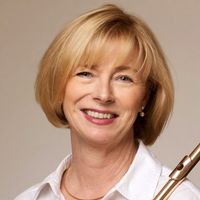
Virginia Taylor
flute
Virginia Taylor has been described as one of the most exciting flautists to appear on the concert platform in recent years. She has received numerous awards, performed with leading Australian orchestras and toured extensively at home and abroad.
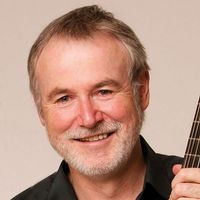
Timothy Kain
guitar
Timothy Kain is an Australian classical guitarist, soloist and chamber musician whose work centres on new Australian repertoire, teaching, and the guitar-family quartet Guitar Trek.
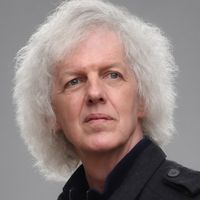
Phillip Houghton
composer
Phillip Houghton’s guitar music has been performed and recorded by leading musicians, including John Williams and Timothy Kain. A self-taught composer, he drew on classical, jazz, rock, ambient and world music.

Elena Kats-Chernin
composer
Elena Kats-Chernin AO (born 1957) is an Australian composer whose piano rags, chamber miniatures, ballet and stage scores have become central to contemporary Australian repertoire.

Coco Nelegatti
composer
Máximo Diego Pujol
composer
Jaime Zenamon
composer
Digital booklet
Digital booklet Notes, texts and credits — read online or download the PDF Download the PDFPerformers
- Virginia Taylor · flute
- Timothy Kain · guitar
Technical credits
-
Producer
Timothy Kain
Virginia Taylor
-
Recording Engineer
Niven Stines
-
Mastering Engineer
Don Bartley
-
Venue
ANU School of Music, Canberra
-
Thanks to
Creative Australia (tracks 8–16)
Details
- List price
- $25.00 AUD
- Total playing time
- 61 minutes 36 seconds
- Release date
- Sep 2011
- Category
- Classical
- Musical work copyright
- © 2011 Timothy Kain and Virginia Taylor
- Sound recording copyright
- ℗ 2011 Move Records
- Catalogue
- MCD 454
- EAN
- 9314574045420
More to explore
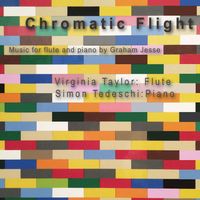
Chromatic Flight
Music for flute and piano by Graham Jesse, played by Virginia Taylor and Simon Tedeschi. Melodic contemporary pieces sit beside Latin and jazz suites, bridging classical technique and jazz inflection.
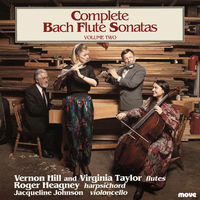
Complete Bach Flute Sonatas, Vol. 2
Acclaimed artists present superb performances of the complete Bach flute sonatas.
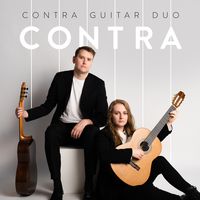
Contra
Contra Guitar Duo’s debut recording presents the lyricism, complex rubato and colour the pair most enjoy in two-guitar playing, across a short programme of romantic and contemporary works.
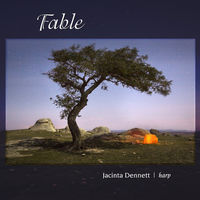
Fable
This solo harp collection spans sixty-six years of original Australian composition. Jacinta Dennett performs works by Australian women composers, showing the instrument’s distinctive colour, range and expressive force.
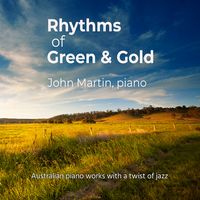
Rhythms of Green and Gold
John Martin’s solo piano recital gathers nineteen short works by ten Australian composers, from ragtime and blues to waltz and jazz-tinged lyricism.
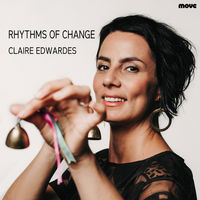
Rhythms of Change
In 2020 Claire Edwardes, often called the wonder woman of percussion, launched Rhythms of Change, a commissioning project for solo percussion that confronts the under-representation of women in classical programming and builds a lasting new repertoire.