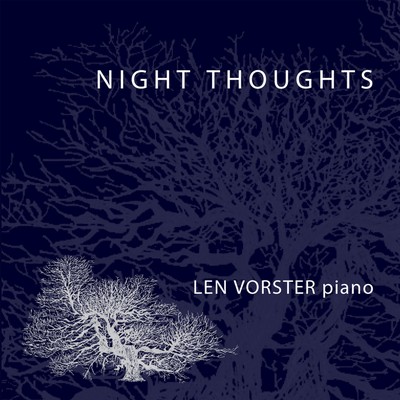
Listen & tracks
15 works · 70:50
-
1 In the Night – A Love Poem Ernest Bloch 4:59
-
2 Nocturne in C-sharp minor, Op. 19 No. 4 Pyotr Ilyich Tchaikovsky 3:49
-
3 Soirées musicales, Op. 6 No. 2 Clara Schumann Notturno in F major 5:18
-
4 Nocturne No. 11 in F-sharp minor, Op. 104 No. 1 Gabriel Fauré 4:43
-
5 Silberstreif – Nocturne in E major, Op. 1 No. 1 Jillian Rose Tymms 5:11
-
6 “1922” Suite for Piano, Op. 26 Paul Hindemith iii. Nachtstück 5:51
-
7 Aux étoiles… Henri Duparc 6:03
-
8 3 Fantasy Pieces, Op. 6 Charles Tomlinson Griffes ii. Notturno 7:44
-
9 Nocturne – Seascape Peter Sculthorpe 1:57
-
10 Nocturne No. 1 Erik Satie 2:57
-
11 Nocturne No. 4, Bal fantôme Francis Poulenc 1:29
-
12 Sonata for Flute and Piano Michael Easton ii. Nocturne [arr. Len Vorster] 4:41
-
13 Nocturne from Giselle’s Mania Leonid Desyatnikov 4:34
-
14 Moments of Night No. 4 Peter Klatzow 3:27
-
15 Night Thoughts ‘Homage to Ives’ Aaron Copland 8:07
Night Thoughts took shape in 2020, when curfew stillness gave Vorster room to sit with music that answered the pandemic’s mix of fear, frustration and a stubborn hope of light ahead.
Jillian Rose Tymms’s Silberstreif, written for him that year, holds that uncharted mood. The 2022 sessions also mark a centenary: Bloch’s love poem In the Night and Hindemith’s Nachtstück from the “1922” Suite, both composed just after the Spanish flu. The recital closes on the tolling bells of Copland’s Night Thoughts.
This is Vorster’s second solo piano album on Move; the first was Summer Waves (2003).
In the artist’s words
The title Silberstreif translates loosely to ‘ray of light’ and/or ‘light at the end of the tunnel’. I chose this title because I wanted this piece to be evocative of the tumultuous feelings that Covid-19 thrust upon Victorians, and to represent how we all longed for ‘lockdown’ to end. I composed this work during Melbourne’s second ‘lockdown’. The chromaticism and unusual modulations resemble restlessness, hopelessness and a sense of searching for answers – where there were often none to be found.
Reviews
Len Vorster has assembled here a stimulating mix of night pieces by 15 composers from 9 different countries including South Africa (Peter Klatzow) and Ukraine (Leonid Desyatnikov). He opens with a sombre piece by the Swiss composer Ernest Bloch and here all the virtues of Len Vorster’s pianism are displayed: superb control of subtle dynamic gradation even at the softest dynamic levels, beautifully judged rubato and an innate understanding of all the diverse compositional styles. His skillful layering of complex textures and his refined pedalling are also evident throughout this album. The Notturno by the American impressionist Charles Griffes is a real find, which Vorster delivers with great poetry. The CD also includes Vorster’s own skillful transcription of Michael Easton’s Nocturne for flute and piano. If like me you tend to avoid anthologies such as this, I nevertheless urge you to hear this beautifully played collection, to which I have listened a number of times with increased enthusiasm.
Artists
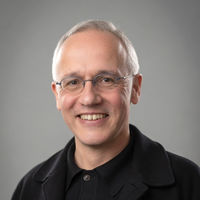
Len Vorster
piano
Len Vorster is one of Australia's finest accompanists, and artistic director of Classical Palette (a Naxos series devoted to contemporary music), of the Schirmer Ensemble, and of the Port Fairy Spring Music Festival.
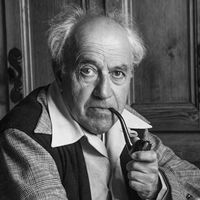
Ernest Bloch
composer
Ernest Bloch (1880–1959) was a Swiss-born American composer whose best-known music draws on Jewish cultural and liturgical themes. An eclectic modernist, he shaped a dramatic, original language especially eloquent in writing for strings and orchestra.
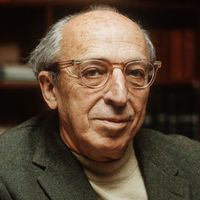
Aaron Copland
composer
Aaron Copland wrote the open, slowly shifting harmonies many still hear as the sound of American music. His vernacular style of the 1930s and 1940s gave ballet, song and chamber works a plain-spoken clarity that reaches from folk song to fanfare.
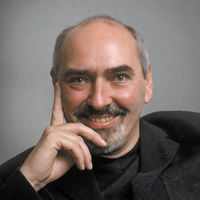
Michael Easton
composer
Michael Easton (1954–2004) was a British-born composer, pianist and arranger who settled in Melbourne in 1982. His music is accessible, wickedly witty and finely crafted, drawing on French models and jazz.
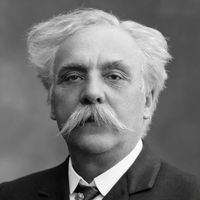
Gabriel Fauré
composer
Gabriel Fauré (1845–1924) was a French composer, pianist, organist and teacher whose music links late Romanticism with early modernism. His best-known works include the Requiem, the Pavane, and a large body of songs and piano music.
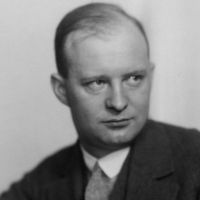
Paul Hindemith
composer
Paul Hindemith wrote music that thinks like Bach and speaks in a lean modern tongue: dense counterpoint, clear forms, and harmony that uses every chromatic note without abandoning tonality. His sonatas for ordinary and unlikely instruments remain essential working repertoire.
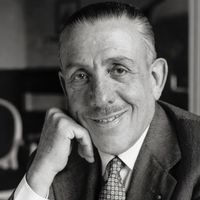
Francis Poulenc
composer
Francis Poulenc's music swings from boulevard wit to peasant devotion. Perpetual-motion piano, chamber sonatas, horn élégies, Christmas and penitential motets, a Gloria, and songs that can flirt, mourn or protest sit side by side in the catalogue.

Erik Satie
composer
Erik Satie's piano music moves in slow, spare circles. The Gymnopédies and Gnossiennes rest on simple modal melodies and unresolved chords, cool, unhurried and strangely weightless.
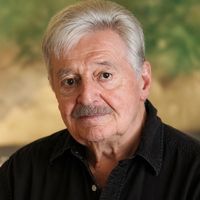
Peter Sculthorpe
composer
Peter Sculthorpe (1929–2014) was a Tasmanian-born composer whose orchestral and chamber music drew the Australian landscape, neighbouring Asian traditions and Indigenous materials into a clear, personal language. He wrote extensively for strings, piano and voice.
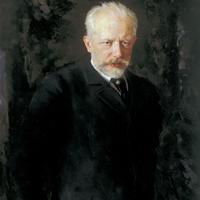
Pyotr Ilyich Tchaikovsky
composer
Pyotr Ilyich Tchaikovsky (1840–1893) was a Russian composer of the Romantic era. His ballets, concertos and orchestral works remain among the most widely performed music in the classical repertoire.

Leonid Desyatnikov
composer
Henri Duparc
composer
Henri Duparc left a handful of late-Romantic mélodies that still define the French art song: long-breathed lines, restless piano writing and an almost unbearable concentration of longing set to Baudelaire, Gautier and Goethe.
Charles Tomlinson Griffes
composer
Charles Tomlinson Griffes wrote piano, chamber and vocal music that moved from German Romanticism toward a distinctive American Impressionism, rich in colour, exotic atmosphere and synthetic scales.
Peter Klatzow
composer
Clara Schumann
composer
Clara Schumann's chamber and piano works speak with lyrical warmth and intimate Romantic colour. Her Notturno and Three Romances, Op. 22, carry melodic lines that sit naturally under the fingers and in the ear, music shaped for the salon and the recital stage.
Jillian Rose Tymms
composer
Jillian Rose Tymms is a dedicated female Australian composer, teacher, and musician, whose artistic journey has been guided by a deep passion for music and a profound connection to the world around her.
Digital booklet
Digital booklet Notes, texts and credits — read online or download the PDF Download the PDFPerformers
- Len Vorster · piano
Technical credits
-
Producer
Thomas Grubb
-
Recording Engineer
Jack Montgomery-Parkes
-
Venue
Iwaki Auditorium, Melbourne
-
Credit
Nicholas Chan
Phil Sander
Sonja Michelini
Details
- List price
- $25.00 AUD
- Total playing time
- 70 minutes 50 seconds
- Release date
- 15 Sep 2023
- Category
- Classical
- Musical work copyright
- © 2023 Len Vorster
- Sound recording copyright
- ℗ 2023 Move Records
- Catalogue
- MCD 647
- EAN
- 9314574064728
More to explore

Summer Waves
Len Vorster plays a personal recital of short piano works by Gershwin, de Falla, Lord Berners, Berkeley, Field, Grieg, Debussy, Poulenc and Ravel, drawn toward summer light, dance rhythm and nocturne stillness.
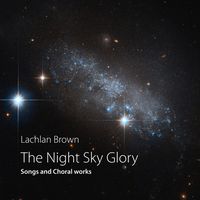
The Night Sky Glory: Songs and Choral Works by Lachlan Brown
Vocal works by Lachlan Brown: songs on poems by Victor Hugo, Heinrich Heine and Rainer Maria Rilke, with wordless vocalises and choral meditations for multi-tracked voices.
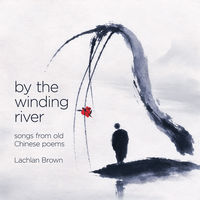
By the Winding River: songs from old Chinese Poems by Lachlan Brown
In the tradition of Gustav Mahler’s The Song of the Earth, Lachlan Brown shapes ancient Chinese poems into a modern song cycle of wonder, nature, friendship and longing.
Lachlan Brown Chamber Works
Lachlan Brown’s Chamber Works offers an hour of beautiful, relaxing music for his favourite instruments and ensembles: piano, harp, organ, violin, cello and string quartet.
Sun Fun and other Disappointments: The music of Michael Easton
This compilation gathers British–Australian composer Michael Easton’s output from 1981 to 1993: solo and duo piano, a flute sonata, a piccolo concerto, song cycles, and four songs from his one-woman show Dorothy Parker Says.
Burns and Beyond
This recording, Burns and Beyond, gathers art songs for voice and modern piano drawn from Robert Burns, and includes Percy Grainger’s Three Scotch Folksongs, built on ancient Scottish tunes.