Listen & tracks
Sing to the Lord (trad. arr. Alice Parker)
Let the people praise Thee, O God (William Mathias)
Messe Basse for women's voices and organ (Fauré)
O Sing Joyfully (Adrian Batten)
Sanctus (Palestrina)
Sacerdotes Domini (Byrd)
Herzlich tut mich verlangen – two settings (Brahms)
Variations on Ach wie nichtig, ach wie flüchtig (Böhm)
Three motets for double choir (Mendelssohn)
Toccata in B minor (Gigout)
Three Psalms (Andrew Batterham)
Messe Solennelle for choir, choir of baritones and two organs (Widor)
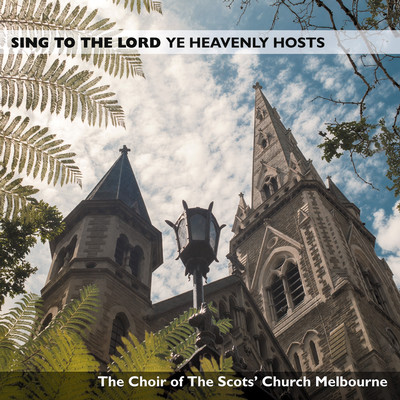
The Choir of The Scots' Church Melbourne sings each Sunday morning and on the special days of the church year. On Sunday evenings soloists or small groups from the choir provide the music. Handel's Messiah is given each December with The Australian Baroque Ensemble. Good Friday concerts have included the Mozart and Fauré Requiems, the Bach Magnificat, and works by Bruhns, Buxtehude, Brahms, Stainer and contemporary composers. Many renowned musicians have sung in this choir; the best known is Dame Nellie Melba, whose father, David Mitchell, built the present church.
The programme spans Palestrina in the sixteenth century to Andrew Batterham in the twenty-first, and includes a rare performance of Widor's Messe Solennelle for choir, baritone choir and two organs.
Artists

Choir of Scots' Church
choir
Founded in 1838, The Scots' Church, Melbourne is Victoria's oldest Presbyterian congregation, many distinguished Melbourne musicians have been part of the choir, including Dame Nellie Melba.
Johannes Brahms
composer
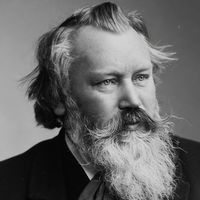
Johannes Brahms (1833–1897) was a German composer and pianist of the Romantic period. His music for piano, chamber ensemble, orchestra, and voice remains central to the concert repertoire.
William Byrd
composer
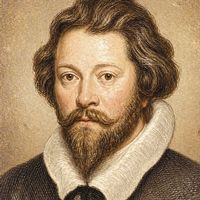
William Byrd wrote English Renaissance polyphony that still defines the choral repertory: Latin motets of fierce concentration, three Masses of luminous restraint, Anglican services and anthems, plus keyboard and consort music of dancing invention.
Gabriel Fauré
composer
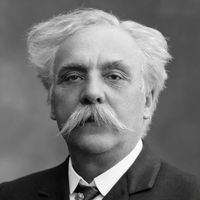
Gabriel Fauré (1845–1924) was a French composer, pianist, organist and teacher whose music links late Romanticism with early modernism. His best-known works include the Requiem, the Pavane, and a large body of songs and piano music.
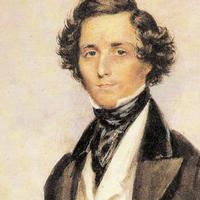
Felix Mendelssohn
composer
Jakob Ludwig Felix Mendelssohn Bartholdy (1809–1847) was a German composer, pianist, organist and conductor of the early Romantic period. His works include symphonies, concertos, oratorios, piano music and chamber music.
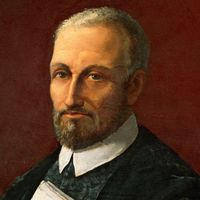
Giovanni Pierluigi da Palestrina
composer
Palestrina's sacred polyphony balances proportion and serenity with crystalline text. His masses and motets move in smooth, carefully controlled lines where dissonance yields to consonance and every voice serves the liturgy.
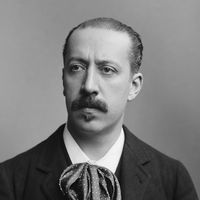
Charles-Marie Widor
composer
Charles-Marie Widor wrote ten organ symphonies that treat the instrument as a full orchestra, from the blazing Toccata of the Fifth to the plainsong-haunted Gothique and Romane. His Mass for two choirs and two organs is rarer ceremonial splendour.
Adrian Batten
composer
Adrian Batten wrote Anglican church music in the early seventeenth century, including verse anthems that alternate full choir and soloists over an independent organ part. His sacred writing is serious and devotional, with skilful counterpoint shaped for liturgy rather than display.
Andrew Batterham
composer
Andrew Batterham is an Australian composer whose music ranges from sacred choral settings to brass and chamber works for contemporary ensembles.
Georg Böhm
composer
Georg Böhm (1661–1733) was a German Baroque organist and composer, noted for keyboard works and for developing the chorale partita.
Eugène Gigout
composer
William Mathias
composer
William Mathias (1934–1992) was a Welsh composer, especially noted for choral music written for the Anglican tradition, alongside symphonies, concertos and an opera.
Alice Parker
arranger
Alice Parker (1925–2023) was an American composer, arranger, conductor and teacher, best known for choral settings of hymns, spirituals and folk songs that entered the repertoire of choirs worldwide.
Performers
- Douglas Lawrence · director
- Choir of Scots' Church · choir
- Rhys Boak · organ
Details
- List price
- $25.00 AUD
- Categories
- Australian, Choral, Classical, Early music, Organ
- Catalogue
- MCD 200
- EAN
- 9314574020021
More to explore
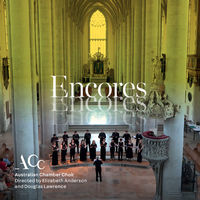
Encores
Directed by Douglas Lawrence, the Australian Chamber Choir gathers favoured concert encores in a programme that shows the ensemble at its most immediate and engaging.
Gold
The Australian Chamber Choir, directed by Douglas Lawrence, performs works by eight Australian composers. From Gordon Kerry’s Shakespeare setting to Malcolm Williamson’s English Eccentrics, the programme turns individual voices into pure gold.
Keys to Heaven
The Australian Chamber Choir opens with the first recording of Agata della Pietà’s cantata Ecce nunc, written in eighteenth-century Venice by an orphan of the Ospedale della Pietà and reconstructed by Elizabeth Anderson. Sacred works by Palestrina and Allegri complete the programme.
A Baroque Christmas
The music on this CD is a historical Christmas “pick of the pops”, from the late 1400s to the end of the Baroque period. Directed by Douglas Lawrence, the Australian Chamber Choir offers a programme recorded live in concert during their 2019 European tour. The 17 tracks are drawn from lesser-known seasonal works, championing a sublime repertoire that is all too often neglected.
Soul
Douglas Lawrence OAM leads the Australian Chamber Choir through sacred music spanning Renaissance polyphony, early Baroque splendour and African-American spirituals.
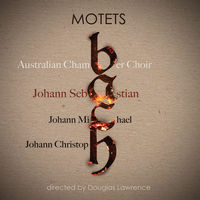
Bach Motets
The Australian Chamber Choir, directed by Douglas Lawrence, performs motets by J.S. Bach with works by Johann Michael Bach and Johann Christoph Bach.