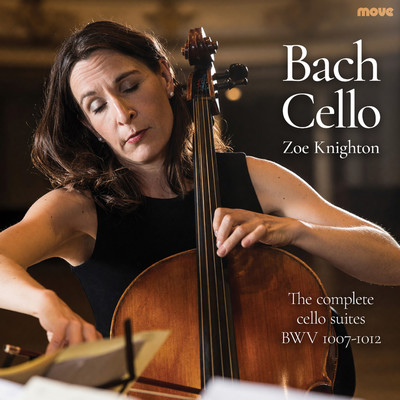
Listen & tracks
3 of 36 tracks have a preview · 6 works · 147:58
-
Suite No. 1 in G major, BWV 1007Johann Sebastian Bach 6 movements19:12
- 1 Prelude 2:18
- 2 Allemande 5:28
- 3 Courante 2:35
- 4 Sarabande 3:18
- 5 Menuet 1 and 2 3:42
- 6 Gigue 1:51
-
Suite No. 4 in E flat major, BWV 1010Johann Sebastian Bach 6 movements25:30
- 7 Prelude 4:11
- 8 Allemande 4:01
- 9 Courante 3:52
- 10 Sarabande 4:46
- 11 Bourée 1 and 2 6:01
- 12 Gigue 2:39
-
Suite No. 5 in C minor, BWV 1011Johann Sebastian Bach 6 movements27:40
- 13 Prelude 7:00
- 14 Allemande 7:13
- 15 Courante 2:03
- 16 Sarabande 4:09
- 17 Gavotte 1 and 2 4:56
- 18 Gigue 2:19
-
Suite No. 2 in D minor, BWV 1008Johann Sebastian Bach 6 movements21:17
- 201 Prelude 3:32
- 202 Allemande 3:48
- 203 Courante 2:20
- 204 Sarabande 5:23
- 205 Menuet 1 and 2 3:13
- 206 Gigue 3:01
-
Suite No. 3 in C major, BWV 1009Johann Sebastian Bach 6 movements22:28
- 207 Prelude 3:21
- 208 Allemande 4:05
- 209 Courante 3:23
- 210 Sarabande 4:02
- 211 Bourée 1 and 2 4:10
- 212 Gigue 3:27
-
Suite No. 6 in D major, BWV 1012Johann Sebastian Bach 6 movements31:51
- 213 Prelude 4:57
- 214 Allemande 8:21
- 215 Courante 4:02
- 216 Sarabande 5:04
- 217 Gavotte 1 and 2 4:37
- 218 Gigue 4:50
Since Pablo Casals brought these works to public attention and presented them complete, the six suites have formed the backbone of musical understanding for every modern cellist. They remain the heartbeat of the cello repertoire and true windows into Bach’s world.
Zoe Knighton has performed the solo cello Bach suites since 2008. This two-CD set is her complete recording of the cycle.
In the artist’s words
The debate still rages about the origins and intention behind these suites. Were they written for the cellists of the court (Christian Ferdinand Abel and Christian Bernhard Linke) where Bach was employed at the time? Were they written for a strange instrument called a violoncello da spalla? … Without the surviving original manuscript or documentation, there is so much speculation and hearsay but as little bits of information come to light, one thing is mostly constant – the notes that are on the page.
But which page?! Are we to trust the Anna Magdalena transcript, his student, Kellner’s manuscript or the first printed edition? Dealing with these decisions and playing these suites comes with it a great education in understanding and coming to terms with one’s own aesthetic. In effect, the performance of these suites become a musical signature of each cellist.
Since our beloved Pablo Casals brought these works to public attention and presented them in their entire form, these six suites have formed the backbone and engine room of musical understanding for every modern cellist and indeed all lovers of Bach’s music.
Thinking of these suites not as individual movements or even as individual suites, but as an entire package has become more and more common. I often muse over the idea that a journey through life can be mirrored through the suites.
Suite 1: G major – Innocence and joy of childhood
Suite 2: D minor – The antithesis of innocence, teenage/early adulthood anguish of self discovery
Suite 3: C major – Triumph of adulthood, self satisfaction, grown ups having fun
Suite 4: E flat – The responsibility of coming of age – having doubts over one’s chosen path
Suite 5: C minor – The despair of aging, regret, longing
Suite 6: D major – The joy of relinquishing responsibility, the joy of a full life and the intense wisdom that comes with age – the sheer delight in having time on one’s hands
After playing these suites in chronological order, at the conclusion of the D major suite there comes an overwhelming urge to just quietly slip from the dominant (D major) to the tonic (G major) and begin the cycle again. It mirrors so much of the cyclical nature of life and death.
Of all the works that I play, these seem the most changing in my own perception of them. They grow with me and allow so many different angles of understanding. I think most cellists feel the same.
Reviews
Zoe Knighton’s Bach Suites recording is wonderfully insightful and of assured musicianship ... Knighton has produced a reading of great artistic integrity.
Artists
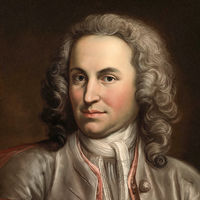
Johann Sebastian Bach
composer
Johann Sebastian Bach (1685–1750) was a German composer and organist of the late Baroque. His sacred and secular music for choir, orchestra, organ and solo instruments remains among the foundations of the Western concert and church repertory.
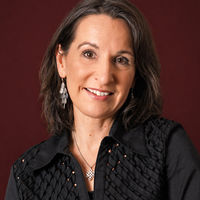
Zoe Knighton
cello
Zoe Knighton is at the forefront of a new generation of performers intent on forging an innovative path for the enjoyment of classical music. A founding member of Flinders Quartet, she is a leading Melbourne cellist and chamber musician.
Digital booklet
Digital booklet Notes, texts and credits — read online or download the PDF Download the PDFPerformers
- Zoe Knighton · cello
Technical credits
-
Recording Engineer
Martin Wright
Vaughan McAlley
-
Editing Engineer
Vaughan McAlley
-
Mastering Engineer
Martin Wright
-
Venue
Move Records Studio
-
Photography
Pia Johnson
Details
- List price
- $25.00 AUD
- Total playing time
- 147 minutes 58 seconds
- Release date
- 11 Aug 2017
- Category
- Classical
- Genre
- Baroque
- Musical work copyright
- © 2017 Move Records
- Sound recording copyright
- ℗ 2017 Move Records
- Catalogue
- MD 3422
- EAN
- 9314574342222
More to explore
Brahms Cello
Zoe Knighton and Amir Farid present their seventh cello–piano collaboration, turning to Johannes Brahms. The programme pairs his two cello sonatas with three songs in which the cello takes the vocal line wordlessly.
Schumann Cello
Cellist Zoe Knighton and pianist Amir Farid continue their partnership in a programme of short works by Clara and Robert Schumann, pairing song transcriptions with chamber pieces for cello and piano.
Northern Cello
Music for cello from northern European composers. Zoe Knighton and pianist Ian Munro centre the programme on Grieg’s romantic sonata, with Sibelius’s Op. 78 pieces, Vasks’s solo Gramata Cellam and Pärt’s Fratres.
Russian Cello
Enter the world of Russia. Zoe Knighton and Amir Farid present unknown works alongside much-loved classics. The recording celebrates a romanticism in composition inspired by the combination of cello and piano.
A Little French Cello
A charming collection from the rich French school of the late nineteenth century. Cello sonority and piano clarity make the programme both approachable and moving. Zoe Knighton and Amir Farid are masters of their art.
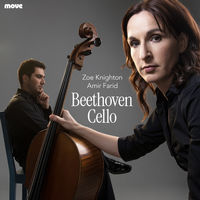
Beethoven Cello
Cellists often bemoan the lack of a cello concerto by Beethoven – and rightly so, but these eight works for cello and piano are the envy of many other instruments. The complete cello sonatas and variations of Beethoven are here on this two-CD set.
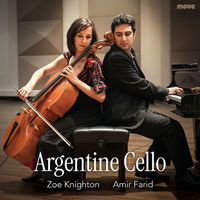
Argentine Cello
More than Piazzolla alone: seven Argentine composers shape a cello-and-piano programme of tango, pampas colour and lyric nationalism, played by Zoe Knighton and Amir Farid.

Mendelssohn Cello
Mendelssohn is often cast as a composer who lived a charmed life, and whose music therefore lacks depth. The glory of that music, its likeability, and his gift for celebrating humanity remain primary reasons for its lasting hold.