John Sangster
John Sangster (1928–1995) was an Australian jazz composer, arranger and multi-instrumentalist whose work stretched from traditional jazz and film scores to large-scale suites of uncommon range, humour and colour.
JOHN SANGSTER 1928–1995
John Sangster was one of the most talented of all Australian jazz musicians: a technician and creator who embraced and understood more styles of the music than any other. He was an expert drummer and vibraphone player, a soulful trumpeter and, in arranging and composing, always took into account the personality of the player.
Don Burrows, opening the foreword to Sangster’s autobiography Seeing the Rafters, called him unique — this drummer, trumpeter, vibraphonist and composer who died in 1995 after a long fight with liver disease. In 1992 Sangster still said with pride that the doctors could hardly discern his liver on their X-rays. Beside a 1950 photo of the Graeme Bell band (Sangster on drums) in Seeing the Rafters runs the line “Happy days – may we live long and die roaring”. Sangster, bon viveur, lived those happy days, nights, months and years to the full.
He came onto the Melbourne jazz scene in 1946, the year of the first Australian Jazz Convention. At the second convention he was first noticed at the piano in a lunch break, playing slow boogie-woogie, diffident and reflective yet somehow individual. At the third (Prahran Town Hall, 1948) he made an indelible mark: hot, exciting cornet in the vein of New Orleans veteran Thomas ‘Papa Mutt’ Carey, and an award from Graeme Bell as ‘the most promising player’. He first recorded on 30 December and took part in the traditional scene around Alan Watson’s house in Rockley Road, South Yarra. At the fourth convention Sango (as he liked to be called) stood one morning with a band in Greville Street, Prahran, playing chorus after chorus of Mahogany Hall Stomp; one afternoon, in a Town Hall back room, he beat a crackling rhythm on a wooden chair with two scraps of wood that were not drumsticks. Soon he had bought Russ Murphy’s kit — Graeme Bell’s first drummer — and recorded on drums for the first time on a classic revivalist session led by Roger Bell in mid-winter 1950. Bassist Lou Silbereisen spread the word, and Sangster became drummer for the second British and European tour of Graeme Bell’s band.
He was now on the international scene: drums with Big Bill Broonzy in Germany; trumpet and drums at Abbey Road in London with a mix of the Bell and Humphrey Lyttelton bands. In August 1978 he appeared on the television programme This Is Your Life in the episode for Graeme Bell, thanking him for a trumpet solo on the Bell–Lyttelton sessions; Lyttelton, waiting to surprise Bell, said of Sangster after twenty-six years: “He’s changed”.
He had become the most complete Australian jazz musician. After Japan and Korea with Bell (his second overseas tour) he settled in Sydney and expanded physically and musically. Never a crushingly restrictive traditionalist, he composed there his Hobbit Suite and The Lord of the Rings trilogy — later re-released on Move as The Lord of the Rings, Vol. 1 and companion volumes. In those extraordinary musical ‘plays’ one hears the old Australian jazz of Bell’s early bands alongside Thelonious Monk, Dizzy Gillespie, and Nat and Cannonball Adderley.
As a listener he was drawn to Sun Ra, Archie Shepp and Ornette Coleman, and to Japanese traditional music (he even took up the shakuhachi, briefly). Film scoring proved both artistic and practical: original scores for Fluteman, the television series Peach’s Australia and Harry Butler in the Wild, animated features, and environmental films for the Australian Museum. That environmental concern later shaped his own label, Rain-forest Records.
He still played with Bell from time to time, worked with the Ray Price Quartet on trumpet, and drummed with the Port Jackson Jazz Band. At El Rocco in Kings Cross, headquarters of modern jazz in Sydney, he played vibes and drums with pianists including Col Nolan and Judy Bailey, and drummed for years with Don Burrows, who played Sangster’s Rivera Mountain to thunderous applause at Carnegie Hall in July 1972. With Burrows he went to Expo 67 in Montreal; seeing him off at Sydney Airport, friends remembered him weeping not for the girl left behind but for the cat in the flat above the old El Rocco.
John Grant Sangster was born 17 November 1928 in Melbourne, only child of John Sangster and Isabella (née Davidson, later Pringle). He attended Sandringham and Vermont primary schools and Box Hill High School; self-taught on trombone then cornet from records with friend Sid Bridle, with whom he formed a band.
On 21 September 1946, after Isabella withdrew permission for a jazz event, a confrontation ended with her death by axe; he was acquitted of murder and manslaughter.
He married Shirley Drew on 18 November 1949. In 1950 he recorded on drums with Roger then Graeme Bell, and joined Graeme’s band for the second international tour (26 October 1950 to 15 April 1952), recording his first composition and absorbing Kenny Graham’s Afro-Cubists and Johnny Dankworth. With Graeme he toured Korea and Japan in 1954–55, then worked in Brisbane, where he took up vibraphone. Shirley filed for divorce in 1957 (decree absolute 17 September 1959). From 3 February 1957 Bell and Sangster held a residency at Sydney’s Hotel Bennelong; with little jazz on the books they cut skiffle hits (Sangster on washboard), and Rock Island Line made the top ten, bringing radio and television work and support for Johnny Ray’s 1957 Australian tour.
From 1959 he freelanced with Ray Price, Don Burrows and Judy Bailey and moved into film and television music. By 1962 he lived above the El Rocco with his partner Janice Patricia Byrnes (Bo Diddley); her death at 43 in 1980 inspired Requiem for a Loved One. There he became central to jazz experiment. Visiting pianist Bob James pointed him toward Albert Ayler, Sun Ra and Cecil Taylor; a 1966 ABC broadcast had his trio freely improvising over pre-recorded percussion — he was among the few Australian composers using electronic sound before the 1970s. Donald Westlake’s 1966 Best of Both Worlds concerts, joining the Don Burrows Quartet with the New Sydney Woodwind Quartet, included Sangster’s own pieces. Fusions and non-Western forms led into the counter-culture: pit band for Hair from 1969, and Australia’s first rock festival at Ourimbah in 1970.
Film work ran from Albie Thoms’ experimental Marinetti (1969) to Hanna-Barbera’s The Funky Phantom (1971). Landscape found a voice in the ABC series In the Wild (1976–1981). From 1971 at Narrabeen he began the Tolkien suites; between 1973 and 1978 he produced more than eight hours of music from ragtime to the avant-garde, expanding the traditional jazz line-up with woodwinds, brass, strings, electric guitars, vocals, synthesiser and studio effects.
In 1988 he was entered on the Montsalvat Jazz Festival Roll of Honour. He moved to Brisbane in 1992, partnering with Berlin-born Petra Schnese, and kept performing — Wangaratta in 1994, a final gig at Noosa Jazz Party in September 1995. He died of liver cancer on 26 October with Petra beside him; she later took the name Petra Schnese-Kleist-Sangster.
Sangster stood at the centre of several Australian developments: Bell’s band and an ‘Australian’ jazz sound; progressive, free-form, electronic and fusion movements. His palette was the broadest of any Australian performer-composer, from the classic jazz corpus through jazz and pop avant-gardists to art-music figures such as Maurice Ravel — what some called ‘cosmic dixieland’. Behind the ocker-hobbit stage persona of Seeing the Rafters lay a far more complex sensibility: possibly the most talented musician in Australian jazz, and one of the most intuitive Australia has produced in any idiom.
Compiled from material written by Bruce Johnson, Dick Hughes, Eric Myers, and Mike Williams
If you want a musical autobiography, it's all there in the Lord of the Rings albums. A crazed montage of all the jazz (and other) idioms I've been involved with during my life. All the musics I love are in there; some plainly stated, some distorted and disguised a little bit the way memories sometimes go.
Press quotes
Sangster's career has been an odyssey through the various stylistic movements that characterise Australian Jazz.
Anyone lucky enough to have made music with John Sangster will likely refer to him as a creative genius. He certainly was that in my view and much more. His compositions, his humour and general attitude towards life were inspirational.
The man is unique.
John Sangster music is highly ambitious and this epic production juxtaposes ragtime, big band and evocative soundtrack-like creations to portray the many characters and events that inhabit Middle Earth ... Essential listening
Sangster’s enchantment ran deep, and it shows.
John Sangster is featured on the following titles

Jazz Music Series (set)
The five volumes of John Sangster's Jazz Music Series are available individually or together as a set at a reduced price.
Composer
Jazz Music Series, Vol. 5: Ripper
The fifth and final volume in John Sangster’s jazz series of suites, written for a lively little orchestra that gathers some of Australia’s finest jazz musicians around his vibraphone writing.
Composer
Producer
Recording Engineer
Jazz Music Series, Vol. 4: Take That
Volume four of John Sangster’s Jazz Music Series finds his “lively little orchestra” of leading Australian jazz players in a ten-movement suite of wit, swing and colour.
Composer
Producer
Jazz Music Series, Vol. 3: Steady Lads
Third in John Sangster’s series of suites for a lively little orchestra of some of Australia’s finest jazz musicians: ten pieces of small big-band writing with Sangster on vibraphone.
Composer
Producer
Recording Engineer
Jazz Music Series, Vol. 2: Requiem (for a loved one)
Volume 2 of five suites by John Sangster, played by his fine small orchestra of leading Australian jazz musicians. A 1980 requiem for Janice Patricia Byrnes, nicknamed Bo Diddley.
Composer
Producer
Jazz Music Series, Vol. 1: Don't Mean a Thing if It Ain't Got That Doo-wup
As John Sangster put it, "Here is the first in a series of Suites written for this lively little orchestra, a gathering that includes some of Australia's finest jazz musicians."
Composer
Producer
Recording Engineer

Meditation
John Sangster’s Meditation, first issued on vinyl around 1980, is an ethereal set of flute, wind-chime and marimba textures. Over three long pieces the music builds a serene, otherworldly atmosphere meant for quiet listening.
Composer
Producer
Recording Engineer
Credit: Directed by

Peaceful
John Sangster's Peaceful gathers nine quiet jazz pieces for tenor saxophone, flutes, acoustic guitar, electric piano, vibraphone, marimba and percussion. The mood is contemplative, with room for gentle improvisation.
Composer
Producer
Recording Engineer

Fluteman
John Sangster wrote the score for the little-known 1982 Australian film Fluteman. Led by Don Burrows on flute, with eight other jazz players, the music makes wonderful listening quite apart from the picture.
Composer
Producer
Uttered Nonsense (The Owl and the Pussycat)
Uttered Nonsense (The Owl and the Pussycat) sets eight Edward Lear poems, spoken with grave poise by Ivan Smith, among fourteen instrumental jazz pieces drawn from the Nonsense Books. Sangster’s large Australian ensemble answers the verse with playful colour.
Composer
Producer
The Last Will and Testament of John Sangster
Tony Gould, Len Barnard, Graeme Lyall and friends honour one of Australia's unsung jazz heroes. These final Sangster scores, played by leading colleagues, form a warm and fitting tribute.

Landscapes of Middle Earth
The fourth and final volume in Move’s restored reissue of John Sangster’s jazz-inspired Tolkien cycle. First a late-1970s double LP, Landscapes of Middle Earth reached CD in 2006.
Composer
Arranger
Producer
The Lord of the Rings, Vol. 3
The third volume of John Sangster's classic jazz epic after J.R.R. Tolkien's The Lord of the Rings. First issued by EMI as a double LP more than twenty-five years earlier, this ambitious Australian trilogy reaches CD for the first time here.
Composer
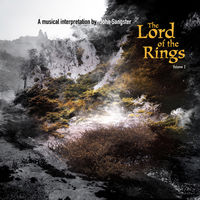
The Lord of the Rings, Vol. 2
The second volume of John Sangster's classic jazz epic on The Lord of the Rings. First issued by EMI as a double LP more than twenty-five years earlier, this music reaches CD for the first time in this Move reissue.
Composer
Producer
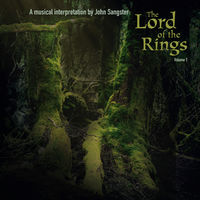
The Lord of the Rings, Vol. 1
Not Howard Shore's film score, but Australian jazz and film composer John Sangster's ambitious 1970s musical portrait of Tolkien's characters and events, restored here on a double CD more than twenty-five years after the original EMI LPs.
Composer

Gould Plays Gould
Some of Australia's finest players of spontaneous, improvised music show their talents on this disc, compiled from two earlier LPs. Original pieces by Tony Gould, directed and conducted by John Sangster.
Composer
Contributor: Musical Director