
Listen & tracks
1 of 18 tracks have a preview · 16 works · 62:06
-
1 La Portugaise Antoine Forqueray 2:53
-
2 La Bellmont Antoine Forqueray 2:38
-
3 La de Drummond Jacques Duphly 3:38
-
4 La Forqueray Jacques Duphly 5:20
-
5 Chaconne Jacques Duphly 8:48
-
6 Menuets Jacques Duphly 2:46
-
7 La Felix Jacques Duphly 3:25
-
8 Les Graces Jacques Duphly 3:16
-
9 La de Belombre Jacques Duphly 3:01
-
10 La de Caze Claude-Bénigne Balbastre 3:43
-
11 La d’Héricourt Claude-Bénigne Balbastre 2:56
-
12 La Ségur Claude-Bénigne Balbastre 4:34
-
13 La Monmartel ou la Brunoy Claude-Bénigne Balbastre 2:44
-
14 La Suzanne Claude-Bénigne Balbastre 3:58
-
15 La Berville Claude-Bénigne Balbastre 4:46
-
16 La Lugeac Claude-Bénigne Balbastre 3:40
In pre-revolutionary France, the salon was a meeting place for an international aristocracy. Noted aristocrats staged several salon concerts for invited audiences every month. The ‘character piece’ or ‘portrait piece’, often inspired by a celebrated Parisian personality of the day, thrived in that intimate setting.
Anderson plays Antoine Forqueray in harpsichord transcriptions by his son Jean-Baptiste-Antoine, character pieces and a chaconne by Jacques Duphly, and works from Claude-Bénigne Balbastre’s first book of harpsichord music. Each portrait is tied to a Parisian figure of the time.
In the artist’s words
One frequenter of salon concerts, Hubert Le Blanc, reports that “nothing in the world surpassed the pleasure of listening to sonatas played by Forqueray (the father) and Monsieur Bellmont”. It is likely that these two famous gamba players gave the first performances of many of Forqueray’s works for two viola da gamba. It is in this form that both La Bellmont and La Portugaise originated. Forqueray’s son Jean-Baptiste-Antoine published the works not only in their original form as gamba duets, but also in these transcriptions for the harpsichord.
To meet a Scotsman amongst this assemblage of Parisian dignitaries is somewhat surprising. Pierre-Jacques-Macgregor Drummond, Captain of the Royal Scottish Regiment, went to Paris as part of Bonny Prince Charlie’s attempt to assemble troops. La Forqueray is one of many tributes by his contemporaries to this revered composer; as well as providing a portrait of Forqueray — capricious, whimsical, bizarre — the piece is a glimpse, through Duphly’s eyes, of Forqueray’s compositional style.
Balbastre dedicated his first book of harpsichord pieces to Madame Suzanne-Félix de Caze. Madame de Caze and Monsieur l’Abbé d’Héricourt were both students of Jacques Duphly; when Balbastre arrived in Paris in 1750, both chose the younger and more flamboyant teacher. Other personages among Balbastre’s students were Thomas Jefferson’s daughter and Marie Antoinette.
Reviews
Lively and sensitive ... lived up to the flamboyance of many of the pieces with exciting displays of virtuosity ... superb phrasing and sympathetic understanding of the music.
Artists
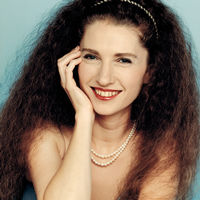
Elizabeth Anderson
harpsichord
Elizabeth Anderson has performed on eleven international concert tours to Europe, Japan and Singapore, and is a regular guest lecturer and performer at universities and music schools throughout Australia.
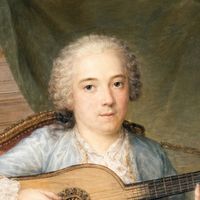
Claude-Bénigne Balbastre
composer
Claude Balbastre wrote flamboyant French harpsichord character pieces and Noëls that thrived in Parisian salons and on the organ: portrait pieces full of colour, dance rhythm and courtly swagger, still vivid when the keys rattle and the stops open.

Jacques Duphly
composer
Antoine Forqueray
composer, arranger
Antoine Forqueray wrote fiercely demanding music for the viola da gamba, dramatic and brash beside the sweeter style of Marin Marais. Only thirty-two pieces survive, many known today as harpsichord character pieces.
Digital booklet
Digital booklet Notes, texts and credits — read online or download the PDF Download the PDFPerformers
- Elizabeth Anderson · harpsichord
Technical credits
-
Producer
Elizabeth Anderson
Martin Wright
-
Recording Engineer
Martin Wright
-
Venue
Move Records Studio
Details
- List price
- $25.00 AUD
- Total playing time
- 62 minutes 6 seconds
- Release date
- 1994
- Categories
- Baroque, Classical, Keyboard
- Genre
- Baroque
- Musical work copyright
- © 1994 Move Records
- Sound recording copyright
- ℗ 1994 Move Records
- Catalogue
- MD 3131
- EAN
- 9314574313123
More to explore
Keys to Heaven
The Australian Chamber Choir opens with the first recording of Agata della Pietà’s cantata Ecce nunc, written in eighteenth-century Venice by an orphan of the Ospedale della Pietà and reconstructed by Elizabeth Anderson. Sacred works by Palestrina and Allegri complete the programme.
The Convict Harpsichordist
John Grant, frustrated in love, shot a London lawyer in the buttock and was sentenced to death at the Old Bailey. Granted a reprieve, he reached Sydney Cove in 1804 with Australia’s first harpsichord. What music did he play? Elizabeth Anderson answers on the instrument he brought.
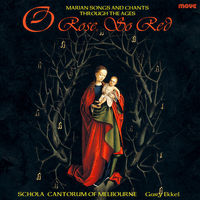
O Rose So Red
Melbourne-based Schola Cantorum, directed by Gary Ekkel, present chants, songs and motets that honour the Virgin Mary across more than a thousand years of sacred repertoire.
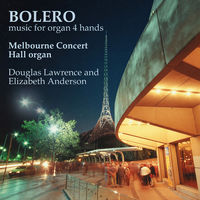
Bolero: Music for Organ 4 Hands
Douglas Lawrence and Elizabeth Anderson play organ four hands on the Melbourne Concert Hall’s French-style Casavant. Bolero gathers favourites and rarities arranged or written for two players at one console.
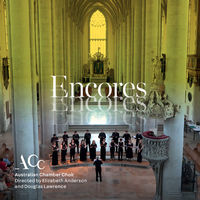
Encores
Directed by Douglas Lawrence, the Australian Chamber Choir gathers favoured concert encores in a programme that shows the ensemble at its most immediate and engaging.
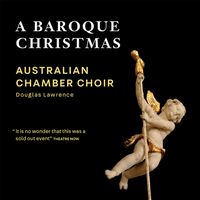
A Baroque Christmas
The music on this CD is a historical Christmas “pick of the pops”, from the late 1400s to the end of the Baroque period. Directed by Douglas Lawrence, the Australian Chamber Choir offers a programme recorded live in concert during their 2019 European tour. The 17 tracks are drawn from lesser-known seasonal works, championing a sublime repertoire that is all too often neglected.