
Listen & tracks
4 of 13 tracks have a preview · 5 works · 54:10
-
What should I say: Four poems of Thomas WyattMatt McMahon 5 movements24:30
- 1 i. Stand whoso list 4:30
- 2 ii. Whoso list to hunt – Prelude 2:17
- 3 iii. Whoso list to hunt, I know where is an hind 7:06
- 4 iv. What should I say 4:33
- 5 v. They flee from me 6:04
-
6 Southern Cross Mats Norrefalk 4:56
-
7 Dark Dreaming Siebe Pogson 5:29
-
ElysiumMatt Keegan 4 movements13:10
- 8 i 3:28
- 9 ii 3:58
- 10 iii 2:57
- 11 iv 2:47
-
12 At Carna Matt McMahon 6:05
Founded in 2015, the ensemble builds charts for a line-up found nowhere else: electric viola da gamba, saxophones, piano, voice and violin, bass guitar and drums. The music moves freely between baroque colour, jazz harmony, folk inflection and composed song.
The title cycle by Matt McMahon sets four poems of Thomas Wyatt, first heard in spare settings and then with fuller ensemble writing. Matt Keegan’s four-movement Elysium, with text by Philip Pogson, anchors the second half; Siebe Pogson contributes Dark Dreaming and an arrangement of Mats Norrefalk’s Southern Cross.
Across the programme the fretted seven-string gamba speaks as both solo voice and partner to Susie Bishop’s singing, while the rhythm section keeps the dialogue between past and present firmly in the present tense.
In the artist’s words
Elysian Fields is an experiment in creating improvised, composed and semi-composed repertoire for the rarest of instruments, the electric viola da gamba. The idea emerged out of a sense that I wanted to extend myself musically and personally after years of intensive work on the acoustic version of my instrument. I’d seen people playing the electric viola da gamba on YouTube and decided to try my hand at it.
Relationships were important to me in co-creating Elysian Fields. Although I am classically trained and specialise in French baroque music, I have attended jazz events for years. Matt McMahon and I got to know each other chatting about music at jazz gigs. It seemed natural to ask him to write for me and then for us to play together. I first met Matt Keegan when I taught him at school “a few years back!” Like Matt McMahon, he grasped immediately what I wanted to do with the electric gamba and writes beautifully for the band. Susie Bishop and I have collaborated on several projects across a range of genres. We have always clicked personally and musically. I am a great fan of her voice and violin playing. I love working with our talented young rhythm section: drummer Finn Ryan and bass guitarist Siebe Pogson. They not only keep us in time, but their youth and stream of ideas keep us honest. These people are not only amazing musicians, they are wonderful human beings. I am humbled by their generosity and patience in allowing me to become part of their musical world.
Over the past three years we’ve gone about developing the ensemble in a largely intuitive way. We’ve written and arranged charts and tried them out, learning as we go. Given the ancient roots of the viola da gamba – the viol family traces its origins back way well before that of the violin – it was inevitable that a multilayered dialogue has emerged between past and present. This involves elements of baroque, classical, jazz, world and folk music. The past-present conversation is evident in the textures we create, the musical languages we explore and even the texts we’ve set to music such as poems by Thomas Wyatt. In addition, I believe that the 7-string viola da gamba, which is tuned in fourths and a third like a guitar, is a naturally modal instrument and highly suited to the subtle harmonic inflections that Matt McMahon, Matt Keegan and Siebe Pogson create in their compositions. Pulling this all together has been exciting and has changed me forever. I can only hope listeners enjoy the result.
Reviews
Elysian Fields uses elements of baroque, classical, jazz, world and folk to create a multilayered, diverse sound. What Should I Say creates a dialogue between the present and the past, through the contrasting use of renaissance poetry, and an electric version of a baroque stringed instrument. ... a thoroughly enjoyable CD that challenges boundaries. It includes hybrid, experimental forms and rare instruments. This music is a testament to Jenny Eriksson’s growing talent, her musicianship, and her ensemble’s quest for new sound.
Masterful musicians at play in the creation of new works and soundscapes that feature and incorporate Jennifer Eriksson’s electric viola da gamba. The endlessly imaginative Matt McMahon has again here morphed into the perfect vessel for the conception and execution of this impressive set, which comprises the first five compositions on the album. The second half of the album contains Matt Keegan’s substantial composition presented in four movements, with text provided by Philip Pogson. What Should I Say is infused with their dedication to their craft and the creative energy from whence Elysian Fields has emerged.
Artists

Elysian Fields
ensemble
Elysian Fields, Australia’s only electric viola da gamba ensemble, was formed by Jenny Eriksson, Matt Keegan and Matt McMahon in 2015. The band is an ongoing experiment in new improvised and composed repertoire for the electric viola da gamba, of which Eriksson is believed to be the only Australian exponent.

Matt Keegan
composer
Matt Keegan regularly performs throughout Australia and around the world. As a saxophonist, composer, arranger and producer he has released eight albums and won the MCA Freedman Fellowship for jazz.

Matt McMahon
composer
Matt McMahon is a Sydney-based pianist, keyboardist and composer. After studying music and English literature at Sydney University and jazz at the Sydney Conservatorium of Music, he has performed and recorded actively since 1993.

Siebe Pogson
arranger, composer
Siebe Pogson is a multi-instrumentalist, composer and bassist from Sydney, leader of the jazz-funk group Funk Engine and a composer for Australia’s only electric viola da gamba ensemble, Elysian Fields.

Mats Norrefalk
composer
Digital booklet
Digital booklet Notes, texts and credits — read online or download the PDF Download the PDFPerformers
- Elysian Fields · ensemble
- Susie Bishop · voice, violin · tracks 1–5, 8, 10 and 11
- Matt Keegan · saxophones · tracks 1–11
- Matt McMahon · piano
- Jennifer Eriksson · electric viola da gamba
- Siebe Pogson · bass guitar · tracks 1–11
- Finn Ryan · drums · tracks 1–11
Technical credits
-
Contributor
Philip Pogson (tracks 8–11)
-
Producer
Jennifer Eriksson
Llew Kiek
Philip Pogson
-
Recording Engineer
Chris Doherty
Jules Goyen
-
Editing Engineer
Llew Kiek
-
Mixing Engineer
Ritchie Belkner
-
Mastering Engineer
Michael Lynch
-
Venue
Free Energy Device Studios
Details
- List price
- $25.00 AUD
- Total playing time
- 54 minutes 10 seconds
- Release date
- 1 Oct 2018
- Category
- Classical
- Musical work copyright
- © 2018 Elysian Fields
- Sound recording copyright
- ℗ 2018 Move Records
- Catalogue
- MCD 580
- EAN
- 9314574058024
More to explore
Fika
Fika is the second album from crossover ensemble Elysian Fields: music shaped for the Swedish custom of gathering with friends over coffee, conversation and something sweet to share.
Exquisite Harmonies
Exquisite Harmonies features works for viola da gamba and harpsichord, and several harpsichord solos, largely from the French Baroque. The exceptions are Telemann, Abel and Australian composer Troy Russell. A nice treat is an improvised harpsichord fantasia in the style of Telemann.
Nordic Moods & Baroque Echoes
A collaboration between Duo Langborn/Wendel and The Marais Project, this album blends baroque repertoire, new compositions and arrangements, and folk music from Australia and Sweden.
Australian Monody
The Marais Project is joined by countertenor Russell Harcourt for a collection of largely Australian songs and instrumental works, spanning light and darkness, love and loss.
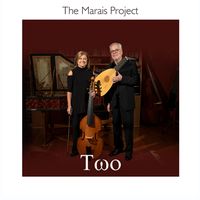
Two
Two brings together Marais Project founding members Jennifer Eriksson, viola da gamba, and Tommie Andersson, gallichon, theorbo and baroque guitar. Each plays alternate brackets of solos before they join in a splendid suite by Marin Marais.

Jazz-Funk
Funk Engine, formed in 2013 by Sydney Conservatorium jazz graduates, returns with a tight, danceable set that revives jazz-funk for a new generation.