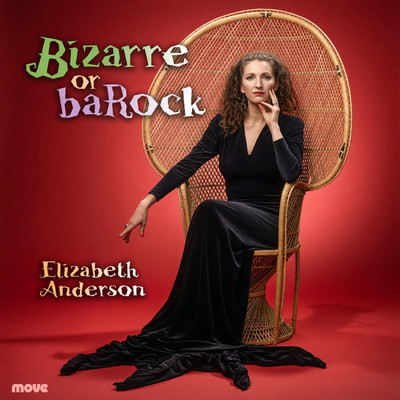
Listen & tracks
1 of 25 tracks have a preview · 20 works · 69:35
-
1 Ragtime Willard Palmer 1:31
-
2 Blues for Harpsichord Willard Palmer 2:09
-
3 Scarborough Fair Traditional 3:20
-
4 Leyenda: Asturias Isaac Albéniz 7:00
-
5 Small Prelude in C minor Johann Sebastian Bach (BWV 999) 1:31
-
6 The Lyre of Orpheus Jean-François Dandrieu 3:10
-
7 The Cuckoo Louis-Claude Daquin 2:25
-
8 Winter's Shadow Mary Mageau 3:47
-
9 Cycles I Lawrence Whiffin 3:59
-
10 Chocolate Bunnies Donald Angle 2:32
-
11 Hungarian Rock György Ligeti 5:58
-
12 A New Ground Henry Purcell 3:08
-
13 The Harmonious Blacksmith George Frideric Handel 4:49
-
14 Eleanor Rigby John Lennon 2:48
-
15 Danza Ostinata William Albright (Fancy No. IV for harpsichord) 5:29
-
16 Batalha Diego da Conceição 4:33
-
17 Nine Rarebits Earle Brown 3:08
-
18 Sonata in D minor Domenico Scarlatti (Prestissimo, K 517) 2:51
-
19 Sonata in A minor Domenico Scarlatti (Allegro, K 175) 2:58
-
20 I Got Rhythm George Gershwin 2:29
‘Barock’ is a German word which originally meant ‘bizarre’. It was not until early in the 20th century that the word ‘Barock’ was used in Germany to describe the music of Bach’s time.
When Sir Charles Burney first used it in his German Tour diary (1733), he explained that it meant ‘coarse and uncouth’, much as writers then used the word ‘Gothic’. In architecture, the word ‘Barock’ was applied from about 1867 to the highly-decorated style of the 17th and 18th centuries in Austria and Germany. Therefore, to apply the term Baroque (French/English spelling) with all its shades of meaning is to extend the boundaries of Baroque music far beyond the dates which have traditionally been set for it.
After the release of the highly acclaimed Goldberg Variations (MD 3160; Soundscapes Editor’s Choice, November 1996) and highly successful European and Japanese tours, Anderson said: “I felt like doing something WILD!”
A second volume followed, even more bizarre: More Bizarre or baRock (MD 3326).
Reviews
Elizabeth Anderson’s harpsichord extravaganza should be a candidate for best Australian CD of 1997 … It all tastes delicious.
There is not a weak point on the disc.
Vivacious Melbourne keyboard virtuoso Elizabeth Anderson plays the hottest, hippest harpsichord in the world today.
I was very glad to make the acquaintance of harpsichordist Anderson, who has four previous CDs on the Move label to her credit, including a recording of Bach’s Goldberg Variations. This is highly proficient, no-nonsense playing that is guaranteed to get your fingers a snappin’ and your toes a tappin’. She plays a terrific-sounding harpsichord (maker unknown) that manages to hold its own in the ensemble numbers with drums and bass… it certainly helps that she is one hell of a harpsichordist. The recorded sound is visceral and real – much of the delight in listening to this CD comes from the sheer impact of the sound. I never thought I’d use the word “visceral” to describe a harpsichord recording, but there it is. What fun—a candidate for this year’s Want List for sure.
Artists
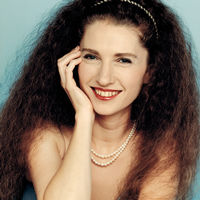
Elizabeth Anderson
harpsichord
Elizabeth Anderson has performed on eleven international concert tours to Europe, Japan and Singapore, and is a regular guest lecturer and performer at universities and music schools throughout Australia.
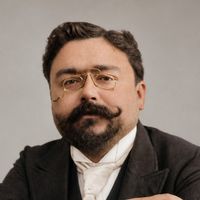
Isaac Albéniz
composer
Isaac Albéniz (1860–1909) was a Spanish pianist and composer whose piano music, steeped in folk idioms, helped give Spanish art music a distinctive national voice.
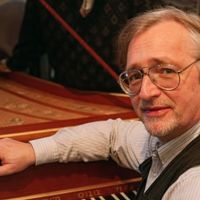
Donald Angle
arranger, composer
Donald Angle’s music comes from, or is influenced most directly by, twentieth-century pop, country and jazz, and is mostly geared to solo performance on the harpsichord.
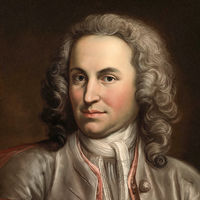
Johann Sebastian Bach
composer
Johann Sebastian Bach (1685–1750) was a German composer and organist of the late Baroque. His sacred and secular music for choir, orchestra, organ and solo instruments remains among the foundations of the Western concert and church repertory.
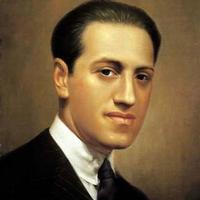
George Gershwin
composer
George Gershwin (September 26, 1898 – July 11, 1937) was an American composer and pianist whose music spanned popular song, Broadway and the classical concert hall, leaving melodies that remain widely known.
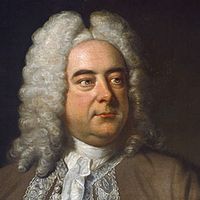
George Frideric Handel
composer
George Frideric Handel (1685–1759) was a German-born Baroque composer who settled in London and became a naturalised British subject. He is celebrated for his operas, English oratorios, organ concertos and orchestral works.
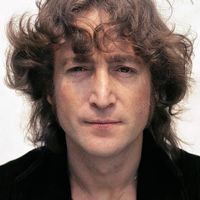
John Lennon
composer
John Lennon's songs cut through styles and decades with plainspoken hooks and melodies that refuse to age. From Beatles classics to the solo anthem Imagine, his writing keeps finding new voices in jazz rooms, a cappella circles and the concert hall.
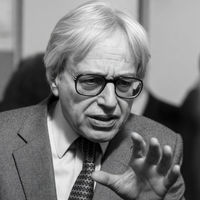
György Ligeti
composer
György Ligeti (1923–2006) was a Hungarian-born composer of contemporary classical music, among the most innovative avant-garde figures of the later twentieth century.
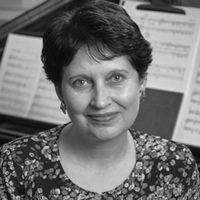
Mary Mageau
composer
Mary Mageau (1934–2020) was an American-born Australian composer and harpsichordist whose catalogue spans orchestra, chamber music, solo works and voice. From 1974 she made her home in Queensland and became a distinctive voice in Australian contemporary music.
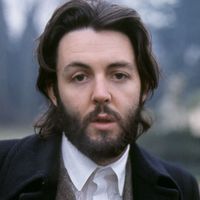
Paul McCartney
composer
Paul McCartney's songs travel far beyond their rock origins. Melodic, singable and built for reinvention, they turn up here in jazz sets, a cappella harmony, intimate guitar ballads and even harpsichord with drums and bass.
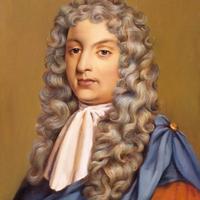
Henry Purcell
composer
Henry Purcell (c. 1659–1695) was an English organist and composer of the middle Baroque. His sacred music, theatre songs, instrumental works and the opera Dido and Aeneas shaped a distinctly English Baroque style.
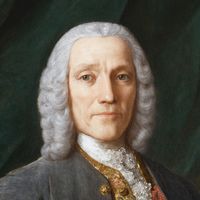
Domenico Scarlatti
composer
Domenico Scarlatti (1685–1757) was an Italian composer who spent much of his career at the Portuguese and Spanish courts. He is known almost exclusively for his 555 keyboard sonatas.
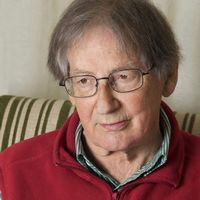
Lawrence Whiffin
composer
Lawrence Whiffin (1930–2012) was a Melbourne-born composer, pianist and teacher. After years abroad he returned to Australia as Senior Tutor at La Trobe University, where teaching harmony and analysis also freed him to write more concert music.

William Albright
composer
Earle Brown
composer
Diego da Conceição
composer
Jean-François Dandrieu
composer
Jean-François Dandrieu was a French Baroque composer, harpsichordist and organist. Dandrieu's harpsichord oeuvre is, after those of François Couperin and Jean-Nicolas Geoffroy, the most important in terms of sheer quantity of pieces.
Louis-Claude Daquin
composer
Louis-Claude Daquin wrote Baroque and Galant keyboard music built for display: clear textures, brilliant passagework and character pieces that paint a scene. His harpsichord suites and organ Noëls still circulate, above all Le coucou and the Swiss Noël.
Willard Palmer
composer
Digital booklet
Digital booklet Notes, texts and credits — read online or download the PDF Download the PDFPerformers
- Elizabeth Anderson · harpsichord
- Kylie Davies · double bass · tracks 1–3, 10, 14 and 20
- Danny Fischer · drums, percussion · tracks 1, 2, 8, 10, 14 and 20
Technical credits
-
Recording Engineer
Martin Wright
Vaughan McAlley
Details
- List price
- $25.00 AUD
- Total playing time
- 69 minutes 35 seconds
- Release date
- 1 Jun 1997
- Categories
- Baroque, Classical, Jazz, Keyboard
- Genres
- Baroque, Jazz & Improvised
- Musical work copyright
- © 1997 Move Records
- Sound recording copyright
- ℗ 1997 Move Records
- Catalogue
- MD 3179
- EAN
- 9314574317923
More to explore
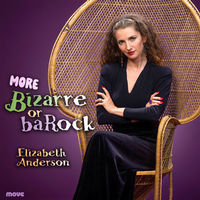
More Bizarre or baRock
"The hottest, hippest harpsichord in the world today," said one critic of the best-selling Bizarre or baRock. Melbourne harpsichordist Elizabeth Anderson returns with the long-awaited sequel.
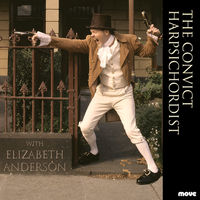
The Convict Harpsichordist
John Grant, frustrated in love, shot a London lawyer in the buttock and was sentenced to death at the Old Bailey. Granted a reprieve, he reached Sydney Cove in 1804 with Australia’s first harpsichord. What music did he play? Elizabeth Anderson answers on the instrument he brought.
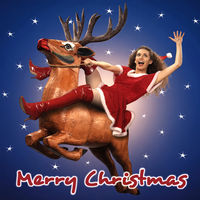
Merry Christmas
Elizabeth Anderson and friends put a fresh twist on Christmas carols: eight tracks packaged as a Christmas card, with a vibrant cover and space for a personal inscription.
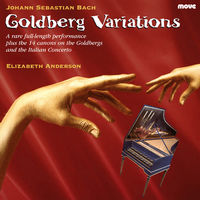
Goldberg Variations
A rare chance to hear Bach’s complete Goldberg Variations with every repeat, the fourteen canons on the Goldberg bass, and the Italian Concerto, played by Elizabeth Anderson on harpsichord. Two CDs for the price of one.
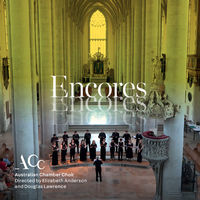
Encores
Directed by Douglas Lawrence, the Australian Chamber Choir gathers favoured concert encores in a programme that shows the ensemble at its most immediate and engaging.
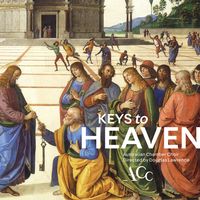
Keys to Heaven
The Australian Chamber Choir opens with the first recording of Agata della Pietà’s cantata Ecce nunc, written in eighteenth-century Venice by an orphan of the Ospedale della Pietà and reconstructed by Elizabeth Anderson. Sacred works by Palestrina and Allegri complete the programme.