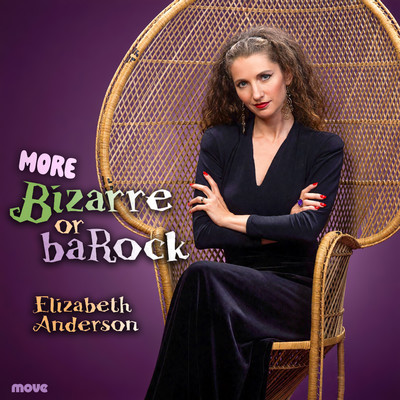
Listen & tracks
2 of 33 tracks have a preview · 19 works · 66:56
-
1 Bird Boogie Franzpeter Goebels Chocolate Boogie 1:20
-
2 Fuguedelic Andrew Koll 3:59
-
No. 1 The Well-Tempered Clavier, Book 1Johann Sebastian Bach 2 movements4:36
- 3 Prelude in C major 2:57
- 4 Fugue in C major 1:39
-
Bach Goes To TownAlec Templeton 2 movements3:33
- 5 Prelude 1:33
- 6 Fugue 2:00
-
Concerto in D majorAntonio Vivaldi 3 movements7:10
- 7 (Allegro) 2:20
- 8 Larghetto 2:23
- 9 Allegro 2:27
-
10 Foggy Mountain Breakdown Earl Scruggs 1:53
-
Pièces de Clavecin, 20th OrdreFrançois Couperin 2 movements4:12
- 11 La Princesse Marie 2:39
- 12 Air dans le goût Polonois 1:33
-
13 Polonaise and Trio Thaddeus Kosciusko 1:27
-
Andreas Bach BookGeorg Philipp Telemann 2 movements3:52
- 14 Bourrées 2:21
- 15 Polonoise 1:31
-
16 The Addams Family Virginall Vaughan McAlley 3:23
-
17 baRock Jill Lowe 2:20
-
18 This Beauteous Wicked Place Ron Nagorcka 6:56
-
19 Bach Before the Mast George Malcolm 3:44
-
20 The Fall of the Leafe Martin Peerson 2:12
-
21 Lambert's Clavichord Op. 41 Herbert Howells Lambert's Fireside 2:31
-
22 Round O' Henry Purcell 1:57
-
23 Continuum György Ligeti 5:00
-
24 Piano Sonata in A major K331 Wolfgang Amadeus Mozart Rondo alla Turka 3:03
-
25 Blue Rondo à la Turk Dave Brubeck 3:48
Barock is a German word that originally meant 'bizarre'. The word 'rock', incidentally, was used early in the twentieth century as a euphemism for sexual congress and later became a generic musical term. Only early in that century was Barock applied in Germany to the music of Bach's time. When Sir Charles Burney first used it in his German Tour diary (1733), he explained that it meant 'course and uncouth', much as writers then used 'Gothic'. In architecture, from about 1867, Barock named the highly decorated style of the seventeenth and eighteenth centuries in Austria and Germany.
To apply Baroque, in the French and English spelling, with all its shades of meaning is therefore to push the boundaries of Baroque music far beyond the dates traditionally set for it.
This recording explores 'Baroque' harpsichord music across four centuries. It ranges from Peerson's early programmatic cameo, through traditional Baroque repertoire by Bach, Vivaldi, Couperin, Telemann and Purcell, to jazz greats Alec Templeton and Dave Brubeck. It is the sequel to Bizarre or baRock.
Reviews
Elizabeth Anderson's latest compact disc may well prove startling. Certainly, it is one of the most delightfully entertaining recitals on the instrument I've heard in a long time.
... a reminder that classical music doesn't need to be serious all the time ... Elizabeth Anderson marries her taste to a good sense of humour and delivers a fascinating program that ranges from Bach to boogie.
Anderson is a dynamic and imaginative player. I enjoy her energetic rendition of Mozart’s Rondo alla Turca. She also has a sensitive, introverted side; and several of the pieces she has programmed for this recording, like Herbert Howells’s poignant ‘Lambert’s Fireside’, show her in that light. The harpsichord is supported in some pieces by a jazz rhythm section of bass, drums, and vibes, in various combinations. The Australian didjeridu makes an appearance in Ron Nagorcka’s ‘This Beauteous Wicked Place’.
the hottest, hippest harpsichord in the world today
Artists
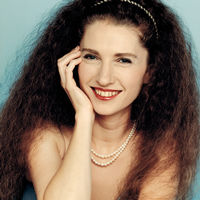
Elizabeth Anderson
harpsichord
Elizabeth Anderson has performed on eleven international concert tours to Europe, Japan and Singapore, and is a regular guest lecturer and performer at universities and music schools throughout Australia.

Ariel Valent
vibraphone
Ariel Valent’s vibraphone colours ambient soundscapes and baroque-jazz crossovers alike, whether co-writing Invention in Time pieces that drift like tide and light or locking into a rhythm section under Elizabeth Anderson’s harpsichord.
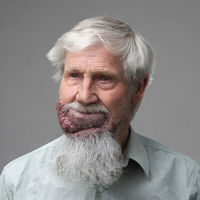
Ron Nagorcka
didjeridu, sampler
Ron Nagorcka has a long-held interest in the sounds of the Australian bush, especially its birds, electronics in music, and just intonation. His nature recordings from Tasmania and arid mainland Australia provide the basis for many of his compositions.
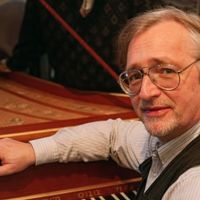
Donald Angle
arranger
Donald Angle’s music comes from, or is influenced most directly by, twentieth-century pop, country and jazz, and is mostly geared to solo performance on the harpsichord.
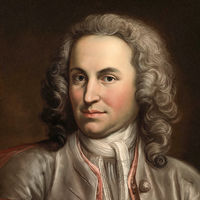
Johann Sebastian Bach
composer, arranger
Johann Sebastian Bach (1685–1750) was a German composer and organist of the late Baroque. His sacred and secular music for choir, orchestra, organ and solo instruments remains among the foundations of the Western concert and church repertory.
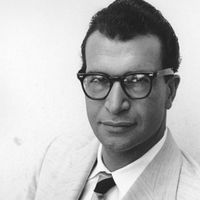
Dave Brubeck
composer
Dave Brubeck wrote jazz that thrives on odd metres, stacked rhythms and a classical sense of form. On these discs his pieces travel far from the quartet: Strange Meadow Lark, Bluette and Lamento for horn and keyboard, and Blue Rondo à la Turk reimagined on harpsichord.
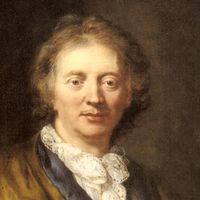
François Couperin
composer
François Couperin (1668–1733) was a French Baroque composer, organist and harpsichordist, known as Couperin le Grand. Organist to Louis XIV and to Saint-Gervais in Paris, he remains the supreme French master of the harpsichord.
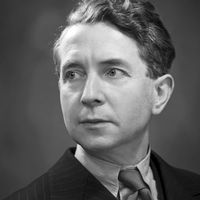
Herbert Howells
composer
Herbert Howells wrote Anglican church music of rare harmonic warmth and contemplative beauty, from carol-anthems such as A Spotless Rose to Latin motets and organ works steeped in the Tudor tradition.
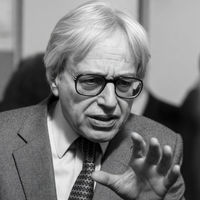
György Ligeti
composer
György Ligeti (1923–2006) was a Hungarian-born composer of contemporary classical music, among the most innovative avant-garde figures of the later twentieth century.
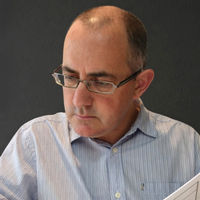
Vaughan McAlley
composer
Vaughan McAlley is a composer and arranger, alto and tenor, a capable flautist and French horn player, and the recording engineer behind countless Move releases.
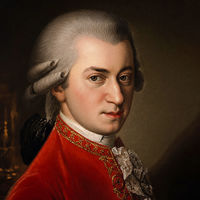
Wolfgang Amadeus Mozart
composer
Wolfgang Amadeus Mozart was a prolific and influential composer of the Classical era. He wrote over 600 works, many of them pinnacles of symphonic, concertante, chamber, piano, operatic and choral music, and remains among the most enduringly popular of classical composers.
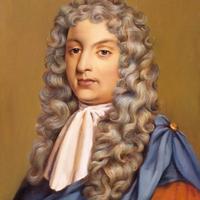
Henry Purcell
composer
Henry Purcell (c. 1659–1695) was an English organist and composer of the middle Baroque. His sacred music, theatre songs, instrumental works and the opera Dido and Aeneas shaped a distinctly English Baroque style.
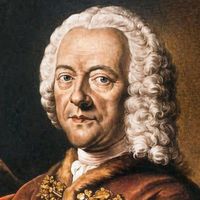
Georg Philipp Telemann
composer
Georg Philipp Telemann (1681–1767) was a German Baroque composer and multi-instrumentalist. Almost completely self-taught, he became a composer against his family's wishes and ranked among the leading German musicians of his age.
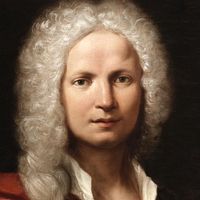
Antonio Vivaldi
composer
Antonio Vivaldi (1678–1741) was an Italian Baroque composer, priest and virtuoso violinist. He is best known for his instrumental concertos, above all the violin cycle The Four Seasons.
Franzpeter Goebels
composer
Andrew Koll
composer
Thaddeus Kosciusko
composer
Jill Lowe
composer
George Malcolm
composer
Vaclav Nelhybel
arranger
Martin Peerson
composer
Earl Scruggs
composer
Alec Templeton
composer
Digital booklet
Digital booklet Notes, texts and credits — read online or download the PDF Download the PDFPerformers
- Elizabeth Anderson · harpsichord
- Rosie Westbrook · acoustic bass, electric bass · track 2
- Tony Floyd · drums
- Ariel Valent · vibraphone · track 2
- Ron Nagorcka · didjeridu, sampler · track 18
Technical credits
-
Recording Engineer
Martin Wright
Vaughan McAlley
-
Thanks to
Creative Australia (track 18)
Details
- List price
- $25.00 AUD
- Total playing time
- 66 minutes 56 seconds
- Release date
- 20 Aug 2009
- Categories
- Baroque, Classical, Jazz, Keyboard
- Genres
- Baroque, Jazz & Improvised
- Musical work copyright
- © 2009 Move Records
- Sound recording copyright
- ℗ 2009 Move Records
- Catalogue
- MD 3326
- EAN
- 9314574332629
More to explore
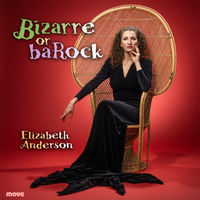
Bizarre or baRock
Elizabeth Anderson explores harpsichord music across four centuries: from Conceição’s raw 17th-century battle piece and traditional Baroque repertoire to jazz, blues, Gershwin and the Beatles with drums and bass. Weird, wild, wacky and wonderful – you’ve never heard the harpsichord like this.
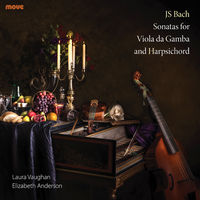
JS Bach Sonatas for Viola da Gamba and Harpsichord
Considering the fame of Bach’s solo violin partitas and cello suites, it is remarkable that his sonatas for viola da gamba and keyboard still sit in the shadows for many listeners. That some of their material appears elsewhere in his output hardly explains the neglect.
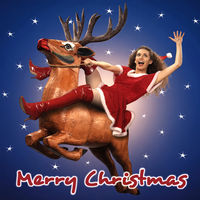
Merry Christmas
Elizabeth Anderson and friends put a fresh twist on Christmas carols: eight tracks packaged as a Christmas card, with a vibrant cover and space for a personal inscription.
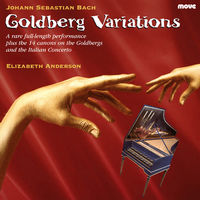
Goldberg Variations
A rare chance to hear Bach’s complete Goldberg Variations with every repeat, the fourteen canons on the Goldberg bass, and the Italian Concerto, played by Elizabeth Anderson on harpsichord. Two CDs for the price of one.
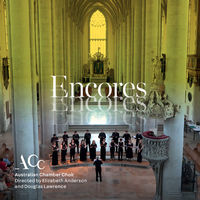
Encores
Directed by Douglas Lawrence, the Australian Chamber Choir gathers favoured concert encores in a programme that shows the ensemble at its most immediate and engaging.
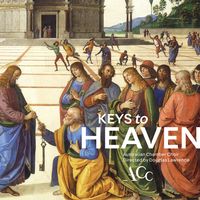
Keys to Heaven
The Australian Chamber Choir opens with the first recording of Agata della Pietà’s cantata Ecce nunc, written in eighteenth-century Venice by an orphan of the Ospedale della Pietà and reconstructed by Elizabeth Anderson. Sacred works by Palestrina and Allegri complete the programme.