Listen & tracks
1 of 14 tracks have a preview · 8 works · 70:08
-
1 Istanpitta Ghaetta Anonymous 8:58
-
2 Lo vers comenssa Marcabru 6:48
-
3 Lo vers comens can vei del fau Marcabru 5:19
-
4 Saltarello Anonymous 4:20
-
5 L'autrier jost' una sebissa Marcabru 5:08
-
6 Bel m'es quant son li fruit madur Marcabru 9:19
-
7 Istanpitta Palamento Anonymous 7:45
-
Cantigas de amigoMartin Codax 7 movements22:31
- 8 Ondas do mar de Vigo 4:28
- 9 Mandad' ei comigo 3:58
- 10 Miña irmana fremosa iredes comigo 3:15
- 11 Ay Deus, se sab' ora o meu amigo 3:30
- 12 Quantas sabedes amar amigo 2:02
- 13 Eno sagrado Vigo 3:07
- 14 Ay ondas que eu vin ver 2:11
The major work is Codax’s Siete Cantigas de Amigo: seven songs set in Vigo on Spain’s west coast, in which a woman waits beside the sea for her lover. Around that cycle sit four songs by Marcabru and three anonymous instrumental dances.
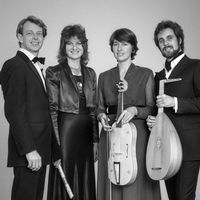
La Romanesca brings together four leading Australian early-music players: Hartley Newnham (countertenor, percussion), Ruth Wilkinson (vielle, recorder), Ros Bandt (recorders, flute, psaltery, percussion) and John Griffiths (lute, guitarra morisca).
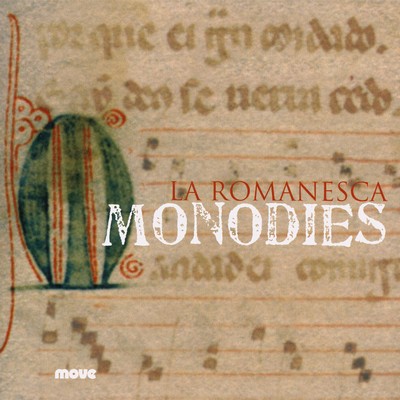
This expanded edition of the 1982 Medieval Monodies adds new instrumental istanpittas and further Marcabru songs to Codax’s sea-haunted cycle.
In the artist’s words
The poet-musicians Marcabru and Martin Codax occupy important places in the history of medieval secular song. Marcabru is the earliest southern French troubadour whose music survives, and Martin Codax’s songs are the oldest relics of Iberian secular music. More than a thousand kilometres and perhaps a hundred years separate them, yet their works are branches of the same tree. Each poet is an articulate observer of his own world, a commentator on social values, and a deft painter of human character and emotion.
Reviews
A well-balanced recording of rare and unusual music.
The reconstructions of this music are truly haunting and sound right - the ultimate test
Artists
La Romanesca
ensemble
A leading force in early music in Australia since 1978, La Romanesca has developed a special interest in the performance of mediaeval monophonic and polyphonic song, although the group's repertory spans the twelfth to seventeenth centuries.

Martin Codax
composer
Marcabru
composer
Digital booklet
Digital booklet Notes, texts and credits — read online or download the PDF Download the PDFPerformers
- La Romanesca · ensemble
- Hartley Newnham · voice, percussion
- Ruth Wilkinson · recorder, vielle, tenor viol
- Ros Bandt · recorder, flute, psaltery, rebec, percussion
- John Griffiths · lute, guitarra morisca
Technical credits
-
Recording Engineer
Andrew Earle
Martin Wright
Vaughan McAlley
-
Venue
Move Records Studio (tracks 1–4 and 7)
Ormond College Chapel (tracks 5, 6, 8–14)
Details
- List price
- $25.00 AUD
- Total playing time
- 70 minutes 8 seconds
- Release date
- 2005
- Categories
- Early music, Vocal
- Genres
- Early Music, Vocal & Opera
- Musical work copyright
- © 1982 Move Records
- Sound recording copyright
- ℗ 1982, 2005 Move Records
- Catalogue
- MD 3044
- EAN
- 9314574304428
More to explore
Via Frescobaldi
Seventeenth-century Italian composer Girolamo Frescobaldi was at once conservative and innovative. La Romanesca presents improvisatory toccatas, imitative polyphonic instrumental works, and songs from his arie musicali of 1630.
Iberian Triangle
La Romanesca presents a portrait of the musical diversity of Spanish song in the years just before the great expulsion and Columbus's voyages: music of Christian, Moorish and Jewish Spain before 1492.
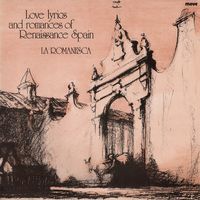
Love Lyrics and Romances of Renaissance Spain
This is the first recording by the early music group La Romanesca, devoted to Spanish villancicos and romances of the Renaissance.

Bards of Faith and Passion
Jim Minchin sets poems by writers at play or at odds with eternity: soul-poet lyrics across the centuries, from anonymous Latin verse and the metaphysicals to Yeats, Shakespeare and living voices.
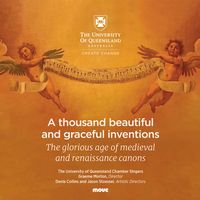
A Thousand Beautiful and Graceful Inventions
Subtitled ‘The glorious age of medieval and renaissance canons’, this programme of late Middle Ages and Early Modern choral music is sung by the University of Queensland Chamber Singers under Graeme Morton. The illustrated booklet has programme notes by Denis Collins and Jason Stoessel, with complete texts.
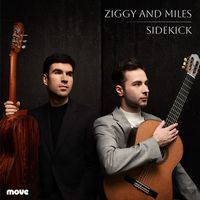
Sidekick
Sidekick is the debut CD from guitar duo Ziggy and Miles. It pairs new works written for the brothers with their own arrangement of Debussy’s Clair de Lune and repertoire from Spain, Latin America and Australia that has shaped their musical identity.