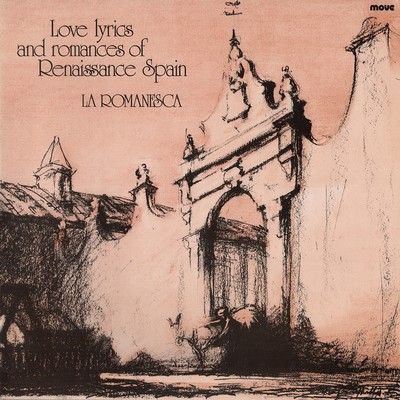
Listen & tracks
16 works · 42:13
-
1 De los álamos vengo, madre Juan Vásquez 1:35
-
2 De Antequera sale el moro Cristóbal de Morales 4:59
-
3 Hermosa Catalina Francisco Guerrero 1:19
-
4 Corten espadas afiladas Anonymous 2:28
-
5 Fantasia del primer tono Luys de Narváez 1:19
-
6 Fantasia del quarto tono Luys de Narváez 2:22
-
7 Ay, triste que vengo Juan del Encina 2:22
-
8 La tricotea Franco Alonzo 2:17
-
9 Tres morillas m’enamoran Anonymous 3:54
-
10 Danza alta Francisco de la Torre 2:15
-
11 Calabaca, no sé, buen amor Anonymous 2:07
-
12 Es la vida que cobré Anonymous 2:01
-
13 Lo mejor de mi vida Juan de Palomares 4:00
-
14 La morena graciosa Anonymous 1:09
-
15 Balletto – Corrente – Balletto – Gagliarda Bartolomé de Selma y Salaverde 4:17
-
16 Las voces del fuego Anonymous 3:49
Villancicos and romances from Spain’s Golden Age, spanning the courts of Ferdinand and Isabella through Charles V to Philip III and IV.
Countertenor Hartley Newnham joins Ruth Wilkinson, Ros Bandt and John Griffiths on recorders, renaissance flute, vihuela, five-course guitar, viola da gamba and percussion.
Artists
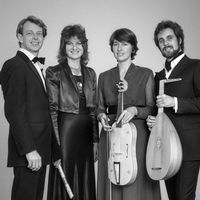
La Romanesca
ensemble
A leading force in early music in Australia since 1978, La Romanesca has developed a special interest in the performance of mediaeval monophonic and polyphonic song, although the group's repertory spans the twelfth to seventeenth centuries.
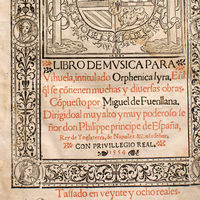
Miguel de Fuenllana
composer
Miguel de Fuenllana (c.1500–1579) was a Spanish Renaissance vihuelist and composer, blind from birth. His Seville publication of 1554, Orphénica Lyra, remains a cornerstone of the vihuela repertoire.

Franco Alonzo
composer
Juan del Encina
composer
Juan del Encina’s villancicos and secular songs give early Spanish Renaissance lyric a clear, speech-led voice: flexible rhythms shaped to the verse, plain strong harmonies, and three- and four-part writing that keeps the text forward.
Francisco Guerrero
composer
Francisco Guerrero (1528–1599) was a Spanish Renaissance composer and Catholic priest, admired for sacred motets and masses as well as secular songs that long outlived him in cathedral and court repertory.
Cristóbal de Morales
composer
Luys de Narváez
composer
Juan de Palomares
composer
Bartolomé de Selma y Salaverde
composer
Francisco de la Torre
composer
Francisco de la Torre left villancicos, funerary polyphony and a single court dance from late fifteenth-century Spain. His Alta, built on the La Spagna tenor, is the piece that still turns up in programmes of Iberian Renaissance song and dance.
Juan Vásquez
composer
Digital booklet
Digital booklet Notes, texts and credits — read online or download the PDF Download the PDFPerformers
- La Romanesca · ensemble
- Ruth Wilkinson · viola da gamba, recorder
- Hartley Newnham · countertenor
- John Griffiths · vihuela, five-course guitar, percussion
- Ros Bandt · recorder, renaissance flute, percussion
Technical credits
-
Producer
Brian Parish
-
Recording Engineer
Brian Parish
-
Venue
La Trobe University Recording Studio
-
Credit
Peter Growney
Roy Griffiths
Details
- List price
- $20.00 AUD
- Total playing time
- 42 minutes 13 seconds
- Release date
- 1980
- Categories
- Classical, Early music
- Genres
- Early Music, Vocal & Opera
- Musical work copyright
- © 1980 Move Records
- Sound recording copyright
- ℗ 1980 Move Records
- Catalogue
- MD 3034
- EAN
- 9314574303421
More to explore
Monodies
Music from twelfth- and thirteenth-century Spain and southern France. The programme centres on Martin Codax’s sea-haunted Cantigas de amigo, with songs by the troubadour Marcabru and anonymous fourteenth-century istanpittas.
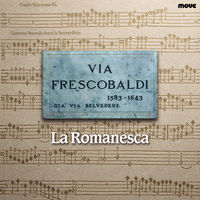
Via Frescobaldi
Seventeenth-century Italian composer Girolamo Frescobaldi was at once conservative and innovative. La Romanesca presents improvisatory toccatas, imitative polyphonic instrumental works, and songs from his arie musicali of 1630.
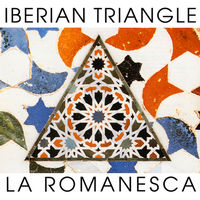
Iberian Triangle
La Romanesca presents a portrait of the musical diversity of Spanish song in the years just before the great expulsion and Columbus's voyages: music of Christian, Moorish and Jewish Spain before 1492.

Bards of Faith and Passion
Jim Minchin sets poems by writers at play or at odds with eternity: soul-poet lyrics across the centuries, from anonymous Latin verse and the metaphysicals to Yeats, Shakespeare and living voices.
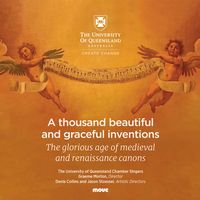
A Thousand Beautiful and Graceful Inventions
Subtitled ‘The glorious age of medieval and renaissance canons’, this programme of late Middle Ages and Early Modern choral music is sung by the University of Queensland Chamber Singers under Graeme Morton. The illustrated booklet has programme notes by Denis Collins and Jason Stoessel, with complete texts.
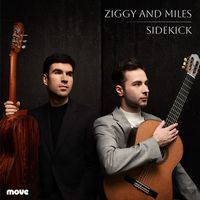
Sidekick
Sidekick is the debut CD from guitar duo Ziggy and Miles. It pairs new works written for the brothers with their own arrangement of Debussy’s Clair de Lune and repertoire from Spain, Latin America and Australia that has shaped their musical identity.