Listen & tracks
2 of 18 tracks have a preview · 12 works · 70:01
-
1 Por allí pasó un cavallero Traditional 2:59
-
2 El Rey de Francia Traditional 7:18
-
3 Moriscos, los mis moriscos Traditional 3:22
-
4 El Polo Traditional 4:50
-
Cantigas de Santa MaríaTraditional 4 movements23:39
- 5 Mui gran dereit' é das bestias obedecer, No. 52 3:16
- 6 Tod' ome deve loor dar, No. 230 4:01
- 7 Da que Deus mamou o leite do seu peito, No. 77 4:16
- 8 A Madre de Deus devemos tener mui cara, No. 51 12:06
-
9 Ben ya sahhara Aurora Moreno 4:06
-
10 Ben aindi habibi Aurora Moreno 5:51
-
11 Perdí la mia rrueca Anonymous 2:27
-
12 De Antequera salió el moro Anonymous 6:20
-
13 Danza alta Francisco de la Torre 2:18
-
14 Pase el agoa Anonymous 2:39
-
15 Tres morillas Anonymous 4:12
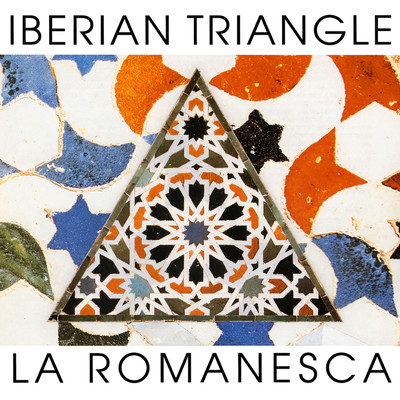
Imagine Spain's most glorious, powerful and corrupt era. La Romanesca has built a portrait of Spanish song before 1492: Sephardic songs, the thirteenth-century Cantigas de Santa María, Mozarabic jarchas, and music from the Christian courts of the fifteenth and sixteenth centuries.
Hartley Newnham, Ruth Wilkinson, Ros Bandt and John Griffiths bring countertenor, vielle, recorders, lute and vihuela to this historically enlightening programme.
Reviews
... fearless virtuosity.
Artists
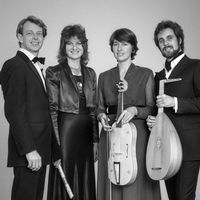
La Romanesca
ensemble
A leading force in early music in Australia since 1978, La Romanesca has developed a special interest in the performance of mediaeval monophonic and polyphonic song, although the group's repertory spans the twelfth to seventeenth centuries.
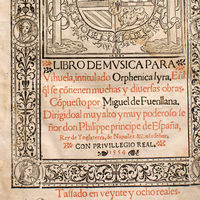
Miguel de Fuenllana
arranger
Miguel de Fuenllana (c.1500–1579) was a Spanish Renaissance vihuelist and composer, blind from birth. His Seville publication of 1554, Orphénica Lyra, remains a cornerstone of the vihuela repertoire.

Aurora Moreno
composer
Francisco de la Torre
composer
Francisco de la Torre left villancicos, funerary polyphony and a single court dance from late fifteenth-century Spain. His Alta, built on the La Spagna tenor, is the piece that still turns up in programmes of Iberian Renaissance song and dance.
Esteban Valdivieso
composer
Digital booklet
Digital booklet Notes, texts and credits — read online or download the PDF Download the PDFPerformers
- La Romanesca · ensemble
- Hartley Newnham · countertenor, percussion
- Ruth Wilkinson · vielle, recorder, voice
- Ros Bandt · recorder, flute, psaltery, percussion, voice
- John Griffiths · lute, vihuela, percussion
Technical credits
-
Producer
John Griffiths
Martin Wright
-
Recording Engineer
Martin Wright
-
Venue
Melba Hall
Details
- List price
- $25.00 AUD
- Total playing time
- 70 minutes 1 seconds
- Release date
- 1992
- Categories
- Early music, Vocal
- Musical work copyright
- © 1992 Move Records
- Sound recording copyright
- ℗ 1992 Move Records
- Catalogue
- MD 3114
- EAN
- 9314574311426
More to explore
Monodies
Music from twelfth- and thirteenth-century Spain and southern France. The programme centres on Martin Codax’s sea-haunted Cantigas de amigo, with songs by the troubadour Marcabru and anonymous fourteenth-century istanpittas.
Via Frescobaldi
Seventeenth-century Italian composer Girolamo Frescobaldi was at once conservative and innovative. La Romanesca presents improvisatory toccatas, imitative polyphonic instrumental works, and songs from his arie musicali of 1630.
Love Lyrics and Romances of Renaissance Spain
This is the first recording by the early music group La Romanesca, devoted to Spanish villancicos and romances of the Renaissance.
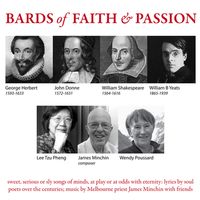
Bards of Faith and Passion
Jim Minchin sets poems by writers at play or at odds with eternity: soul-poet lyrics across the centuries, from anonymous Latin verse and the metaphysicals to Yeats, Shakespeare and living voices.
A Thousand Beautiful and Graceful Inventions
Subtitled ‘The glorious age of medieval and renaissance canons’, this programme of late Middle Ages and Early Modern choral music is sung by the University of Queensland Chamber Singers under Graeme Morton. The illustrated booklet has programme notes by Denis Collins and Jason Stoessel, with complete texts.
Nordic Moods & Baroque Echoes
A collaboration between Duo Langborn/Wendel and The Marais Project, this album blends baroque repertoire, new compositions and arrangements, and folk music from Australia and Sweden.