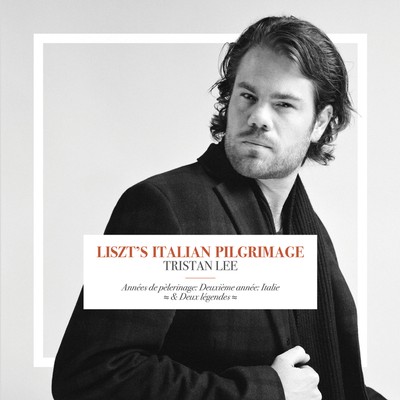
Listen & tracks
2 of 9 tracks have a preview · 2 works · 72:50
-
Années de pèlerinage: Deuxième année: Italie, S161Franz Liszt 7 movements52:58
- 1 Sposalizio 7:50
- 2 Il penseroso 4:13
- 3 Canzonetta del Salvator Rosa 3:16
- 4 Sonetto 47 del Petrarca 5:44
- 5 Sonetto 104 del Petrarca 6:37
- 6 Sonetto 123 del Petrarca 6:56
- 7 Après une lecture du Dante – Fantasia quasi Sonata 18:22
-
Deux Légendes, S175Franz Liszt 2 movements19:52
- 8 St Francis d’Assise: La prédiction aux oiseaux 10:56
- 9 St Francis de Paule marchant sur les flots 8:56
Liszt’s Années de pèlerinage: Deuxième année: Italie (Years of Pilgrimage: Second Year: Italy) is a set of seven pieces that pay homage to Italian art and literature. Inspired by Raphael, Michelangelo, Petrarca and Dante, the cycle holds some of Liszt’s most beautiful and evocative piano music. It opens with the serene Sposalizio, drawn from Raphael’s painting of the same name, then moves through the three highly romantic Sonetti del Petrarca to the formidable Dante Sonata.
The programme is completed by Liszt’s Deux légendes (Two Legends): St François d’Assise: La prédication aux oiseaux (Saint Francis of Assisi’s Sermon to the Birds), and St François de Paule marchant sur les flots (Saint Francis of Paola Walking on the Waves). In these epic pieces Liszt builds an almost impressionistic imagery by working the outer registers of the piano.
Across the nine works, Tristan Lee marks how art, literature and legend feed musical narrative and the Romantic imagination.
In the artist’s words
Franz Liszt (1811–1886) composed the Années de pèlerinage: Deuxième année: Italie (Years of Pilgrimage: Second Year: Italy) over a period of twenty years before their publication in 1858. The seven pieces that comprise this volume are all inspired by Italian art and literature, paying homage to Raphael, Michelangelo, Petrarca and Dante. This musical journey through Renaissance art commences with Sposalizio, a serene musical depiction of Raphael’s painting of the Marriage of the Virgin, before continuing with Il penseroso, inspired by Michelangelo’s sculpture adorning the tomb of Lorenzo de’ Medici in the Basilica di San Lorenzo, Florence. One of Liszt’s more frivolous miniatures, Canzonetta del Salvator Rosa, follows, acting as a humorous and charming introduction to the three Sonetti del Petrarca, in which we hear Liszt’s most impassioned and heartfelt romanticism. The journey concludes with the formidable Après une lecture du Dante: Fantasia quasi sonata, evoking the infernal and purgatorial torments of Dante Alighieri’s Divine Comedy (although there is also a hint of Paradiso towards the end). Liszt was greatly inspired by Italian art and culture and it had a profound influence on his compositional style. In An Artist’s Journey, Liszt describes his relationship to Italy: ‘The beauty in this special land became evident to me in its purest and most sublime form. Art in all its splendour disclosed itself to my eyes. It revealed its universality and unity to me. Day by day my feelings and thoughts gave me deeper insight into the hidden relationship that unites all works of genius. Raphael and Michelangelo increased my understanding of Mozart and Beethoven… Dante has found his expression in Orcagna and Michelangelo, and someday perhaps he will find his musical expression in the Beethoven of the future.’
Liszt’s Deux légendes (Two Legends) provide a fitting complement to the Deuxième année: Italie. The first Légende, St François d’Assise: La prédication aux oiseaux (Saint Francis of Assisi’s Sermon to the Birds) begins by conjuring birdsong in the upper register of the piano, creating an almost impressionistic level of musical imagery before a solemn chorale-like passage slowly builds to a euphoric climax. The second Légende, St François de Paule marchant sur les flots (Saint Francis of Paola Walking on the Waves) conjures the rumbling of the ocean using the lower register of the piano. This work tells the story of the saint crossing the Strait of Messina using his cloak as a raft following the refusal of a ferryman to allow him to board his vessel. Both these works are of epic proportions and create a Wagnerian sense of scope, harmonic language, and religious symbolism.
Reviews
Young Australian pianist Tristan Lee certainly sets his cap high with an all-Liszt program ... all the music here sees the composer at his most intensely romantic as well as technically challenging. ... a brilliant and mature recital of some of Liszt's most difficult and demanding music. ★★★★
Moving variously between striking fortissimo chords and dense, florid scalic passages, the Liszt’s score calls on an intrepid and confident pianist of the highest calibre. Lee rises to the challenge, and pulls off the great feat with flair ... superb debut recording.
A compact and coherent collection of Liszt’s piano pieces without having to record all three years in the complete cycle. Lee’s pianism is certainly up to the demands of the tune-and-accompaniment music presented in the six pieces that open the second book: jaunty enough in the Canzonetta, radiant in the Sposalizio, declamatory where necessary in the three sonnets, and maintaining the correct gravitas in Il penseroso.
Artists

Tristan Lee
piano
Tristan Lee is an Australian pianist gaining international recognition for his distinctive style and musicianship.
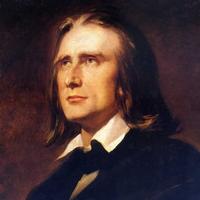
Franz Liszt
composer
Franz Liszt (1811–1886) was a Hungarian composer, virtuoso pianist, conductor and teacher of the Romantic era. His vast output reshaped piano technique, invented the symphonic poem and pushed harmony toward the twentieth century.
Digital booklet
Digital booklet Notes, texts and credits — read online or download the PDF Download the PDFPerformers
- Tristan Lee · piano
Technical credits
-
Producer
Mark Edwards
-
Recording Engineer
Mark Edwards
-
Venue
Melba Hall, University of Melbourne
-
Design
Esther Bousageon
-
Photography
Willi T Dennithorne
Details
- List price
- $25.00 AUD
- Total playing time
- 72 minutes 50 seconds
- Release date
- Apr 2019
- Category
- Classical
- Musical work copyright
- © 2019 Tristan Lee
- Sound recording copyright
- ℗ 2019 Move Records
- Catalogue
- MCD 593
- EAN
- 9314574059328
More to explore
Bach Piano 2
More Bach keyboard works on piano from Judith Lambden. Of her first volume, Toby Wong praised ‘[Lambden’s] exceptional artistry … creates a compelling and vibrant musical narrative.’
Geoffrey Tozer in Concert: Canberra 1987
This live recording of pianist Geoffrey Tozer was made in June 1987, during a series of four recitals marking his twenty-fifth anniversary as a performer.
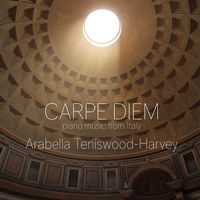
Carpe Diem: Piano Music from Italy
This recording celebrates Italy, and Rome above all, as a lasting place of artistic pilgrimage and inspiration. Italian-themed solo piano works frame the premiere of Michael Kieran Harvey’s Carpe Diem (2015).
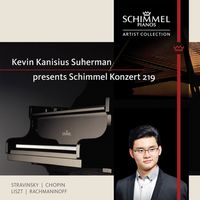
Kevin Kanisius Suherman presents Schimmel Konzert 219
Kevin Kanisius Suherman presents the new Schimmel Konzert 219 concert grand in a recital that sets Romantic and early twentieth-century piano works beside his own arrangements of Indonesian song.
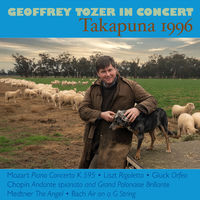
Geoffrey Tozer in Concert: Takapuna 1996
A live 1996 concert from Takapuna captures Geoffrey Tozer with the Auckland Sinfonietta in Mozart’s Piano Concerto No. 27, framed by Chopin, Medtner, Schnabel, Gluck, Liszt and Bach.
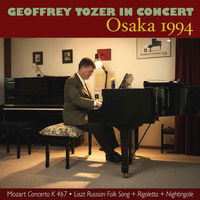
Geoffrey Tozer in Concert: Osaka 1994
Live from Osaka in 1994, Geoffrey Tozer partners the Osaka Symphony Orchestra in Mozart’s Piano Concerto No. 21 in C major, K. 467, then turns to three Liszt piano works.