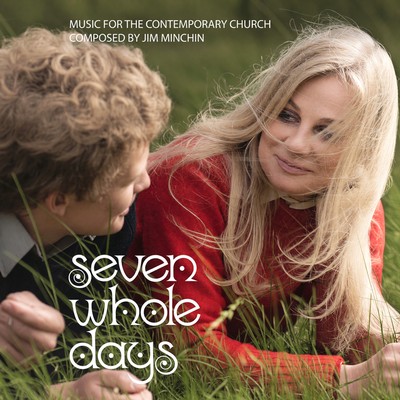
Listen & tracks
14 works · 39:42
-
1 Come, Lord Jesus Jim Minchin 2:35
-
2 You can't do more than that Jim Minchin 3:43
-
3 Bird of Heaven Jim Minchin 3:06
-
4 A sky without sunlight Jim Minchin 2:23
-
5 Psalm 42: Like the deer that yearns Jim Minchin 3:08
-
6 Dance there Jim Minchin 2:32
-
7 King of glory Jim Minchin 2:44
-
8 Start again Jim Minchin 3:49
-
9 Look out on the sea Jim Minchin 2:42
-
10 Psalm 126: On our lips were songs Jim Minchin 3:11
-
11 Brothers in a new land Jim Minchin 2:45
-
12 Man is lonely by birth Jim Minchin 1:59
-
13 Come, Love, Carolling Jim Minchin 2:21
-
14 Postlude Jim Minchin 2:44
All the music is Minchin’s. The texts range from Miriam Therese Winter, Sydney Carter and Gelineau psalm settings to Yeats, George Herbert and writers from the Asian church scene he had just entered as a junior priest at St Andrew’s Cathedral, Singapore.
Sessions began in Melbourne with Margaret Haggart and Chris Bence, then continued in Singapore with Chan Ming Lye and Melinda Lim, before final mixing at Bill Armstrong Studios. The result sits beside Move Two Mix as a document of late-1960s worship music open to jazz colour, social justice and everyday faith.
In the artist’s words
The 1960s were perfect for people with any kind of music in their soul, especially for those free spirits who wanted to blossom in personal faith and to explore quizzically prevailing mores as they saw their society – and themselves – grow more open, multi-cultural and plural in outlook: I was one such – a thoughtful if isolated middle-class lad in Melbourne. Somehow I, we, felt free to follow our own stars, in my case the God of Jesus Christ as I prepared to become a priest, while hoping to stay attuned to my evolving inner self. Musically this meant listening, dancing, playing, singing, composing, in my case only as a determined amateur: I was preoccupied by more pressing life concerns.
In 1962 I needed contemporary hymns and songs to accompany a weekly ‘mission’ service in College Chapel. Finding the cupboard bare I decided to take some old hymn words and put jazzy tunes to them, and to improvise with friends playing instruments other than the monarchical organ (which, by the way, I loved, and still do). Later I was moved by the example of Sydney Carter and others of his ilk to track down texts for hymns and songs, not only for worship but to give wing to wider more ‘secular’ personal and social-justice themes. To my surprise, I began to receive requests from all over Australia – most denominations, the ABC – and indeed the world – Inuit and Argentinians, Taiwanese and Germans – to take up, perform and record my music – which I had thought would only be a seven-day wonder. Perhaps it would stretch to seven years!
The 1960s found the Western-derived churches everywhere – Roman Catholic, Anglican and Protestant, Pentecostal – facing increased ‘secular’ confidence in science, commerce and popular culture in tandem with decreased trust in exclusive and monochrome patterns of worship and liturgy (including music), belief and ethics. Some church communities welcomed this shift: the Second Vatican Council opened windows to the world ‘outside’, many Christians examined the Bible more critically and articulated their beliefs with greater care and humanity, and got involved in the challenges of the day alongside people of goodwill. Others bemoaned the shift and either withdrew or hoped gimmickry might stave off the tide. I was delighted, knowing that music could give depth and energy to this process of sifting and renewal.
In 1968 I was assigned to Singapore and Malaysia, and, thereafter, unexpected and vibrant perspectives kept coming into view! As well as being overwhelmed by the social engineering of newly-independent Singapore, I found myself caught up in widening circles of music, art and literature: from West, East and every continent, ancient and modern, ‘religious’ and ‘secular’, popular or esoteric, recorded and ‘live’. Eventually I was invited to be text editor of Sound the Bamboo, a marvellous compendium of hymns from every kind of church in every part of ‘Asia’, published in 2000; for the first time my previously resented Latin and Greek verse composition came into its own, fitting English paraphrases to weird metres in the original music!
And now, more than fifty years after I began to get involved, I am overwhelmed by the wealth of good music for worship and devotion, to celebrate life in the light of eternity; music not only for individual enjoyment but also for community celebration. Of course, there’s also a lot of junk music. In either case, some lasts, some doesn’t! From my own ongoing if fitful journey of composition, mostly away from the public domain, it is a thrill – as I move into retirement and old age – to bring my music once again to light of day via concert and recording, to discover wonderfully talented artists and friendly audiences who are happy to join me on the way.
Artists
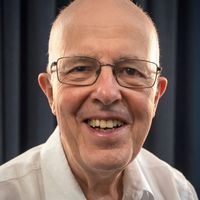
Jim Minchin
piano
James Blundell “Jim” Minchin (b. 1942) is an Australian composer and Anglican priest whose jazz-inflected hymn settings helped renew church music in the 1960s, and who later wrote songs to contemporary texts for worship and beyond.
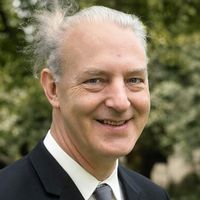
Sydney Carter
songwriter
Sydney Carter (1915–2004) was an English poet, folk singer and songwriter. He is often called a hymn-writer for Lord of the Dance, though his songs range across faith, protest, doubt and ordinary life.
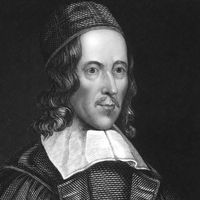
George Herbert
songwriter
George Herbert’s sacred lyrics speak with plain force and metaphysical wit to the soul’s traffic with God. Shaped as altars and wings on the page, they have drawn composers for centuries and still ring out as hymns and art songs of rare intimacy.

Peter Field
songwriter
Joseph Gelineau
songwriter
Joseph Gelineau shaped modern Christian liturgical song through his psalmody: chant-inflected tones that follow the uneven line lengths of the psalms rather than forcing them into regular hymn metres.
Roland Giese
songwriter
Roland Giese is a songwriter whose work appears on recordings of contemporary church music first issued in the late 1960s and later restored to the catalogue.
John Perkins
songwriter
James Thiem
songwriter
Miriam Therese Winter
songwriter
W. B. Yeats
songwriter
W. B. Yeats (1865–1939) was an Irish poet, dramatist and writer, and one of the foremost figures of twentieth-century literature. His lyric verse, steeped in Irish legend and craft, has long been set for the concert platform.
Digital booklet
Digital booklet Notes, texts and credits — read online or download the PDF Download the PDFPerformers
- Jim Minchin · piano · all except tracks 1, 3, 9 and 12
- Chan Ming Lye · vocals · tracks 1, 4, 6, 9, 11–13
- Margaret Haggart · vocals · tracks 5–7 and 10
- Chris Bence · vocals · tracks 2 and 8
- Melinda Lim · vocals · track 3
- Liam Bradley · vibraphone · tracks 7 and 14
- Nick Alexander · spinet, marimba · tracks 2, 10 and 14
- Lee Tzu Kuang · guitar, glockenspiel
- Horace Wee · guitar, flute, saxophone
- Peter Castle · guitar
- Ray Elliott · percussion
- Solway Love · flute
- Joy Fletcher · cello
- Lim Su Chong · bass
- Hamish Hughes · bass
Technical credits
-
Producer
Martin Wright
-
Recording Engineer
John Sayers
Paul Phoon
Details
- List price
- $20.00 AUD
- Total playing time
- 39 minutes 42 seconds
- Release date
- 1969
- Categories
- Australian, Choral, Vocal
- Genres
- Choral & Sacred, Vocal & Opera
- Musical work copyright
- © 1968 Move Records
- Sound recording copyright
- ℗ 1968 Move Records
- Catalogue
- MD 3004
- EAN
- 9314574300420
More to explore
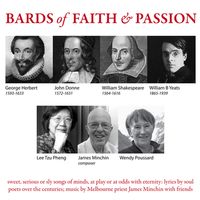
Bards of Faith and Passion
Jim Minchin sets poems by writers at play or at odds with eternity: soul-poet lyrics across the centuries, from anonymous Latin verse and the metaphysicals to Yeats, Shakespeare and living voices.
Words, Love, Music: Sydney Carter
Songs and poems by Sydney Carter from the 1950s to the 1970s, spanning social protest, faith and everyday life, performed by Carter and guest singers including Sheila Hancock, Franciscus Henri and Nadia Cattouse.
Move Two Mix: Music for the Contemporary Church
Move Two Mix gathers religious songs and hymns with music by Jim Minchin, marrying familiar sacred texts to jazz- and folk-inflected settings. First issued in 1968, this pioneering Melbourne recording brought contemporary idioms into church worship.
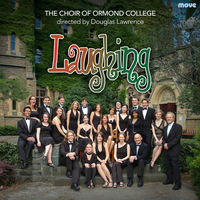
Laughing
The internationally acclaimed Choir of Ormond College, directed by Douglas Lawrence, turns to the lighter side of a cappella singing across jazz, madrigal and spiritual repertoire.
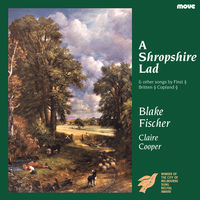
A Shropshire Lad
Baritone Blake Fischer and pianist Claire Cooper, winners of the 1998 Song Recital Award, present English and American folk, traditional and art songs by Butterworth, Copland, Finzi and Britten.
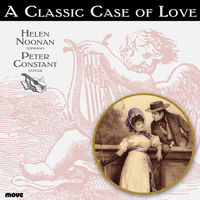
A Classic Case of Love
Soprano Helen Noonan and guitarist Peter Constant present an intimate programme of love songs spanning centuries, from folk and early music to Schubert, Satie, Villa-Lobos and the twentieth-century stage and songbook.