Sydney Carter
Sydney Carter (1915–2004) was an English poet, folk singer and songwriter. He is often called a hymn-writer for Lord of the Dance, though his songs range across faith, protest, doubt and ordinary life.
Unlike most song makers he composed on the voice, the body and the tape recorder rather than on the piano or guitar. Often unaccompanied, or backed by guitar, flute or drum, he sang, recited or performed to almost any kind of audience, the unlikelier the better—prisons, churches, or the Albert Hall. He was seen on British television in a series of programmes called Hallelujah, where the aim was to bring Christian and non-Christian face to face. The songs raise questions about love, time, politics and religion.
Carter wrote revue material for Donald Swann (of Flanders and Swann) in the 1950s. Later in the 1960s Swann introduced some of Carter’s songs on two records, Songs of Faith and Doubt and Sing Round the Year (MD 3002). Many folk and protest singers took up his songs.
He started working life as a schoolmaster, served with the Friends Ambulance Unit in Greece, and later wrote as a music critic for Gramophone magazine. His poems and songs are published by Stainer and Bell in a variety of publications. http://www.stainer.co.uk/carter.html
He was born 6 May 1915 in Camden, London, and died 13 March 2004 in London. Oxford-educated, and hoping for work in the BBC or films, he became history master at Frensham Heights School in Farnham, Surrey. He was already writing poetry, but it was after the Second World War—during which he served in the Middle East and Greece with the Friends Ambulance Unit—that he began composing songs. Inspired by music heard in Greece, he frequented London folk clubs, heard Ewan MacColl, joined the English Folk Dance and Song Society (EFDSS), and started singing his own material.
In the 1960s he wrote songs for Christian Aid, having earlier contributed religious and protest songs for the Aldermaston march. His first album, 1962’s Putting Out the Dustbin, was recorded with Sheila Hancock; Hallelujah featured Martin Carthy and Isla Cameron. The former included the minor hit My Last Cigarette. His best-known and most widely covered song is the children’s favourite Lord of the Dance, an adaptation of the Shaker hymn Simple Gifts, included on the 1965 EP of the same name. Its ambiguous lyrics drew on both Christianity and paganism, and appealed to believers and atheists alike.
Many of his compositions carried a religious theme; in 1995 his eightieth birthday was celebrated at Westminster Abbey. Judas and Mary was sung by Nadia Cattouse at the First International Festival of Music in Seville (Unda Sevilla) in 1967, winning the Gold Medal Award (Premio Unda Sevilla) among more than twenty countries. One More Step is widely requested for collective worship. The lyrics of Friday Morning prompted Enoch Powell to call for a ban over the lines ‘It’s God they ought to crucify / Instead of you and me’.
Carter always claimed a style based on rhythm and feel rather than technical display. His songs have been covered by many artists, among them Rolf Harris, Jackson Browne, Julie Felix, the Spinners, Judy Collins and Pete Seeger. The anti-war lullaby Crow on the Cradle was revived at the 1979 No Nukes concert and brought unexpected royalties. Despite final years blighted by Alzheimer’s disease, his songs endure.
Sydney Carter is featured on the following titles
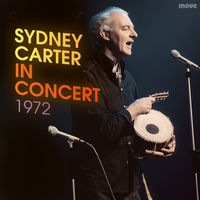
Sydney Carter In Concert
Poet and songwriter Sydney Carter visited Australia in 1972 for concerts and workshops across the country. This recording captures one of those live events in full, preserving his wry, questioning songs as they were heard on the tour.
Composer
The Present Tense: Songs of Sydney Carter
The songs of Sydney Carter are an enigma. Folk, religious, satire and protest never quite fit. They have depth and integrity, and they press us to face and question our innermost thoughts and conflicts.
Songwriter
Words, Love, Music: Sydney Carter
Songs and poems by Sydney Carter from the 1950s to the 1970s, spanning social protest, faith and everyday life, performed by Carter and guest singers including Sheila Hancock, Franciscus Henri and Nadia Cattouse.
Composer
Songwriter
Sing Round the Year
Donald Swann gathers eighteen carols and kindred songs of worship and praise, arguing that a carol need not be confined to Christmas. School choirs, organ and his own piano and voice share the programme.
Arranger
Compositions by Sydney Carter also appear on
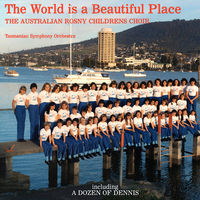
The World is a Beautiful Place
The Australian Rosny Children’s Choir presents A Dozen of Dennis, Peter Davies’s settings of twelve poems from C. J. Dennis’s A Book for Kids, with the Tasmanian Symphony Orchestra.
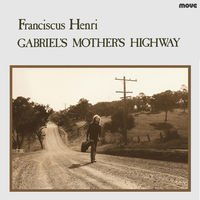
Gabriel's Mother's Highway
Franciscus Henri presents songs by Sydney Carter, Elton John and Arlo Guthrie alongside three of his own. Produced by Brian Cadd, the album settles into a gentle folk-rock style with clear acoustic colour.
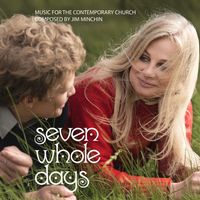
Seven Whole Days: Music for the Contemporary Church
Seven Whole Days is Jim Minchin’s second Move album of contemporary church song, recorded across Melbourne and Singapore in 1969 with singers and instrumentalists from both places.
Move Two Mix: Music for the Contemporary Church
Move Two Mix gathers religious songs and hymns with music by Jim Minchin, marrying familiar sacred texts to jazz- and folk-inflected settings. First issued in 1968, this pioneering Melbourne recording brought contemporary idioms into church worship.