Listen & tracks
15 works · 33:56
-
1 The Present Tense Sydney Carter :59
-
2 Standing in the Rain Sydney Carter 3:24
-
3 George Fox Sydney Carter 1:55
-
4 When They Shouted Hosanna Sydney Carter 1:55
-
5 Lord of the Dance Sydney Carter 2:32
-
6 The Crow on the Cradle Sydney Carter 2:28
-
7 Every Star Shall Sing a Carol Sydney Carter 3:08
-
8 I Want to Have a Little Bomb Like You Sydney Carter 1:46
-
9 Bird of Heaven Sydney Carter 1:46
-
10 Travel On Sydney Carter 1:45
-
11 Judas and Mary Sydney Carter 3:09
-
12 Friday Morning Sydney Carter 2:22
-
13 Bitter Was the Night Sydney Carter 2:22
-
14 The Vicar Is a Beatnik Sydney Carter 2:18
-
15 The Mask I Wore Sydney Carter 2:07
This is the man who wrote Lord of the Dance, but also I Want to Have a Little Bomb Like You.
This short film of the title song was made in 1972 for Sydney Carter's Australian tour.
Reflection perform fifteen of Carter’s best-known songs, from the quiet intensity of Judas and Mary and Friday Morning to the wry protest of The Crow on the Cradle and the title track.
In the artist’s words
Dancing has always interested me. It seems to be the most basic activity and the one most like faith and creation and everything else.
It always has seemed very religious to me, and I was very interested to find two things.
First there was a carol in the Oxford Book of Carols called Tomorrow is my dancing day which I think is a sort of holy parody. That is to say, an ordinary secular tune or song adapted to give it a religious meaning in which Christ invites somebody to come to the dance.
And then I read about the Shakers, that curious American sect who actually did dance in their worship and made some very good tunes including this one which I’ve used for Lord of the dance called Gift to be simple. When I first heard that played, and indeed danced to in the Albert Hall in London at a festival of the English folk dance and song society, at that point I thought I might write my own dancing song.
There are two kinds of song: those after which you say ‘Amen’ and those after which you don’t. The ‘Amen’ kind of song, whether it is a hymn, a national anthem or whatever, has to unite people who are singing it. Any song in dialogue which presents two or more points of view without indicating clearly which is ‘right’ has to be disqualified. Any irony, any ambiguity, is dangerous. There must be no doubt about what you have said ‘Amen’ to.
This rules out nearly all the songs I write, including those upon this record. But that does not mean that they are not religious.
Most religious songs are hymns — even though you call them psalms or anthems — and therefore they are Amen songs. That does not make them worse or better than any other kind of song. It merely means that they have a special function, like a work-song or a lullaby. The function of a hymn is to unite the singers in an act of worship.
What kind of song (it may be asked) can be religious, which does not do this? The kind of song which I would call ‘dramatic’. And drama is essentially ambiguous in that it presents more than a single point of view. The audience can take sides and identify with one view-point or another. But the drama — as drama — cannot say ‘this is right, and that is wrong’. That must be left to the audience.
Classification of Sydney Carter’s songs is self-defeating. It is only when we forget our preconceived ideas about what these songs should say that we can fully experience their depth – when we allow their poetry to dig beneath our surface reactions and touch that part of us that we so often fight to hide. And it is the genius of Sydney Carter that his songs have this ability to make us face and question our innermost thoughts and conflicts.
Sydney Carter provides no easy answers to the vital questions posed in his songs; and the rejection of the man Standing in the rain or the bitterness of failure in Bitter was the night can only be softened by the listener’s own reactions – and action.
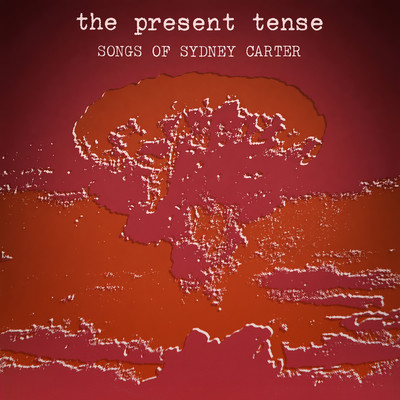
Reflection lived with these songs for a long time, and on this recording has tried to preserve the flavour of a man’s music as they have experienced it. The cover picture reminds us of the most recent past tense, and our future now rests on the way that we react to the present tense. All we can ask of any man is his help on our way to the future. As Sydney Carter has written elsewhere: “To keep running with the truth – that is our destiny.”
Artists

Reflection
ensemble

Sydney Carter
composer
Sydney Carter (1915–2004) was an English poet, folk singer and songwriter. He is often called a hymn-writer for Lord of the Dance, though his songs range across faith, protest, doubt and ordinary life.
Digital booklet
Digital booklet Notes, texts and credits — read online or download the PDF Download the PDFPerformers
- Reflection · ensemble
- Lionel Browne · bass guitar, drums, percussion
- Nik Knight · drums, percussion
- Marion Banks · flute
- James Etheridge · guitar, organ, piano, bass guitar, vibraphone
- Lessley Bateson · oboe
- Colin Wright · organ, piano
- Jonathan Jones · vocals
- Mo Brown · vocals
- Richard Spence · vocals
- Sue McHaffie · vocals, celesta
- Stuart Yeates · vocals, cello
- Michael Campbell · vocals, guitar, organ, piano
Technical credits
-
Producer
Michael Lehr
-
Recording Engineer
Malcolm Jackson
-
Credit
John F. Bond
Details
- List price
- $25.00 AUD
- Total playing time
- 33 minutes 56 seconds
- Release date
- 1972
- Categories
- Folk music, Vocal
- Genres
- Folk, Vocal & Opera
- Musical work copyright
- © 1968 Reflection Records
- Sound recording copyright
- ℗ 1972 Move Records
- Catalogue
- MD 3005
- EAN
- 9314574300529
More to explore
The World is a Beautiful Place
The Australian Rosny Children’s Choir presents A Dozen of Dennis, Peter Davies’s settings of twelve poems from C. J. Dennis’s A Book for Kids, with the Tasmanian Symphony Orchestra.
Gabriel's Mother's Highway
Franciscus Henri presents songs by Sydney Carter, Elton John and Arlo Guthrie alongside three of his own. Produced by Brian Cadd, the album settles into a gentle folk-rock style with clear acoustic colour.
Sydney Carter In Concert
Poet and songwriter Sydney Carter visited Australia in 1972 for concerts and workshops across the country. This recording captures one of those live events in full, preserving his wry, questioning songs as they were heard on the tour.
Words, Love, Music: Sydney Carter
Songs and poems by Sydney Carter from the 1950s to the 1970s, spanning social protest, faith and everyday life, performed by Carter and guest singers including Sheila Hancock, Franciscus Henri and Nadia Cattouse.
Seven Whole Days: Music for the Contemporary Church
Seven Whole Days is Jim Minchin’s second Move album of contemporary church song, recorded across Melbourne and Singapore in 1969 with singers and instrumentalists from both places.
Sing Round the Year
Donald Swann gathers eighteen carols and kindred songs of worship and praise, arguing that a carol need not be confined to Christmas. School choirs, organ and his own piano and voice share the programme.