Listen & tracks
1 of 23 tracks have a preview · 6 works
-
Concerto 1 in G minorGeorge Frideric Handel 4 movements
- 1 Largo
- 2 Allegro
- 3 Adagio
- 4 Andante
-
Concerto 2 in B-flat majorGeorge Frideric Handel 4 movements
- 5 A tempo ordinario
- 6 Allegro
- 7 Adagio
- 8 Allegro ma non presto
-
Concerto 3 in G minorGeorge Frideric Handel 4 movements
- 9 Adagio
- 10 Allegro
- 11 Adagio
- 12 Gavotte
-
Concerto 4 in F majorGeorge Frideric Handel 4 movements
- 13 Allegro
- 14 Andante
- 15 Adagio
- 16 Allegro
-
Concerto 5 in F majorGeorge Frideric Handel 4 movements
- 17 Larghetto
- 18 Allegro
- 19 Alla siciliana
- 20 Presto
-
Concerto 6 in B-flat majorGeorge Frideric Handel 3 movements
- 21 Andante Allegro
- 22 Larghetto
- 23 Allegro Moderato
On 27 September 1738, John Walsh announced "To all Lovers of Musick" in the Daily Post:
"Whereas there is a spurious and incorrect Edition of Six Concerto's of Mr. Handel's for the Harpsichord and Organ, publish'd without the Knowledge or Consent of the Author, This is to give Notice, (That the Publick may not be imposed on with a mangled Edition) That there are now printing from Mr. Handel's original Manuscript, and corrected by himself, the same Six Concerto's which will be published in a few Days. Price 3s."
Handel himself warned against the pirate edition in the Daily Post in October, and again on the title page of later editions. The keyboard part promised orchestral parts 'in a few days', yet those parts did not appear until the end of 1738.
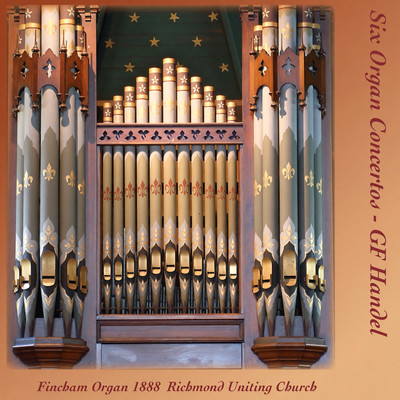
This recording is the first of this organ-only version of the Opus 4 concertos. Sound and performances have drawn high acclaim. The 1888 Fincham is a small instrument admirably suited to the music: clear, bright, and reliant on clarity of articulation and texture.
The writing is highly dramatic, showing Handel's gift as a theatre composer and his skill in strict counterpoint. Much of the music is known in other forms, instrumentations and contexts. Handel was never one to waste his best ideas, and this set gathers some of his finest.
Reviews
Andrew Blackburn's playing and readings are splendid, always penetrating to the heart of the music, with clean articulation, rhythmic accuracy and judicious use of the pedals.
Artists
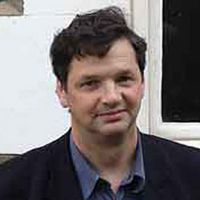
Andrew Blackburn
organ
Andrew studied at Melbourne University where he gained a Master of Music degree. He won numerous prizes during his university degrees and continued his organ studies in England and in France with Jean Langlais.
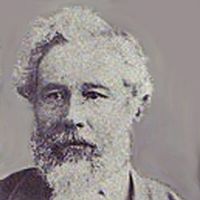
George Fincham
Organbuilder (1828-1910). Born in the UK in 1828 George Fincham moved to Melbourne in the 1850s. He is considered to be the father of the Australian organ building industry. The firm he started was still in operation until the late 1990s.
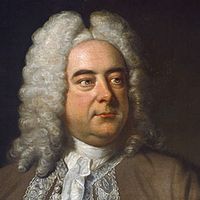
George Frideric Handel
composer
George Frideric Handel (1685–1759) was a German-born Baroque composer who settled in London and became a naturalised British subject. He is celebrated for his operas, English oratorios, organ concertos and orchestral works.
Performers
- Andrew Blackburn · organ
Technical credit
-
Organ-builder
George Fincham
More to explore
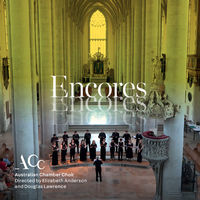
Encores
Directed by Douglas Lawrence, the Australian Chamber Choir gathers favoured concert encores in a programme that shows the ensemble at its most immediate and engaging.
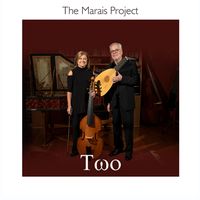
Two
Two brings together Marais Project founding members Jennifer Eriksson, viola da gamba, and Tommie Andersson, gallichon, theorbo and baroque guitar. Each plays alternate brackets of solos before they join in a splendid suite by Marin Marais.
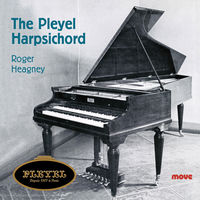
The Pleyel Harpsichord
Roger Heagney plays one of the last harpsichords made by the French Pleyel piano company (1963). Founded in 1807, Pleyel built pianos until 2014. The Concert Grand Harpsichord offers a distinctive sound and seven-pedal colour.
Automne: Changing Colours of Harp Music
From classical to folk, from sweeping glissandi to the strikingly contemporary, the range and diversity of the harp always entrances and amazes.

North of the Yarra: Organs of Melbourne
Gordon Atkinson plays seven of Melbourne's finest organs, from the oldest surviving city instrument to the giant Town Hall organ, including St Patrick's Cathedral, The Scots' Church, St Paul's Cathedral and St Mary Star of the Sea, West Melbourne.

Transcriptions Baroque
Recorded in Trinity College Chapel, Melbourne, this disc pairs trumpeter Anthony Pope with organist Dominic Perissinotto across eight Baroque concertos. Four are heard on trumpet with organ accompaniment; the rest are solo organ transcriptions by celebrated organists of their day.