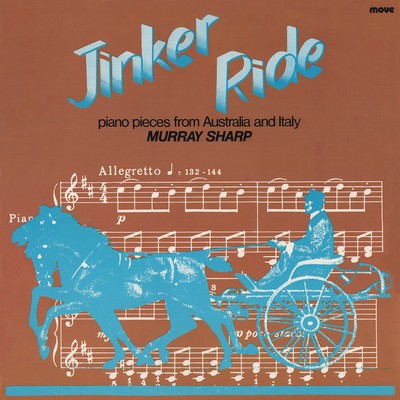
Listen & tracks
15 works · 76:14
-
1 Souvenir for my wife Gioachino Rossini 3:05
-
2 Sonata in D major, K. 429 Domenico Scarlatti 6:07
-
3 Sonata in B-flat major, Op. 47 No. 2 Muzio Clementi 13:39
-
4 Jinker Ride Dorian Le Gallienne 1:29
-
5 Nocturne Dorian Le Gallienne 3:38
-
Six Preludes, Op. 11Raymond Hanson 6 movements14:27
- 6 The little forest creatures stirring at daybreak 2:00
- 7 Lonely distant mountains, sentinels of time 2:00
- 8 Ancient granite hills 3:18
- 9 The deep dark river 2:53
- 10 A tempest 1:20
- 11 Sunset after the rain 2:56
-
12 Idyll Emmanuel Chabrier 3:39
-
13 Pastourelle Francis Poulenc 2:07
-
14 Toccata Francis Poulenc 2:27
-
15 Duetto Felix Mendelssohn 2:52
-
16 Spinning song Felix Mendelssohn 2:19
-
17 The lover and the nightingale Enrique Granados 6:14
-
18 Gondoliera Franz Liszt 5:17
-
19 Sonetto 104 del Petrarca Franz Liszt 6:17
-
20 Canzonetta del Salvator Rosa Franz Liszt 2:37
Of special mention are pieces by Australian composers Dorian Le Gallienne and Raymond Hanson.
The early death of Dorian Le Gallienne in 1963 at the age of 48 robbed Australia of one of her leading composers. Although more conservative than some, his music shows sound melodic construction and fine craftsmanship. The reflective mood of his Nocturne contrasts with the lively Jinker Ride. A jinker is a small horse-drawn two-wheel cart, or sulky. The jolting rhythm of this little piece captures the spirit of the Australian bush, where these vehicles were used in earlier days.
Born in Sydney in 1913, Raymond Hanson’s ancestry dates back to free settlers who arrived in 1792. It is ironic that his compositions of the 1940s were thought too radical to be popular, which is hard to believe when we hear this music now. He was later criticised for being too conservative, suffering the fate of many a composer who failed to keep exactly in step with the times. The six preludes on this recording, written in 1940–41 during a visit to the Burragorang valley in the Blue Mountains of New South Wales, depict the grandeur and ruggedness of the Australian scene as well as its contrasting softness and delicacy.
This generous programme also includes short works by Rossini, Scarlatti, Clementi, Chabrier, Poulenc, Mendelssohn, Granados and Liszt.
Artists
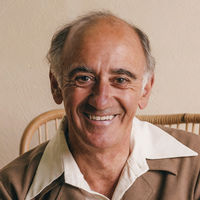
Murray Sharp
piano
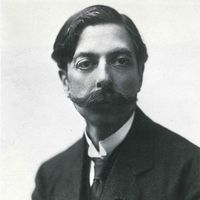
Enrique Granados
composer
Enrique Granados was born in Lérida in 1867. He studied the piano and composition in Barcelona and then in Paris, returning to Barcelona in 1889, and won distinction as a pianist and popularity in Spain with his zarzuelas and piano music.
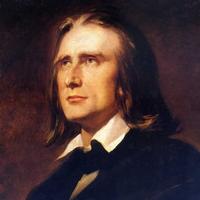
Franz Liszt
composer
Franz Liszt (1811–1886) was a Hungarian composer, virtuoso pianist, conductor and teacher of the Romantic era. His vast output reshaped piano technique, invented the symphonic poem and pushed harmony toward the twentieth century.
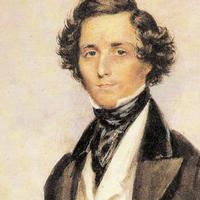
Felix Mendelssohn
composer
Jakob Ludwig Felix Mendelssohn Bartholdy (1809–1847) was a German composer, pianist, organist and conductor of the early Romantic period. His works include symphonies, concertos, oratorios, piano music and chamber music.
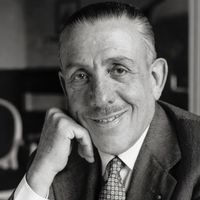
Francis Poulenc
composer
Francis Poulenc's music swings from boulevard wit to peasant devotion. Perpetual-motion piano, chamber sonatas, horn élégies, Christmas and penitential motets, a Gloria, and songs that can flirt, mourn or protest sit side by side in the catalogue.
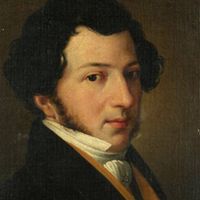
Gioachino Rossini
composer
Rossini's operas crackle with melodic invention and theatrical pace: comic peaks such as The Barber of Seville and La Cenerentola sit beside grand statements like Guillaume Tell, all driven by rhythmic snap and bright instrumental colour.
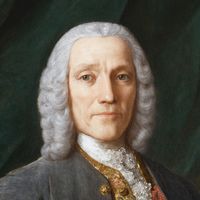
Domenico Scarlatti
composer
Domenico Scarlatti (1685–1757) was an Italian composer who spent much of his career at the Portuguese and Spanish courts. He is known almost exclusively for his 555 keyboard sonatas.

Emmanuel Chabrier
composer
Emmanuel Chabrier (1841–1894) was a French Romantic composer and pianist whose free-spirited musical language helped open the way for later French modernism.
Muzio Clementi
composer
Dorian Le Gallienne
composer
Dorian Le Gallienne's piano miniatures balance reflective lyricism with bush-born energy, while his Shakespeare songs sit in the lyrical-pastoral English tradition. The music is carefully made, with clear melodic construction.
Raymond Hanson
composer
Raymond Hanson's scores favour evolving melodic lines and purposeful piano textures. The violin works and piano preludes show a tonal language spiced with chromatic bite, jazz rhythm and a clear resistance to serial fashion.
Digital booklet
Digital booklet Notes, texts and credits — read online or download the PDF Download the PDFPerformers
- Murray Sharp · piano
Technical credits
-
Contributor
Martin Wright
-
Producer
Martin Wright
-
Venue
Robert Blackwood Hall
Details
- List price
- $20.00 AUD
- Total playing time
- 76 minutes 14 seconds
- Release date
- 1989
- Category
- Classical
- Musical work copyright
- © 1982 and 1989 Move Records
- Sound recording copyright
- ℗ 1982 and 1989 Move Records
- Catalogue
- MD 3043
- EAN
- 9314574304329
More to explore

Summer Waves
Len Vorster plays a personal recital of short piano works by Gershwin, de Falla, Lord Berners, Berkeley, Field, Grieg, Debussy, Poulenc and Ravel, drawn toward summer light, dance rhythm and nocturne stillness.
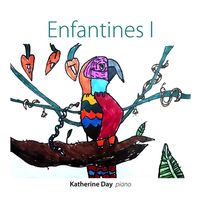
Enfantines I
Katherine Day’s first solo album gathers piano works by Joachim, Krenek, Granados and Mozart chosen for young players. Her finely sculpted readings treat often-overlooked teaching repertoire with the care usually reserved for the concert canon.
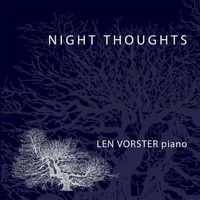
Night Thoughts
During the long still nights of Melbourne’s Covid lockdowns, pianist Len Vorster listened widely and thought hard about what he heard. Those evening ruminations became this programme of fifteen nocturnes and night pieces, from Schumann’s circle to Copland.
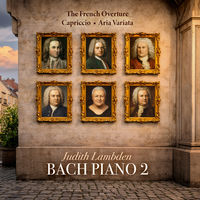
Bach Piano 2
More Bach keyboard works on piano from Judith Lambden. Of her first volume, Toby Wong praised ‘[Lambden’s] exceptional artistry … creates a compelling and vibrant musical narrative.’

Sidekick
Sidekick is the debut CD from guitar duo Ziggy and Miles. It pairs new works written for the brothers with their own arrangement of Debussy’s Clair de Lune and repertoire from Spain, Latin America and Australia that has shaped their musical identity.
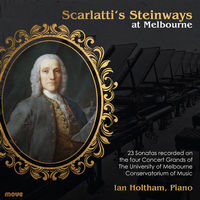
Scarlatti's Steinways at Melbourne
The remarkable output of 555 keyboard sonatas by Domenico Scarlatti (1685–1757) remains one of the most original contributions in Western art music. Pianist Ian Holtham selects 23 sonatas, sequenced into four Baroque tonal groupings and recorded on the Conservatorium’s four Steinway Model Ds.