Listen & tracks
4 of 21 tracks have a preview · 10 works · 53:36
-
Sonata in C Major, Op. 9: No. 2, WK 87Carl Friedrich Abel 3 movements4:44
- 1 i. Vivace 2:14
- 2 ii. Adagio 1:32
- 3 iii. Minuetto :58
-
4 Fantasia (Vivace) for Harpsichord in F Major, TWV 33:5 Georg Philipp Telemann 4:26
-
Sonata in A Minor, TWV 41:a6Georg Philipp Telemann 4 movements10:23
- 5 i. Largo 2:58
- 6 ii. Allegro 2:16
- 7 iii. Suave 2:38
- 8 iv. Allegro 2:31
-
9 Fantasia after Telemann Anthony Abouhamad Allegro–Affettuoso–Allegro 4:15
-
10 Les pleurs Monsieur de Sainte-Colombe 1:51
-
Suite in G Minor/MajorLouis de Caix d'Hervelois 3 movements7:28
- 11 L'Agreable 2:26
- 12 La Fanatique 2:32
- 13 Allemande 2:30
-
14 Les Silvains Majesteusment, sans lenteur François Couperin 5:44
-
Suite in G MajorMarin Marais 3 movements6:40
- 15 i. Saillie du Jardin 1:11
- 16 ii. Rondeau le Troilleur 3:50
- 17 iii. Le petit badinage 1:39
-
18 Chaconne La Buisson Antoine Forqueray 5:23
-
19 The Acceptance Troy Russell 2:42
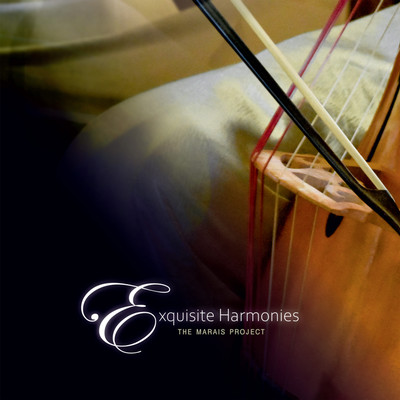
Exquisite Harmonies brings together acclaimed viola da gambist Jennifer Eriksson and harpsichordist Anthony Abouhamad in a richly expressive collection of French and German Baroque repertoire. Featuring works by Sainte-Colombe, Marin Marais, Antoine Forqueray, Georg Philipp Telemann and Carl Friedrich Abel, the album also includes contemporary Australian works by Abouhamad and Biripi and Gamillaroi composer Troy Russell. Beautifully performed and recorded, Exquisite Harmonies celebrates the enduring richness of early music alongside a distinctive contemporary Australian perspective.
In the artist’s words
Anthony and I have worked together for many years and often discussed a duo project. We eventually developed a program that highlighted some of the best-known baroque era composers for the viola da gamba interspersed with harpsichord solos.
As a centrepiece I assembled a Grande Suite featuring music by several French masters, which serves as a kind of French baroque smorgasbord. I hope these gentlemen forgive me from the grave! The links between them are noteworthy. Monsieur de Sainte-Colombe, who famously added the seventh string to the viola da gamba, taught the young Marin Marais. Forqueray’s fearsome virtuosity was said to have exceeded that of the celebrated Marais, whose career he overlapped with. Both men attracted the attention of, and employment by, the music and dance-loving monarch, Louis XIV. A contemporary commentator, Hubert Le Blanc, wrote that Marais played like an angel, and Forqueray like the devil!
François Couperin needs no introduction to music lovers. Although best known for his splendid harpsichord pieces, he also wrote for the viola da gamba as did Abel and Telemann who are of Germanic rather than French extraction. Again, the links are fascinating. Abel was taught as a schoolboy by J.S. Bach, later founding a music promotion business in London with his son, J.C. Bach.
The outliers in the mix are Anthony’s improvised Fantasia in the style of Telemann, and The Acceptance by Biripi and Gamillaroi musician and composer, Troy Russell. I asked Troy to write The Acceptance as a kind of musical acknowledgement of country. It gently reminds us that First Nations’ artists preceded European musicians on this continent by dozens of millennia.
The Fantasia after Telemann is my attempt to imitate the compositional model that Telemann presents in his Three Dozen Fantasias. Following Telemann’s model, my fantasia uses da capo form to explore and contrast melodic ideas. I was able to develop these ideas – as products of the imagination – by using my knowledge of eighteenth-century counterpoint and harmony to improvise the fantasia at the harpsichord. This process helped me to better understand the idea that eighteenth-century compositions are simply written records of a composer’s improvisations. It is interesting to reflect on this concept and consider the sheer number of improvisations (thousands, if not millions) that eighteenth-century musical masters left unrecorded. Moreover, however, I believe that by practising improvisation and composition we may come closer to experiencing the intimacy and immediacy that eighteenth-century music has to offer.
Artists
The Marais Project
ensemble
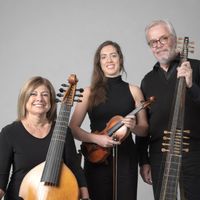
The Marais Project is a celebration of music for the viola da gamba inspired by Marin Marais, the great French virtuoso viola da gamba performer and composer. Formed by Jennifer Eriksson in 2000, the ensemble’s original aim was to perform the complete viola da gamba works of Marais – a monumental task which is more than 85% complete.
Jennifer Eriksson
viola da gamba
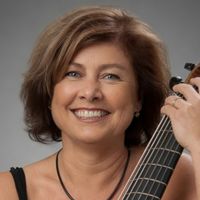
Jennifer Eriksson completed her initial musical studies at the Sydney Conservatorium before moving to the Netherlands for three years of viola da gamba tuition with Jaap ter Linden at Rotterdam Conservatorium.
Anthony Abouhamad
harpsichord
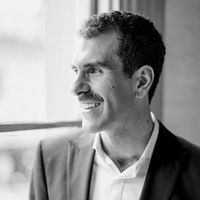
Anthony Abouhamad is a harpsichordist, continuo organist and composer. His work centres on French and German baroque repertoire and newly written pieces for early instruments.
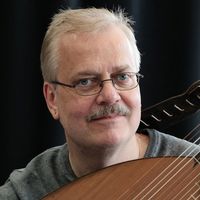
Tommie Andersson
arranger
Tommie Andersson was born in Sweden and has been based in Sydney since 1984. He is regarded as Australia's leading specialist in lutes and early guitars, and as a continuo player and soloist across the early-music repertoire.
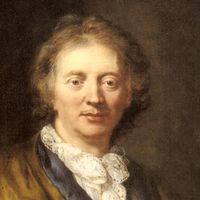
François Couperin
composer
François Couperin (1668–1733) was a French Baroque composer, organist and harpsichordist, known as Couperin le Grand. Organist to Louis XIV and to Saint-Gervais in Paris, he remains the supreme French master of the harpsichord.
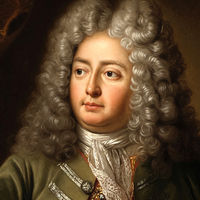
Marin Marais
composer
Marin Marais (1656–1728) was a French composer and master of the viola da gamba. His five books of Pièces de viole remain the summit of the French baroque viol repertoire.
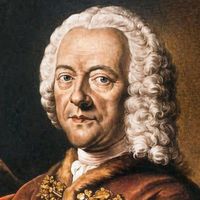
Georg Philipp Telemann
composer
Georg Philipp Telemann (1681–1767) was a German Baroque composer and multi-instrumentalist. Almost completely self-taught, he became a composer against his family's wishes and ranked among the leading German musicians of his age.

Carl Friedrich Abel
composer
Carl Friedrich Abel left a substantial body of chamber music and works for the viola da gamba, written in the early Classical style. His gamba sonatas and solos form a lasting part of that instrument's repertoire.
Louis de Caix d'Hervelois
composer
Louis de Caix d'Hervelois wrote almost exclusively for the viola da gamba: tuneful French dance suites whose graceful melodies, ornamentation and rhythmic lift make them among the most idiomatic music for the instrument.
Antoine Forqueray
composer
Antoine Forqueray wrote fiercely demanding music for the viola da gamba, dramatic and brash beside the sweeter style of Marin Marais. Only thirty-two pieces survive, many known today as harpsichord character pieces.
Troy Russell
composer
Monsieur de Sainte-Colombe
composer
Digital booklet
Digital booklet Notes, texts and credits — read online or download the PDF Download the PDFPerformers
- The Marais Project · ensemble
- Jennifer Eriksson · viola da gamba · all except tracks 4, 9 and 14
- Anthony Abouhamad · harpsichord · tracks 1–18
- Susie Bishop · voice, violin · track 19
- Tommie Andersson · gallichon · track 19
Technical credits
-
Producer
Jennifer Eriksson
Llew Kiek
Philip Pogson
-
Recording Engineer
Chris Doherty
-
Editing Engineer
Jennifer Eriksson
Llew Kiek
-
Mastering Engineer
Michael Lynch
-
Venue
Golden Retriever Studios
-
Thanks to
Musica Viva
Details
- List price
- $25.00 AUD
- Total playing time
- 53 minutes 36 seconds
- Release date
- 7 Aug 2026
- Genres
- Baroque, Early Music
- Musical work copyright
- © 2026 The Marais Project
- Sound recording copyright
- ℗ 2026 The Marais Project
- Catalogue
- MCD 676
- EAN
- 8721465019780
More to explore
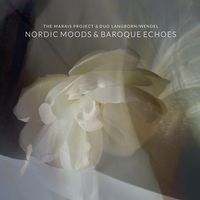
Nordic Moods & Baroque Echoes
A collaboration between Duo Langborn/Wendel and The Marais Project, this album blends baroque repertoire, new compositions and arrangements, and folk music from Australia and Sweden.
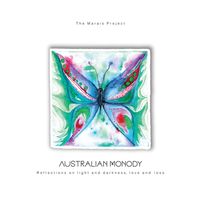
Australian Monody
The Marais Project is joined by countertenor Russell Harcourt for a collection of largely Australian songs and instrumental works, spanning light and darkness, love and loss.
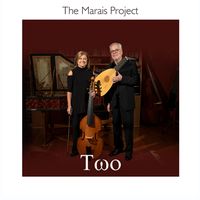
Two
Two brings together Marais Project founding members Jennifer Eriksson, viola da gamba, and Tommie Andersson, gallichon, theorbo and baroque guitar. Each plays alternate brackets of solos before they join in a splendid suite by Marin Marais.
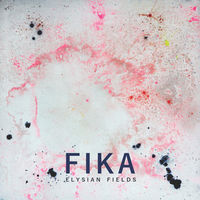
Fika
Fika is the second album from crossover ensemble Elysian Fields: music shaped for the Swedish custom of gathering with friends over coffee, conversation and something sweet to share.
The Garden Party
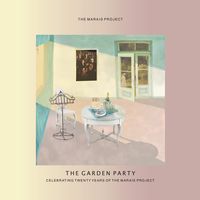
The Marais Project’s anniversary disc The Garden Party has a festive flavour, mixing world-premiere Marais arrangements and Eriksson’s title track with earlier Move recordings across French baroque, Swedish folk and South American song.

Snow in Summer
In 18th-century Scotland, folk songs sat beside Corelli and Vivaldi without hierarchy. Across thirteen tracks, Snow in Summer pairs period sonatas with folk arrangements: sparse strings, plucked notes like stars, and a voice high above.