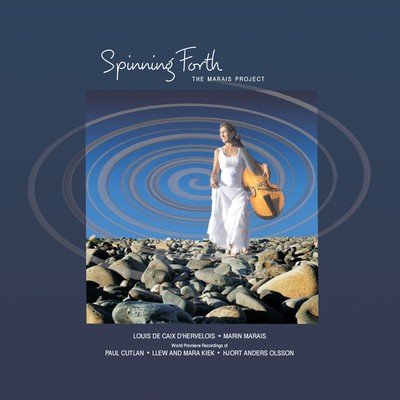
Listen & tracks
5 works · 43:31
-
Pièces de viole, Premier Livre, Suite in D minorLouis de Caix d'Hervelois 7 movements10:41
- 1 Prelude 1:39
- 2 l'Henriette legerement 1:41
- 3 La Villageois 1:48
- 4 La Bagatelle :46
- 5 La Luthée 2:27
- 6 Gigue 1:30
- 7 Menuet :50
-
8 Min levnads afton Hjort Anders Olsson 3:27
-
Spinning ForthPaul Cutlan 4 movements17:00
- 9 i. Prelude 2:55
- 10 ii. With Rustic Energy 4:45
- 11 iii. Slow and Sustained – quasi Sarabande 4:54
- 12 iv. Quasi Gigue 4:26
-
13 Tombeau for John Dowland Marin Marais 6:11
-
The Streets of ForbesLlew Kiek 2 movements6:12
- 14 The Cheshire Rounds 1:44
- 15 The Streets of Forbes 4:28
Jenny Eriksson can’t remember how often she was told, after she left a promising cello career and sold her two cellos to fund overseas study on the viola da gamba, that she would never make a living on the instrument in Australia. She flew to Holland anyway and stepped “into the abyss”, building a future on a voice few local listeners knew and fewer seemed to want.
In the decades since, and with the release of her sixth CD, Spinning Forth, she has repeatedly proved those advisors wrong.
Recorded with her ensemble The Marais Project, the disc rests on the pillars of her work: deep immersion in French baroque gamba repertoire, care for detail, and a readiness to commission the new. World-premiere recordings include Paul Cutlan’s major suite for gamba and harpsichord, Tommie Andersson’s setting of a Swedish walking tune, and Llew and Mara Kiek’s pair drawn from English dance and Australian bush ballad. Among the most affecting tracks is Eriksson’s own re-imagining of Marin Marais, titled Tombeau for John Dowland, written for the 450th anniversary of the lutenist’s birth.
A tombeau – “grave” or “shrine” in French – is a Gallic musical memorial. “Couperin wrote tombeaus, as did Marin Marais and even Ravel,” Eriksson notes. “The mournful sound of the gamba is well-suited to turning our attention to death! Someone once described the viola da gamba to me as a ‘depressed cello!’” Bach used the instrument at key moments in the St John and St Matthew Passions; Telemann and Handel wrote for it with equal care.
The album title is Cutlan’s. “He was drawing on the baroque idea of fortspinnung, where each musical phrase seems to effortlessly evolve into the notes that come after it, just spinning forth.” For Eriksson the phrase is also a career metaphor: moving from where she is toward something new, blending old and new without standing still.
In the artist’s words
When I founded The Marais Project we created a statement of purpose which read “to perform the music of Marin Marais and other music for the viola da gamba in a contemporary Australian context.” I wanted to play the viol and do it in a way that reflected the fact I lived and worked in Australia. I feel strongly that what we do and how we do it should consciously relate to our place and time. This CD draws together several threads implicit in our original purpose and one that has emerged since, Swedish music. At the core remains the viola da gamba music of the French baroque as represented by my arrangement of Marais’ Tombeau pour Marais le Cadet and a fine, lyrical suite by his pupil, Louis de Caix d’Hervelois.
I never wanted to get stuck in an ‘early music ghetto’, so I’ve regularly commissioned Australian composers to create new works to present alongside the historical greats. I’ve known and collaborated with Llew and Mara Kiek for many years and am a great admirer of their band, Mara! In 2015 I asked them to set an Australian folk song to complement all the Swedish music we were playing. The Streets of Forbes was the result. Similarly, I’ve loved Paul Cutlan’s sax and bass clarinet playing for some time but came to know his compositions more recently. Spinning Forth is the second work I’ve commissioned from him. It is a major piece and I hope other gambists take it up.
To paraphrase Paul Cutlan, whose piece provides the title for the CD, I hope that the music played suggests the music yet to come, a kind of ‘spinning forth’.
It is an honour to be asked to write another piece for Jenny Eriksson. I have enjoyed exploring the character and timbre of the viola da gamba in more detail, and relished the opportunity to write for the harpsichord. Spinning Forth was inspired by similarities between the often mesmerising rhythmic and textural features of Baroque music (J. S. Bach’s music in particular) and contemporary minimalism. The four movements take characteristics of typical Baroque dance-suite forms as their point of departure. I let my imagination run with the idea of ‘fortspinnung’ in Baroque music, where musical phrases often connect seamlessly, the notes just played suggesting the notes yet to come ‘spinning forth’.
Reviews
Only two pieces on this enthralling album are genuinely "baroque", but the Marais Project's central instrument, Jennifer Eriksson's viola da gamba, is a machine for imbuing all it touches with that stately grace of the music of 300 years ago. Sumptuously recorded, its bass notes are as sonorous as the voice of a great baritone; the high ones diaphanous. The baroque component consists of Eriksson's arrangement of Marais' desolately sad Tombeau pour Marais le Cadet and a suite by Marais' pupil Louis de Caix d'Hervelois that defines elegance. Tommie Andersson (theorbo, guitar) has arranged a plangent tune by the Swedish folk fiddler Hjort Anders Olsson, featuring Mikaela Oberg's baroque flute. Paul Cutlan's quixotic title track is a suite for viola da gamba and harpsichord (Raymond Harvey) that improbably manages to carry echoes of Bach while also being overtly modernist in the two instruments' capricious interaction. Finally, Llew and Mara Kiek playfully fuse the English folk tune The Cheshire Rounds with a Bulgarian 11/8 rhythm as a prelude to the bush ballad The Streets of Forbes (sung by tenor Koen van Stade), proving that Eriksson's instrument can glide through space as well as time.
A mix of baroque, arranged baroque, contemporary, and an item uncovered in the early 20th Century, but probably of distant origin. The opening, Pieces de viole, is a relaxing work even in its more sprightly movements and it is most delightfully presented. Spinning Forth, was composed by Paul Cutlan (b 1964). It is for gamba and harpsichord and is well situated on the disc, surrounded by baroque flavours. It is a co-operation of ideas - a little each of baroque, classical, contemporary and a hint of jazz.
The Marais Project’s new CD Spinning Forth is a gorgeous collection of music which showcases the viola da gamba and its ensemble partners, through dedicated pieces written during its golden age in the 17th century and through its second coming in the 20th century, championed in Australia by viola da gamba player and founding artistic director of the ensemble, Jennifer Eriksson. Eriksson has created an ensemble that performs this thoughtful programme with brilliant musicianship. It is an intimate recording, rich in detail – detail that can sometimes be lost in the sound of a larger ensemble or concert hall. Spinning Forth unites music from across the centuries, continents, styles and hemispheres, illustrating the charm of early music, and demonstrating that old instruments can remain relevant as they make new music.
Artists
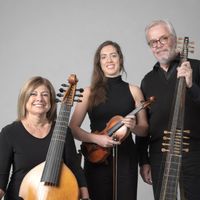
The Marais Project
ensemble
The Marais Project is a celebration of music for the viola da gamba inspired by Marin Marais, the great French virtuoso viola da gamba performer and composer. Formed by Jennifer Eriksson in 2000, the ensemble’s original aim was to perform the complete viola da gamba works of Marais – a monumental task which is more than 85% complete.
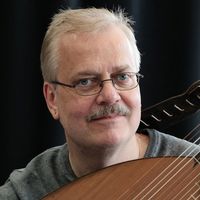
Tommie Andersson
arranger
Tommie Andersson was born in Sweden and has been based in Sydney since 1984. He is regarded as Australia's leading specialist in lutes and early guitars, and as a continuo player and soloist across the early-music repertoire.
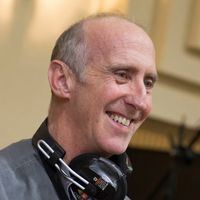
Paul Cutlan
composer
Paul Cutlan (b. 1964) is an Australian multi-instrumentalist, composer and improviser whose work spans contemporary classical music, jazz and world music. Bass clarinet and saxophone sit at the centre of a practice that moves freely between writing and performance.
Jennifer Eriksson
arranger
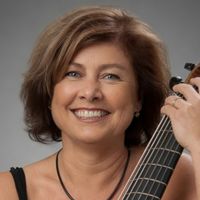
Jennifer Eriksson completed her initial musical studies at the Sydney Conservatorium before moving to the Netherlands for three years of viola da gamba tuition with Jaap ter Linden at Rotterdam Conservatorium.
Marin Marais
composer
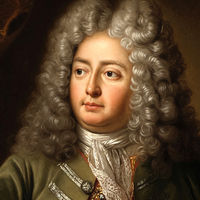
Marin Marais (1656–1728) was a French composer and master of the viola da gamba. His five books of Pièces de viole remain the summit of the French baroque viol repertoire.

Louis de Caix d'Hervelois
composer
Louis de Caix d'Hervelois wrote almost exclusively for the viola da gamba: tuneful French dance suites whose graceful melodies, ornamentation and rhythmic lift make them among the most idiomatic music for the instrument.
Llew Kiek
composer
Llew Kiek brings Balkan string and drum colour to chamber, choir and dance scores, arranging traditional Bulgarian song and writing folk fusions that sit as easily beside baroque viols as under open-throated voices.
Mara Kiek
composer
Mara Kiek sings the close intervals and open-throated force of Bulgarian traditional song, drives it on frame drum and tapan, and arranges village horo, ballad and dance scores that stay fierce, precise and bodily alive.
Hjort Anders Olsson
composer
Digital booklet
Digital booklet Notes, texts and credits — read online or download the PDF Download the PDFPerformers
- The Marais Project · ensemble
- Jennifer Eriksson · viola da gamba
- Catherine Upex · viola da gamba · tracks 1–7 and 13
- Tommie Andersson · theorbo, classical guitar · all except tracks 9–12
- Matthew Bruce · baroque violin · tracks 8, 14 and 15
- Mikaela Oberg · baroque flute · tracks 8, 14 and 15
- Raymond Harvey · harpsichord · tracks 9–12
- Koen van Stade · tenor · tracks 14 and 15
Technical credits
-
Producer
Jennifer Eriksson
Llew Kiek
Philip Pogson
-
Recording Engineer
Chris Doherty
-
Editing Engineer
Jennifer Eriksson
Llew Kiek
-
Mixing Engineer
Chris Doherty
Llew Kiek
-
Mastering Engineer
Andrew Edgson
-
Venue
EMI Studios 301
Details
- List price
- $25.00 AUD
- Total playing time
- 43 minutes 31 seconds
- Release date
- 1 Oct 2017
- Category
- Classical
- Genres
- Baroque, Contemporary Classical
- Musical work copyright
- © 2017 The Marais Project
- Sound recording copyright
- ℗ 2017 Move Records
- Catalogue
- MCD 564
- EAN
- 9314574056426
More to explore
Exquisite Harmonies
Exquisite Harmonies features works for viola da gamba and harpsichord, and several harpsichord solos, largely from the French Baroque. The exceptions are Telemann, Abel and Australian composer Troy Russell. A nice treat is an improvised harpsichord fantasia in the style of Telemann.
Nordic Moods & Baroque Echoes
A collaboration between Duo Langborn/Wendel and The Marais Project, this album blends baroque repertoire, new compositions and arrangements, and folk music from Australia and Sweden.
Australian Monody
The Marais Project is joined by countertenor Russell Harcourt for a collection of largely Australian songs and instrumental works, spanning light and darkness, love and loss.
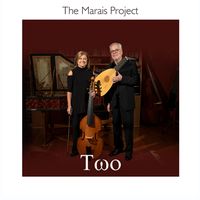
Two
Two brings together Marais Project founding members Jennifer Eriksson, viola da gamba, and Tommie Andersson, gallichon, theorbo and baroque guitar. Each plays alternate brackets of solos before they join in a splendid suite by Marin Marais.
The Garden Party
The Marais Project’s anniversary disc The Garden Party has a festive flavour, mixing world-premiere Marais arrangements and Eriksson’s title track with earlier Move recordings across French baroque, Swedish folk and South American song.
Smörgåsbord
The Marais Project’s fifth disc gathers Swedish folk, Bellman songs, Roman and Marais chamber works, a jazz pavane and even ABBA, all heard for the first time in Australia on period instruments.