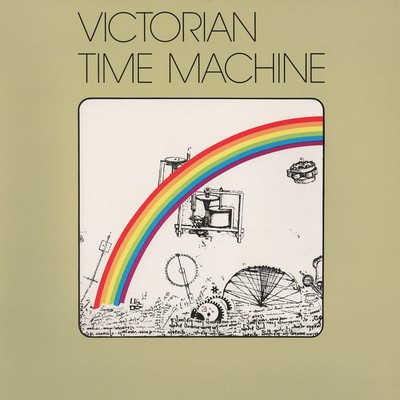
Listen & tracks
3 works · 48:19
-
Nuper Rosarum FloresGuillaume Dufay 2 movements25:32
- 1 (1436) 6:50
- 2 monody after Dufay for instrumental ensemble and early music consort 18:42
-
3 To Be Alone Barry Conyngham simultaneous solos for four performers and pre-recorded tape (1978) 11:04
-
4 Music for Brass Instruments III James Fulkerson for twelve brass players (1978) 11:43
The cathedral of Santa Maria del Fiore in Florence stands behind Nuper Rosarum Flores, Hames’s monody after Guillaume Dufay for instrumental ensemble and early music consort directed by Gerald English. Both the 1436 motet and the new work turn on musical space and proportional design.
Barry Conyngham’s To Be Alone sets four simultaneous solos against pre-recorded tape, an image of loneliness and the isolating modern world.
James Fulkerson closes the disc with Music for Brass Instruments III for twelve brass players.
In the artist’s words
On 25 March 1436, Pope Eugenius IV dedicated the cathedral of Santa Maria del Fiore in Florence with its great dome designed by Filippo Brunelleschi. During the ceremony the Papal choir performed the motet Nuper Rosarum Flores that Guillaume Dufay had composed for the event, apparently basing the numerical structure of his work upon the proportional module used by Brunelleschi in his architecture.
My own work takes the original Dufay as a starting point for a set of continuous thematic transformations compositionally articulated in time by means of a complex series of proportional sieves. The resulting melodic contours, each sharply characterized in terms of tempo, register, and timbre, unfold in an overlapping and multi-layered system which, with their isorhythmic and isomelic structure, may be regarded as a kind of “same musical space” that the four sections of my work share in common with the Dufay.
Nuper Rosarum Flores was commissioned by The Victorian College of the Arts to pay tribute to the distinguished work of Dr Phillip Law, AO, CBE, Vice President of the Victoria Institute of Colleges, on the occasion of his retirement. The first performance was given by the Victorian Time Machine, directed by the composer and in the presence of Dr Law, during a private ceremony in the Orchestra Studio of The Victorian College of the Arts in July 1977. The work is dedicated to David Munrow, In Memoriam.
This piece represents a further development for me in the area of performer–composer interaction. The highly experienced and intuitive members of the Time Machine enabled me to replace a conventional notation with a partly verbal, partly notated score which was used as a beginning point for the composition. I was then able to work closely with each performer to fix the material of the piece.
The basic idea of the piece is to explore four simultaneous, separated, but ultimately co-existing and complementary solos, investigating loneliness. The everlasting chord and the “bell tones” were pre-recorded and played to the performers during the recording process. These also serve to suspend and distort our perceptions of time.
The “actors” humorously, intensely, explosively reveal themselves, somehow held in the bounds of the four pitches, until in the last section of the piece they coalesce into a cry for assistance.
This is certainly my most expressive piece and is intended to be a comment on the isolating nature of the modern world.
When I visited The Victorian College of the Arts in July 1977, I gave the first performance of my Music for Brass Instruments I, which I had composed in 1975 for brass quintet and pre-recorded tape. During these rehearsals and the various lectures which I delivered in that three-week period, I began to know many of the brass players at the College and when my thoughts turned to composing a piece for the Victorian Time Machine during my tenure as composer-in-residence at the College during 1978, it seemed quite natural to write a work for this group of people.
My works have often employed graphic scores and extended technical resources, especially for brass players, but Music for Brass Instruments III uses only conventional playing techniques and standard notation – in part because extended techniques mean that many players are unable to approach the scores and because many others are unable to form an image of what the piece sounds like. It has recently seemed important to me to confront these two problems.
I have not used any pre-planned compositional scheme for the work. I just sit down and compose.
Artists

Victorian Time Machine
ensemble
Richard David Hames
director, conductor
Richard David Hames is an Australian composer, conductor and director. He directed the Victorian Time Machine, an instrumental and vocal ensemble that grew out of the Victorian College of the Arts.
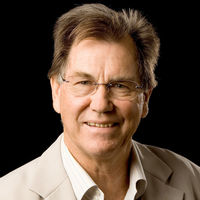
Barry Conyngham
composer
Barry Conyngham, born in Sydney, has received numerous awards and fellowships for composition, among them Churchill, Harkness, Australia Council and Senior Fulbright grants. He holds an ARIA, two Sounds Australian Critics Awards and two Maggs Awards.
Guillaume Dufay
composer
James Fulkerson
composer
James Fulkerson composes chamber, stage, electroacoustic and multimedia works and plays trombone in experimental music. His Music for Brass Instruments III is concentrated brass writing; as a player he has drawn more than two hundred new pieces and leads ensembles at the edge of the notated score.
Digital booklet
Digital booklet Notes, texts and credits — read online or download the PDF Download the PDFPerformers
- Anne-Maree Macdonald · soprano · tracks 2 and 3
- Rachelle Skinner · flute, alto flute, piccolo · tracks 2 and 3
- Lawrence Dobell · e-flat clarinet · tracks 2 and 3
- Gordon Dickson · bass clarinet · tracks 2 and 3
- Graeme Shilton · soprano saxophone · tracks 2 and 3
- Melanie Harris · french horn · tracks 1–3
- David O'Meara · french horn · tracks 2 and 3
- Lyndsay Davies · trumpet · tracks 2–4
- Anna Freeman · trumpet · tracks 2–4
- Bruce Roberts · trumpet · tracks 2–4
- Gregory Carr · trumpet · tracks 2–4
- David Tains · trombone · tracks 2–4
- Philip Holdsworth · trombone · tracks 2–4
- Glenn Bardwell · trombone · tracks 2–4
- Tim Dowling · trombone
- Warwick Bone · tuba · tracks 2–4
- Gary Stevenson · tuba · tracks 2–4
- Sarah Hopkins · cello · tracks 2 and 3
- Pamela Raines · harp · tracks 2 and 3
- Robert Clarke · percussion · tracks 2 and 3
- John Hopkins · guitar; conductor (track 4) · tracks 2–4
- Gerald English · tenor; director, early music consort · tracks 1–3
- Jochen Schubert · guitar · tracks 2 and 3
- Derek Jones · tracks 1–3
- Victorian Time Machine · ensemble
- Richard David Hames · director, conductor
- James Fulkerson · trombone · tracks 2–4
Technical credits
-
Recording Engineer
Les Craythorn
-
Venue
University of Melbourne Electronic Music Studio
-
Credit
Brendan Hennessy
James Shugg
Robert Reid
Details
- List price
- $20.00 AUD
- Total playing time
- 48 minutes 19 seconds
- Release date
- 1979
- Categories
- Australian, Classical
- Musical work copyright
- © 1979 Move Records
- Sound recording copyright
- ℗ 1979 Move Records
- Catalogue
- MD 3028
- EAN
- 9314574302820
More to explore
Dreams: Works for Small Orchestra
Australian composer David Joseph gathers choreographically inspired works for small orchestra from 1986 to 1994 in Dreams, tracing memory, dream states and perception through richly textured, psychologically charged writing.

Flute Perspectives, Vol. 4
Derek Jones’s fourth Flute Perspectives volume gathers contemporary Australian flute music with Jerry Wong and Joshua Hyde. Sonatas, solos and electronics chart lyric landscape, multiphonic colour and modernist drive.

Flute Perspectives, Vol. 3
The third release in Derek Jones’s series, Flute Perspectives 3 continues to convey the synergy of Australia’s varied classical flute repertoire, with newly commissioned works, some recorded here for the first time.
Gardener of Time: Barry Conyngham at 75
This double-CD gathers seven orchestral works by Barry Conyngham, among Australia’s most widely performed composers abroad, with premieres across Japan, America, Europe, Russia and Australia. The Ormond Ensemble is conducted by Richard Davis.
Flute Perspectives, Vol. 2
Derek Jones (flute) and Cameron Roberts (piano) present a programme of Australian works by Anne Boyd, Stuart Greenbaum, Rohan Phillips, Mark Pollard and Richard Meale.
Spirit Wind
Flautist Derek Jones presents seven free-flowing improvisations inspired by a universal spirit shared across musical cultures, layering flute lines over synthesiser soundscapes, drones and deep gamelan-like bells.