Listen & tracks
1 of 20 tracks have a preview · 20 works · 76:56
-
1 Musica son Francesco Landini 3:15
-
2 Fa metter bando Francesco Landini 4:17
-
3 Deh, pon quest’amor giù! Francesco Landini 6:41
-
4 Altri n’arà Francesco Landini 3:53
-
5 Angelica biltà Francesco Landini 2:21
-
6 Non creder, donna Francesco Landini 4:58
-
7 Vita non è più misera Francesco Landini 3:23
-
8 Ama, donna, chi t’ama Francesco Landini 4:05
-
9 Amor con fede Francesco Landini 2:49
-
10 Ecco la primavera Francesco Landini 1:02
-
11 Donna, che d’amor senta Francesco Landini 2:30
-
12 Oimé ‘l core! Francesco Landini 7:17
-
13 A le’ s’andrà lo spirto Francesco Landini 4:13
-
14 Che cosa è questa, Amor Francesco Landini 4:06
-
15 Amor in te spera’ Francesco Landini 2:28
-
16 O fanciulla giulìa Francesco Landini 4:51
-
17 Che pena è questa al cor Francesco Landini 3:41
-
18 Or su, gentili spirti Francesco Landini 4:33
-
19 Sì dolce non sonò Francesco Landini 3:05
-
20 Contemplar le gran cose Francesco Landini 3:28
A team of musicologists, literary scholars and performers from the University of Melbourne, La Trobe University and the Australian Research Council, directed by John Stinson and John Griffiths, collaborated to research and interpret works by the principal composers and from the central collections of the fourteenth century. The musical sources of France and Italy in the age of Machaut, Petrarch and Boccaccio include some 1500 works, most of which had never been available on recordings.
Alongside the restoration, research and interpretation of important manuscripts, software developed for the project was used in over 30 universities around the world.
The Ensemble of the Fourteenth Century and Les Six are collectives of specialist singers and instrumentalists brought together for the Fourteenth Century Recording Project. They were formed around the leading mediaeval ensemble La Romanesca and expanded for the varied instrumental and vocal combinations required by the repertory.
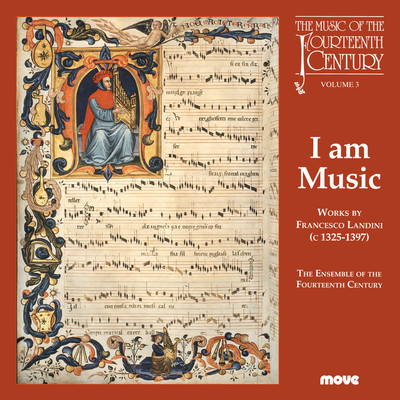
1997 marked the 600th anniversary of Francesco Landini’s death. Landini was a poet, polemicist and performing musician whose fame even during his lifetime equalled that of the greatest artistic figures of his century. His music is the kernel of every surviving manuscript that documents the music of fourteenth-century Italy; even 600 years after his death, less than half his works had been recorded.
This collection presents twelve works not previously recorded as well as fresh readings of some of his most famous pieces. Most of the madrigals and ballatas deal with love, from the most extroverted manifestations to poems of a more contemplative mood; others contain abstract and philosophical ideas of the time. Companion volumes in the series include Two Gentlemen of Verona, Every Delight and Fair Pleasure and A Florentine Annunciation.
Reviews
Editor's Choice
... an excellent thoughtful and committed recording ... if you like the sounds of mediæval two and three part polyphony, this CD is a worthy investment. If you don't, get it anyway; this recording may convert you.
Artists

Ensemble of the Fourteenth Century
ensemble
The Ensemble of the Fourteenth Century is a collective of specialist singers and instrumentalists brought together for the Fourteenth Century Recording Project. The ensemble was initially formed around the leading Australian mediaeval ensemble La Romanesca, which was expanded to provide the varied instrumental and vocal combinations required by the repertoire.
Francesco Landini
composer
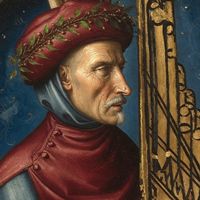
Francesco Landini (c. 1325–1397) was a Florentine composer, poet, organist and singer, and a central figure of the Italian Trecento. Blind from childhood, he left a large body of madrigals and ballate that dominate the surviving sources of fourteenth-century Italian polyphony.
Digital booklet
Digital booklet Notes, texts and credits — read online or download the PDF Download the PDFPerformers
- Ensemble of the Fourteenth Century · ensemble
- John Stinson · director
- John Griffiths · director, lute
- Ros Bandt · psaltery · tracks 5 and 20
- Ruth Wilkinson · vielle · tracks 4, 8, 15–18
- Hartley Newnham · countertenor · tracks 1, 5, 7, 9, 10, 14–18 and 20
- Margo Adelson · soprano · tracks 4, 7 and 12
- Margaret Arnold · alto · tracks 1, 12, 14 and 19
- Tom Healey · tenor · track 13
- Ian McDonald · countertenor · tracks 2, 8 and 19
- Lloyd Fleming · tenor · tracks 1–3, 6, 9–11, 13–15, 17 and 19
- Gavin Carr · baritone · tracks 3, 6, 11 and 13
Technical credits
-
Producer
John Griffiths
Ruth Wilkinson
Vaughan McAlley
-
Recording Engineer
Martin Wright
-
Venue
Trinity College Chapel
-
Thanks to
Australian Research Council
La Trobe University
University of Melbourne
Details
- List price
- $25.00 AUD
- Total playing time
- 76 minutes 56 seconds
- Release date
- 1997
- Categories
- Early music, Vocal
- Genres
- Early Music, Vocal & Opera
- Musical work copyright
- © 1997 The University of Melbourne, La Trobe University
- Sound recording copyright
- ℗ 1997 Move Records
- Catalogue
- MD 3093
- EAN
- 9314574309324
More to explore
Two Gentlemen of Verona - The Music of the 14th Century Vol. 1
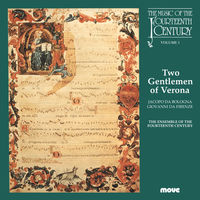
Two Gentlemen of Verona gathers secular polyphony from the first known generation of Italian composers. This volume presents madrigals, caccie and a motet by Jacopo da Bologna and Giovanni da Firenze.
Every Delight and Fair Pleasure - The Music of the 14th Century Vol. 2
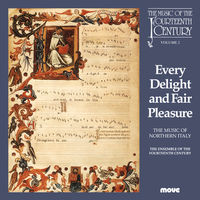
Northern Italian music from the second decade of the 14th century to the early 15th. Anonymous Rossi manuscript songs sit beside madrigals and ballatas by Maestro Piero and Bartolino da Padova.
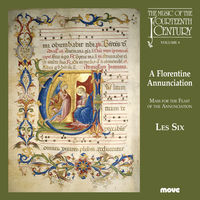
A Florentine Annunciation - The Music of the 14th Century Vol. 4
The Music of the Fourteenth Century series presents some of the earliest and most significant polyphonic settings of late-medieval lyric poetry. This volume offers music for the Feast of the Annunciation, performed by Les Six.
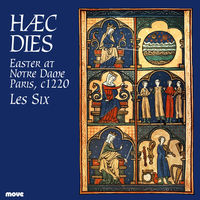
Hæc Dies
Easter at Notre Dame, Paris, c.1220. Music for Easter Sunday Mass as it may have been heard at Notre Dame early in the thirteenth century: chant propers, a complete ordinary cycle in two-part Leoninus-style settings, and three-part organum in the style of Perotin.
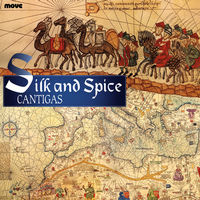
Silk and Spice
Cantigas follow the mediæval Silk Road in dance, monophonic song and improvisation. Recorders, rebec, vielle, oud, lute and percussion carry music shaped by Europe, Asia and the Middle East.
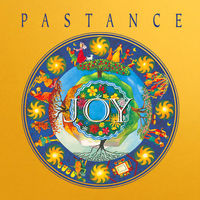
Joy
Joy names the intent behind much of this music: carols of piety, the longing of Landini and Machaut, and Hildegard von Bingen’s soaring beauty. The collection shows how song shaped everyday life in the Middle Ages.