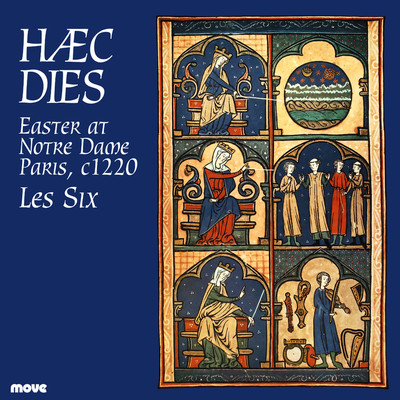
Listen & tracks
1 of 15 tracks have a preview · 15 works · 49:41
-
1 Conductus Anonymous Omnia beneficia gaudia generancia 1:07
-
2 Introit Anonymous Resurrexi, et adhuc tecum sum, alleluja 3:41
-
3 Kyrie Anonymous fons bonitatis … eleison 3:57
-
4 Gradual Anonymous Hæc dies quam fecit Dominus 6:41
-
5 Alleluja Anonymous Pascha nostrum immolatus est Christus 6:39
-
6 Sequence Anonymous Victimae paschali laudes 2:15
-
7 Gloria in excelsis Deo Anonymous 4:07
-
8 Credo in unum Deum Anonymous 5:35
-
9 Offertory Anonymous Terra tremuit 1:13
-
10 Sanctus Anonymous 5:05
-
11 Motet Anonymous Se valours / Bien me sui / Hic factus est 2:47
-
12 Agnus Dei Anonymous 3:19
-
13 Communion Anonymous Pascha nostrum immolatus est Christus 1:20
-
14 Ite vos Deum laudantes Anonymous :53
-
15 Conductus Anonymous Omnia beneficia 1:02
The programme follows the shape of the Mass, from processional conductus through Introit, Gradual and Alleluia to Communion and recessional. Plainsong sits beside two- and three-part organum drawn from the Notre Dame orbit and from manuscripts in Spain, Scotland and Poland.
The project grew from the first volume of Edward Roesner’s Magnus Liber Organi for Editions de l’Oiseau-Lyre. Directed by Hartley Newnham and John Stinson, the Melbourne ensemble sings the repertoire with the clarity and blend the sources invite.
In the artist’s words
This programme brings together a collection of music which might have been heard at Mass on Easter Sunday in the second quarter of the thirteenth century in Notre Dame in Paris and other centres of Notre Dame influence. Some of the music is much older: the plainsong Introit, Offertory and Communion belong to the earliest layer of chants in manuscripts from the tenth century, but which have continued to be used for the Easter service right up to our time. Some may be from later in the century, but are found in manuscripts which transmit the central repertoire. Some of the repertoire is international, as the many manuscripts from many countries bear witness. Some of the music is certainly Parisian, and the style of the Notre Dame repertoire gives a cohesiveness to the music which comes down to us in sources from all parts of Europe.
This recording was prompted by the occasion of the launch of the first volume of the Magnus Liber Organi edited by Edward Roesner and published by Editions de l’Oiseau-Lyre, Monaco.
Reviews
The singing by these Melbourne based musicians is exquisite throughout. It is beautifully produced with excellent notes … haunting and evocative … Highly recommended.
Les Six are a wonderful group of singers … and they sing the Mass with a beautiful clarity of tone and a moving profundity.
Artists

Les Six
ensemble
The vocal group Les Six were formed specifically to perform mediaeval and renaissance repertoire in authentic style.
Digital booklet
Digital booklet Notes, texts and credits — read online or download the PDF Download the PDFPerformers
- Les Six · ensemble
- John Heuzenroeder · tenor
- Hartley Newnham · alto · track 10
- Tom Healey · baritone · track 10
- Andrew Fysh · bass, alto
- Simon Biazeck · tenor
- Grantley McDonald · baritone
Technical credits
-
Contributor
Hartley Newnham
John Stinson
-
Recording Engineer
Martin Wright
-
Venue
Move Records Studio
Details
- List price
- $25.00 AUD
- Total playing time
- 49 minutes 41 seconds
- Release date
- 1994
- Categories
- Choral, Classical, Early music
- Genres
- Early Music, Choral & Sacred
- Musical work copyright
- © 1994 Move Records
- Sound recording copyright
- ℗ 1994 Move Records
- Catalogue
- MD 3144
- EAN
- 9314574314427
More to explore
A Florentine Annunciation - The Music of the 14th Century Vol. 4
The Music of the Fourteenth Century series presents some of the earliest and most significant polyphonic settings of late-medieval lyric poetry. This volume offers music for the Feast of the Annunciation, performed by Les Six.
I am Music - The Music of the 14th Century Vol. 3
The Music of the Fourteenth Century series presents some of the earliest and most significant polyphonic settings of late medieval lyric poetry. Songs by Francesco Landini, performed by the Ensemble of the Fourteenth Century.
Every Delight and Fair Pleasure - The Music of the 14th Century Vol. 2
Northern Italian music from the second decade of the 14th century to the early 15th. Anonymous Rossi manuscript songs sit beside madrigals and ballatas by Maestro Piero and Bartolino da Padova.
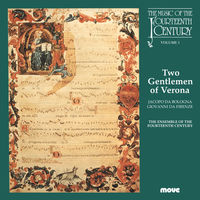
Two Gentlemen of Verona - The Music of the 14th Century Vol. 1
Two Gentlemen of Verona gathers secular polyphony from the first known generation of Italian composers. This volume presents madrigals, caccie and a motet by Jacopo da Bologna and Giovanni da Firenze.
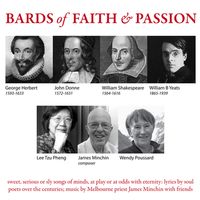
Bards of Faith and Passion
Jim Minchin sets poems by writers at play or at odds with eternity: soul-poet lyrics across the centuries, from anonymous Latin verse and the metaphysicals to Yeats, Shakespeare and living voices.
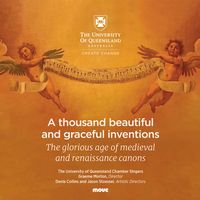
A Thousand Beautiful and Graceful Inventions
Subtitled ‘The glorious age of medieval and renaissance canons’, this programme of late Middle Ages and Early Modern choral music is sung by the University of Queensland Chamber Singers under Graeme Morton. The illustrated booklet has programme notes by Denis Collins and Jason Stoessel, with complete texts.