Ruth Wilkinson
Ruth Wilkinson is a recorder and viol player devoted to music from the twelfth to the eighteenth century. Her performances are praised for their musical integrity, imagination and brilliance.
As a member of many of Australia’s most established early music ensembles, including La Romanesca, Capella Corelli and Consort Eclectu, she has toured extensively throughout Australia, Europe and South-East Asia for Musica Viva. More recently she was invited to perform with the plucked-instruments ensemble Ludovico’s Band.
Ruth has taken part in many recording projects with the Ensemble of the Fourteenth Century, La Romanesca and the Elysium Ensemble, as well as a solo recording of the Suites for Voice Flute by Charles Dieupart. The breadth of her musical expertise is reflected in her extensive discography.
She studied recorder with Hans-Martin Linde and viola da gamba with Jordi Savall at the Schola Cantorum Basiliensis in Switzerland. She teaches recorder and viola da gamba at the Early Music Studio of the University of Melbourne and is Director of Junior School Music at St Michael’s Grammar School, Melbourne.
Ruth Wilkinson is featured on the following titles
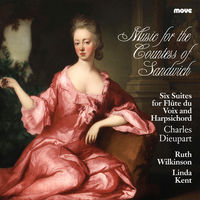
Music for the Countess of Sandwich
First Australian release of Charles Dieupart’s complete suites for flûte du voix and harpsichord (1701), including two suites later copied by J. S. Bach.
Performing as Capella Corelli
Capella Corelli, one of Australia's foremost baroque chamber ensembles, was formed 21 years ago. The violin works of the great Italian virtuoso Arcangelo Corelli and of his Italian predecessors were the initial inspiration for the group.
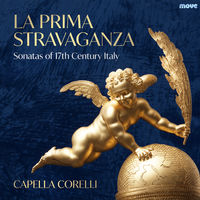
La Prima Stravaganza
Sonatas of 17th-century Italy from Capella Corelli: a window on instrumental music as it found its own voice, from the experimental works of Cima, Castello, Montalbano, Fontana, Frescobaldi, Marini and Uccellini through to Corelli.

Capella Corelli Plays Handel and Telemann
Capella Corelli has long been one of Australia’s foremost baroque chamber ensembles. Here they present sonatas by Handel and Telemann for baroque violin, recorder, viola da gamba and harpsichord.
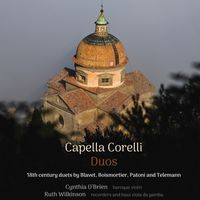
Duos
An extraordinary acoustic frames extraordinary music: Ruth Wilkinson (recorders and bass viola da gamba) and Cynthia O’Brien (baroque violin), the duo known as Capella Corelli, in late Baroque two-part repertoire.
Performing as La Romanesca
A leading force in early music in Australia since 1978, La Romanesca has developed a special interest in the performance of mediaeval monophonic and polyphonic song, although the group's repertory spans the twelfth to seventeenth centuries.
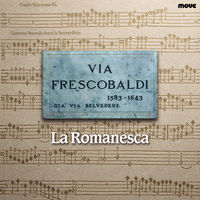
Via Frescobaldi
Seventeenth-century Italian composer Girolamo Frescobaldi was at once conservative and innovative. La Romanesca presents improvisatory toccatas, imitative polyphonic instrumental works, and songs from his arie musicali of 1630.
Iberian Triangle
La Romanesca presents a portrait of the musical diversity of Spanish song in the years just before the great expulsion and Columbus's voyages: music of Christian, Moorish and Jewish Spain before 1492.
Monodies
Music from twelfth- and thirteenth-century Spain and southern France. The programme centres on Martin Codax’s sea-haunted Cantigas de amigo, with songs by the troubadour Marcabru and anonymous fourteenth-century istanpittas.
Love Lyrics and Romances of Renaissance Spain
This is the first recording by the early music group La Romanesca, devoted to Spanish villancicos and romances of the Renaissance.
Performing as Ensemble of the Fourteenth Century
The Ensemble of the Fourteenth Century is a collective of specialist singers and instrumentalists brought together for the Fourteenth Century Recording Project. The ensemble was initially formed around the leading Australian mediaeval ensemble La Romanesca, which was expanded to provide the varied instrumental and vocal combinations required by the repertoire.
I am Music - The Music of the 14th Century Vol. 3
The Music of the Fourteenth Century series presents some of the earliest and most significant polyphonic settings of late medieval lyric poetry. Songs by Francesco Landini, performed by the Ensemble of the Fourteenth Century.
Producer
Performing as Elysium Ensemble
The Elysium Ensemble has been acclaimed by critics for its exciting performances, fine musicianship and authoritative interpretations of Baroque and Classical repertoire on period instruments.
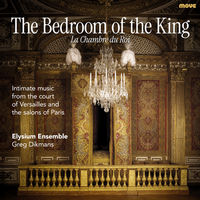
The Bedroom of the King (La Chambre du Roi)
Elysium Ensemble bring French chamber music of the early 18th century into the private apartments of Louis XIV: Couperin and Hotteterre in the douceur of Versailles and the Paris salons.
Ruth Wilkinson also appears on
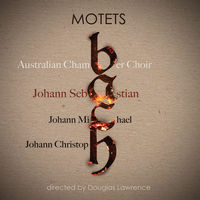
Bach Motets
The Australian Chamber Choir, directed by Douglas Lawrence, performs motets by J.S. Bach with works by Johann Michael Bach and Johann Christoph Bach.
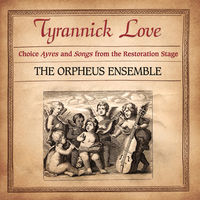
Tyrannick Love
The Orpheus Ensemble with Vivien Hamilton. Songs for soprano, harpsichord, baroque cello (viola da gamba and baroque violins on occasion), each written for famous singers and actresses in popular Restoration dramas of late 17th-century England.
Ruth Wilkinson is a member of

Accademia Arcadia
Accademia Arcadia plays baroque cantatas and chamber sonatas with one-to-a-part heat: Buxtehude's sacred motets, Handel's Italian dramas full of fire, Corelli through Purcell and Leclair, and improvisatory violin writing that still feels spontaneous.